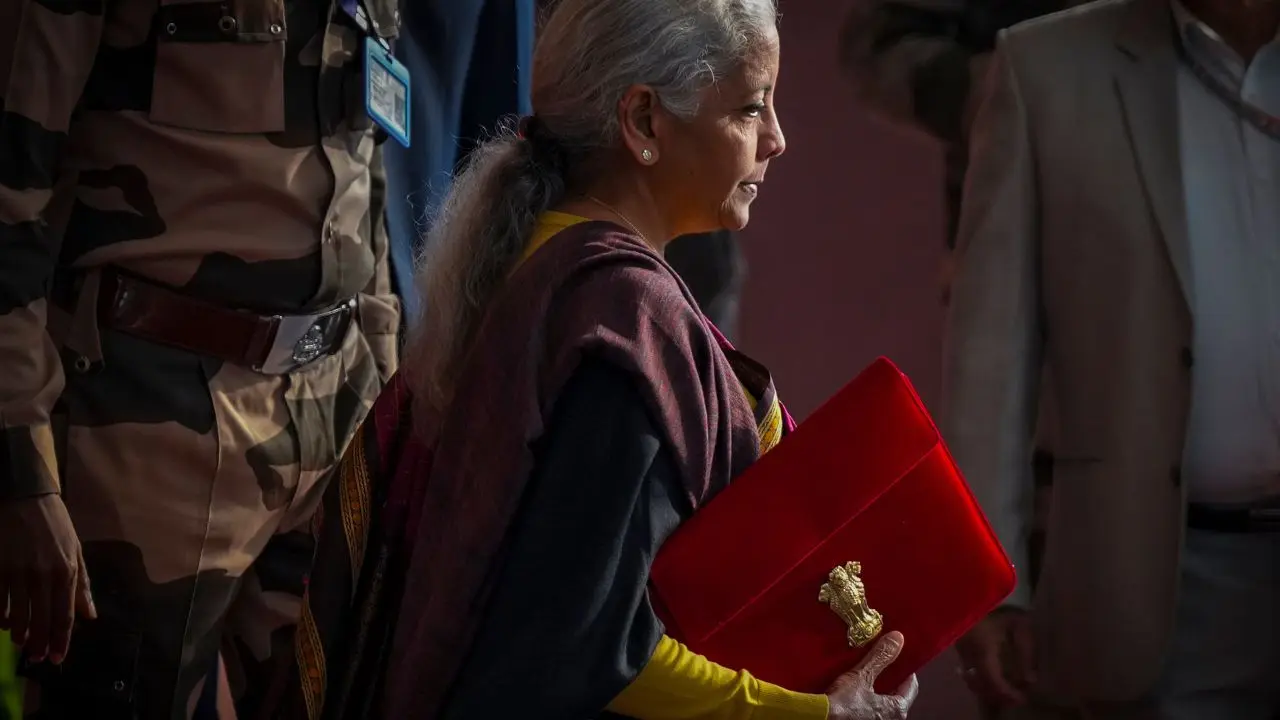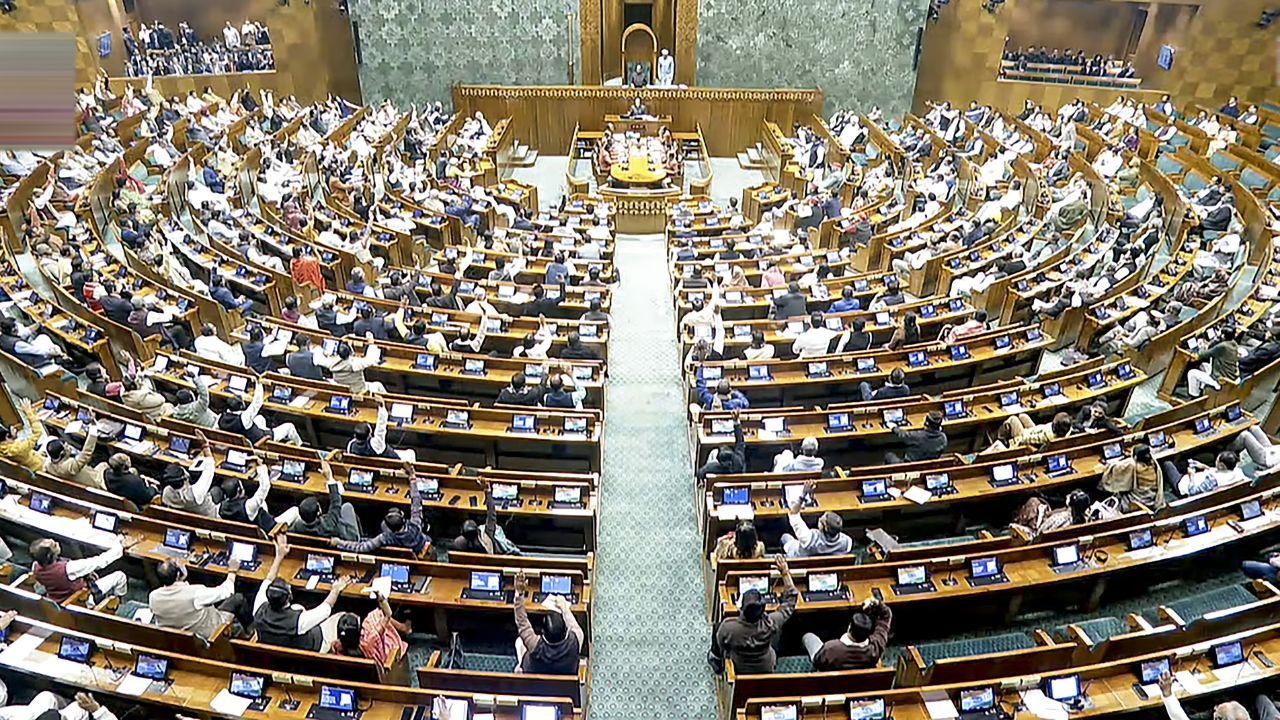
Finance Minister Nirmala Sitharaman, while presenting the Union Budget 2026 in the Parliament on Sunday, February 1, laid out government expenditure and taxation plans that will directly impact the daily lives of the citizens and businesses across India. While the headline of the budget is mostly about the unchanged income tax slab, several announcements by the Finance Minister are set to make an impact on the daily life of students, employees and businesses. Check LIVE Budget Updates here Considering that the income tax slabs remain unchanged to no income tax up to Rs 12 lakh per annum, several indirect taxes on everyday products and services are set to change from April 1, 2026. Smartphones to get cheaper in India Union Finance Minister Nirmala Sitharaman, while presenting her ninth consecutive budget, asserted the government will offer support for electronics manufacturing, with increased funding of around Rs 40,000 crore. Sitharaman also stated that they plan to rationalise taxes on phone components to build India as a tech hub. However, this may help reduce costs of smartphones, tablets and mobile accessories in the long run. Cigarettes and alcohol are getting expensive While the Union Budget 2026 mostly focused on healthcare, energy, electronics and technology, tobacco and alcohol are set to get more expensive from April 1, 2026. The government this year has imposed new excise duties and higher taxes on cigarettes and other tobacco products, effective April 1, 2026. Cigarettes from April will attract higher excise duties on top of GST, ultimately making them expensive. While alcoholic beverages will continue to be taxed by state governments, the central and state excise duty has also been increased, which will make the effective selling price comparatively expensive from the upcoming financial year. Sports equipment to get cheaper With Nirmala Sitharam announcing the ‘Khelo India Mission’ that will focus on encouraging sports infrastructure within the country, the sports equipment in the upcoming financial year may get cheaper. Reductions in customs duties may be one of the reasons that sports goods made outside the country will now be available at a slightly lower price. Futures and options trading to be taxed heavily Nirmala Sitharaman, while speaking about share market trading, asserted the increase in Security Transaction Tax (STT) on Futures and Options (F&O) transactions. The raise in STT by 150 per cent on futures from 0.02 per cent to 0.05 per cent, while the tax on options transactions will be hiked by 50 per cent, making it 0.15 per cent from 0.01 per cent. Expert opinion CA, CFA Sahil Sonawat who works as an analyst at a financial advisory firm emphasizes, "The Union Budget 2026 presents a structural pivot, balancing an aggressive Rs 12.2 lakh crore capex (4.4 per cent of GDP) with a disciplined fiscal deficit glide path to 4.3 per cent." Expressing his views on taxation hike on F&O trades and India's Semiconductor Mission 2.0 he added, "By scaling the India Semiconductor Mission 2.0 and hiking STT on F&O trades, the Finance Bill strategically prioritizes long-term industrial 'Trump-proofing' over speculative retail volatility. For investors, this creates a high-quality 'risk-off' environment, trading short-term derivative liquidity for a more stable, infrastructure-led equity growth story."
01 February,2026 03:54 PM IST | Mumbai | Tarun VermaThe Union Budget 2026, apart from the fiscal deficit and no changes in income tax, also highlighted an increase in the budget outlay for sports goods manufacturing. The Union Finance Minister, while presenting the budget, proposed to extend the Khelo India Mission for the next 10 years. The extension of ‘Khelo India’ was one of the key takeaways for sports in the Union Budget 2026-27 presented by the Finance Minister at the Parliament on Sunday. These major initiatives taken by the government during the Budget 2026 clearly indicate that the government is trying to change the country's sports ecosystem from funding events and athletic support to creating infrastructure. The continuation and increasing of funds in the sports industry pushes a major boost in developing and nurturing talent and being self-reliant when it comes to equipment and infrastructure. India eyes to bid for Olympics 2036 These moves are aimed at developing the Indian sports ecosystem capable of putting its best foot forward at the 2030 Commonwealth Games and the 2036 Olympics, for which the country has bid, as per IANS. With that in mind, the Finance Minister on Sunday, while presenting the budget, also proposed plans for a major upgrade in infrastructure and for the development of sports at the grassroots level. While highlighting that India could be a global hub for sports manufacturing, she said, “India has the potential to emerge as a global hub for high-quality, affordable sports goods,” Sitharaman said in her budget speech. “I propose a dedicated initiative for sports goods that will promote manufacturing, research, and innovation in equipment design as well as material sciences,” as per IANS. Government to allocate Rs 10,000 crore for sports development Sitharama, while highlighting the major boost to sports development in India, said, "I propose to introduce a dedicated Rs 10,000 crore SME growth fund to create future champions, incentivising enterprises based on select criteria." The government also proposed a long-term Khelo India Mission that will be in force for the next 10 years. She also added, “Taking forward the systematic nurturing of sports talent which is set in motion through the Khelo India programme, I propose to launch a Khelo India Mission to transform the sports sector over the next decade,” as cited by news agency IANS. The sports development industry could be a major boost to the economy. Finance Minister Sitharaman also noted the sports sector in India has great potential to generate employment, skilling, and job creation within the country. She further added that the sports sector provides multiple means of employment, skilling and job opportunities. Underlining the government’s intent to develop sports as an economic ecosystem, she highlighted the money to be invested in training, coaching, equipment manufacturing, and support services in the upcoming financial year. ‘Khelo India’ budget increased by Rs 200 crore The government has also increased the total budget allocations for the Ministry of Youth Affairs and Sports in this budget. The budget for the 'Khelo India' programme has been increased from Rs 800 crore to Rs 1000 crore, while among the other major hikes, the budget for the Sports Authority of India (SAI) has been increased from Rs 815 crore to Rs 830 crore, while the outlay for incentives to athletes was reduced from 42.65 crore to Rs 37 crore. The National Sports Federations will get more now with the budget increased from Rs 340 crore to Rs 400 crore, while the National Dope Testing Laboratory will get Rs 23 crore instead of the Rs 18.70 crore it was allocated in the last budget, making sure that the regulator keeps a keen eye on athletes using fraudulent ways to enhance their performances. (With inputs from IANS)
01 February,2026 03:53 PM IST | New Delhi | mid-day online correspondentIn her first Budget in 2019, Sitharaman replaced the decades-old leather briefcase with a traditional red ‘bahi-khata’, symbolising a shift in presentation style. Continuing the practice of recent years, the Union Budget 2026–27 will be paperless, marking the fifth consecutive digital Budget. Union Budget 2026: What moment is India in? India heads into Union Budget 2026 at a moment of relative strength—but with limited room for error. The macroeconomic backdrop remains supportive, though increasingly fragile amid global uncertainties. Economic growth is holding firm. The Economic Survey projects real GDP growth of 6.8–7.2 per cent in FY 2026–27, a moderation from the 7.4 per cent estimated for the current year, yet still among the fastest growth rates globally. The government’s fiscal stance remains calibrated. The fiscal deficit stood at 4.8 per cent of GDP in FY25 and is targeted at 4.4 per cent in FY26, even as public investment continues to play a central role in sustaining growth. Capital expenditure remains a key anchor. Budgeted capex for FY26 stands at Rs 11.21 lakh crore, while effective capex—including grants for asset creation—reaches Rs 15.48 lakh crore, reinforcing the government’s infrastructure-led growth strategy. Inflation has eased significantly, averaging 1.7 per cent between April and December 2025, providing policymakers with some headroom. However, external pressures persist, with exports facing global trade frictions, keeping the focus firmly on domestic demand and public investment. While domestic demand remains resilient, global headwinds are intensifying. Rising US tariffs and sluggish global growth have weighed on exports, while private investment continues to remain cautious. As a result, economists expect the government to continue leaning on public spending, particularly in sectors such as roads, ports, energy and defence, even as it remains committed to fiscal consolidation. Capital expenditure is likely to rise further, alongside a gradual lowering of the fiscal deficit target. Here are the key numbers and themes to watch in the Union Budget for FY 2027: Fiscal deficit The budgeted fiscal deficit for the current financial year (FY26: April 2025–March 2026) is estimated at 4.4 per cent of GDP. Having achieved a fiscal consolidation target below 4.5 per cent, markets will look for clarity on the debt-to-GDP reduction roadmap and whether the government provides a specific fiscal deficit target for FY27. Expectations are that the deficit could be pegged at around 4 per cent of GDP. Capital expenditure (Capex) The government’s planned capital expenditure for FY26 stands at Rs 11.2 lakh crore. The upcoming Budget is expected to maintain a strong capex push, with a 10–15 per cent increase likely, even as private sector investment remains cautious. With major pay revisions due only in FY28, the government may have room to raise capex beyond Rs 12 lakh crore. Debt roadmap In the 2024–25 Budget, Sitharaman stated that from FY27 onwards, fiscal policy would aim to place central government debt on a declining path as a percentage of GDP. Markets will closely watch the debt consolidation roadmap and timelines for bringing general government debt-to-GDP down to the 60 per cent target. Currently, the ratio is estimated at over 85 per cent, including around 55 per cent central government debt. Borrowing Gross market borrowing for FY26 was budgeted at Rs 14.80 lakh crore. The FY27 borrowing number will be closely tracked as it signals the government’s fiscal position, revenue mobilisation, and overall borrowing needs. Tax revenue The FY26 Budget pegged gross tax revenues at Rs 42.70 lakh crore, an 11 per cent increase over FY25. This includes: Rs 25.20 lakh crore from direct taxes (personal income tax and corporate tax) Rs 17.50 lakh crore from indirect taxes (customs, excise duty and GST) GST Goods and Services Tax (GST) collections in FY26 are estimated to rise 11 per cent to Rs 11.78 lakh crore. FY27 GST projections will be keenly watched, especially as revenue growth is expected to gain momentum following rate rationalisation measures introduced since September 2025. Nominal GDP India’s nominal GDP growth for FY26 was initially estimated at 10.1 per cent, while real GDP growth stood at 7.4 per cent, as per NSO data. However, nominal growth was revised down to around 8 per cent due to lower-than-expected inflation.FY27 nominal GDP projections—expected between 10.5 and 11 per cent—will offer cues on the government’s inflation outlook. Dividend The government has budgeted Rs 1.50 lakh crore in dividend income, including Rs 1.02 lakh crore from the RBI and financial institutions, and Rs 48,000 crore from CPSEs. With the RBI already paying a higher-than-expected dividend of Rs 2.69 lakh crore in FY26, Budget estimates are likely to be revised upward. Dividend assumptions will be closely scrutinised, given recent tax relief measures. Subsidy Total subsidy allocation for FY26 stands at Rs 3.83 lakh crore, with food subsidy capped at Rs 2.03 lakh crore. Key schemes and sectors The spotlight will also be on allocations for flagship schemes such as VBG RAM G, along with spending on health, education, and other priority sectors.
01 February,2026 03:47 PM IST |Parts of Kashmir received fresh snowfall while rains lashed the plains as the night temperature rose above the freezing point at some places, including Srinagar city, officials said on Sunday. Snowfall was witnessed in higher reaches of Pahalgam in Anantnag district and Qazigund area of Kulgam district while many parts of South Kashmir were hit by rains, the officials said. They said Srinagar city also witnessed early morning rains. The minimum temperature in Srinagar city settled at 2 degrees Celsius on Saturday night, up from the previous night's minus 0.1 degrees Celsius.This was 2.6 degrees above the season's normal. While the temperature data for several places, including Sonamarg in Ganderbal district, was not available, the ski resort of Gulmarg in Baramulla district was the coldest recorded place in Jammu and Kashmir at minus 7 degrees Celsius. Officials said Pahalgam tourist resort in south Kashmir recorded a low of minus 1.4 degrees Celsius, up from minus 2.6 degrees Celsius the previous night. It was 3.8 degrees higher that seasonal normal. In Qazigund, the minimum temperature settled at 0.4 degrees, while Kokernag recorded zero degree Celsius and Kupwara recorded low of minus 1.7 degrees Celsius. A 20-day 'Chillai Khurd' (small cold) began on Saturday, after the culmination of the 40-day harshest winter period, 'Chillai-Kalan'. Chillai Khurd will be followed by the 10-day 'Chillai Bachha' (baby cold). The meteorological department has said the weather will remain cloudy, and there is a possibility of light to moderate rain or snow, especially in the higher reaches, with thunder or gusty winds at many places on Sunday. Light rain, with snow in the higher reaches, is possible at scattered to many places on February 2-3, officials said. This story has been sourced from a third party syndicated feed, agencies. Mid-day accepts no responsibility or liability for its dependability, trustworthiness, reliability and data of the text. Mid-day management/mid-day.com reserves the sole right to alter, delete or remove (without notice) the content in its absolute discretion for any reason whatsoever.
01 February,2026 03:41 PM IST | Srinagar | PTIFinance Minister Nirmala Sitharaman on Sunday proposed extending the deadline for filing revised income tax returns, offering relief to taxpayers who miss earlier cut-off dates. https://www.mid-day.com/news/india-news/live-blog/union-budget-2026-live-updates-finance-minister-nirmala-sitharaman-full-union-budget-speech-highlights-from-parliament-18331577 Presenting the Union Budget 2026 in the Lok Sabha, Sitharaman said the time limit for submitting revised income tax returns would be extended from December 31 to March 31, subject to the payment of a nominal fee. The move is aimed at providing taxpayers with greater flexibility and reducing compliance-related stress. In another taxpayer-friendly announcement, the Finance Minister proposed a reduction in the Tax Collected at Source (TCS) rate under the Liberalised Remittance Scheme (LRS) for education and medical purposes. The TCS rate for remittances made for pursuing education or medical treatment abroad will be lowered from 5 per cent to 2 per cent. Sitharaman also announced a cut in the TCS rate on overseas tour packages. Under the proposal, the rate will be reduced to 2 per cent from the existing 5 per cent. Notably, the levy on such tour packages had earlier been as high as 20 per cent before being rationalised. As part of efforts to simplify tax administration, the Finance Minister said the government plans to introduce a rule-based automated process for small taxpayers in the 2026–27 financial year. This initiative is intended to minimise discretionary interventions, speed up resolution of cases and enhance transparency in dealings with the tax department. In a significant relief measure, Sitharaman also proposed exempting compensation awarded by the Motor Accident Claims Tribunal from income tax, removing ambiguity over the tax treatment of such awards and providing direct benefit to accident victims and their families. The proposed measures form part of the government’s broader effort to make the tax system more taxpayer-friendly, reduce litigation and improve ease of compliance while maintaining revenue neutrality. Income tax law comes into force from April 1: FM Meanwhile, Finance Minister Nirmala Sitharaman said the Income Tax Act, 2025 will be implemented from April 1 and rules and tax returns forms will be notified shortly. Beginning April 1, the Income Tax Act, 2025, will come into force replacing the six-decade-old tax law and the changes made in tax laws in 2026-27 Budget will be incorporated in the new legislation. In her Budget speech in the Lok Sabha on Sunday, she said, "This (direct tax code) was completed in record time and the Income Tax Act 2025 will come into effect from first April 2026. The simplified income tax rules and forms will be notified shortly, giving adequate time to taxpayers to acquaint themselves with its requirements." The forms have been redesigned, such that ordinary citizens can comply without difficulty, she added. The 2025 I-T law is revenue neutral with no change in tax rates. It has only made direct tax laws simple to understand, removed ambiguities, thereby reducing scope for litigations. It reduces text volume and sections by about 50 per cent vis-a-vis the 1961 Income Tax Act. The new law simplifies the tax timeline by doing away with the distinction between the assessment year and the previous year, replacing it with a single "tax year" framework. It also allows taxpayers to claim TDS refund even when ITRs are filed after deadlines, without any penal charges.
01 February,2026 03:40 PM IST | New Delhi | mid-day online correspondentLaying out an ambitious infrastructure and mobility roadmap in the Union Budget 2026, Finance Minister Nirmala Sitharaman on Sunday announced plans to develop seven high-speed rail corridors, create new dedicated freight links and operationalise 20 national waterways over the next five years, with a strong emphasis on sustainability and economic connectivity. https://www.mid-day.com/news/india-news/live-blog/union-budget-2026-live-updates-finance-minister-nirmala-sitharaman-full-union-budget-speech-highlights-from-parliament-18331577 Transport reforms anchored in 'Yuvashakti' and three kartavyas Presenting the Union Budget 2026 in Parliament, Sitharaman said the proposals are driven by "Yuvashakti" and anchored in what she described as the government’s "three kartavyas", aimed at accelerating growth while maintaining reform momentum. She underlined that transport and logistics reforms would play a central role in supporting long-term economic expansion. Seven high-speed rail corridors to link major economic hubs As part of efforts to promote environmentally sustainable passenger transport, the Union Budget 2026 proposes the development of seven high-speed rail corridors connecting major urban, industrial and economic hubs. These corridors are expected to significantly reduce travel time, lower carbon emissions and act as growth enablers for regions they pass through. The proposed high-speed rail routes include Mumbai–Pune, Pune–Hyderabad, Hyderabad–Bengaluru, Hyderabad–Chennai, Chennai–Bengaluru, Delhi–Varanasi and Varanasi–Siliguri. Together, these links will connect financial centres, technology hubs, manufacturing clusters and emerging cities through faster and cleaner mobility networks. New freight corridors, national waterways to boost logistics efficiency In addition to passenger transport, the Budget outlined a major push for freight movement. Sitharaman announced plans to establish new dedicated freight corridors, including a key east–west link connecting Dangkuni in West Bengal with Surat in Gujarat. The move is aimed at improving logistics efficiency, cutting costs and boosting industrial competitiveness, particularly for export-oriented sectors. The Finance Minister also said the government will operationalise 20 new national waterways over the next five years to promote environmentally sustainable cargo transport. Shifting freight to inland waterways, she noted, would help reduce dependence on road and rail while offering a more energy-efficient and cost-effective logistics alternative. Eco-tourism, MSMEs and manufacturing part of broader growth strategy The Budget further highlighted eco-tourism and nature-based travel as emerging growth areas. Sitharaman said India has the potential to offer world-class trekking and hiking experiences, with plans to develop sustainable mountain trails in Himachal Pradesh, Uttarakhand and Jammu and Kashmir, as well as in Araku Valley in the Eastern Ghats and Pudigai Malai in the Western Ghats. Special wildlife trails, including turtle nesting trails in Odisha, Karnataka and Kerala, and bird-watching trails around Pulicat Lake, were also announced. While outlining the broader economic strategy, Sitharaman said the government has identified six key areas for targeted intervention to accelerate and sustain growth. These include scaling up manufacturing in seven strategic and frontier sectors, rejuvenating legacy industries, creating globally competitive MSMEs, delivering a strong infrastructure push, ensuring long-term economic stability, and developing city economic regions. "The reform express is running on its way and will maintain its momentum to help us fulfil our Kartavya," the Finance Minister said, adding that the combined measures reflect the government’s commitment to sustained reforms and inclusive development.
01 February,2026 03:40 PM IST | New Delhi | mid-day online correspondentFinance Minister Nirmala Sitharaman, while presenting the Union Budget 2026 on Saturday, proposed the setting up of a girls’ hostel in every district to improve access to education for female students, particularly those from rural and underserved areas. Follow the live updates of Union Budget 2026 with real-time coverage of major announcements, tax reforms, economic priorities and policy decisions To strengthen industry–academia collaboration, she also proposed establishing five university townships or academic zones next to major industrial hubs. The Finance Minister further announced the setting up of 50,000 Atal Tinkering Labs in government schools over the next five years to promote innovation, scientific temper and hands-on learning among students. Union Budget 2026: ‘Bhartiya Bhasha Pustak’ scheme, 10,000 new medical seats announced She also proposed the ‘Bhartiya Bhasha Pustak’ scheme, under which digitised textbooks in Indian languages will be made available for primary and secondary school students to improve learning outcomes and access to quality educational material. In a boost to medical education, Sitharaman said 10,000 new undergraduate and postgraduate seats will be added in government medical colleges and hospitals in the next year. This is part of a broader plan to add 75,000 medical seats over the next five years, she added.
01 February,2026 03:39 PM IST | Mumbai | Aditi AlurkarFinance Minister Nirmala Sitharaman on Sunday presented her ninth consecutive Union Budget 2026, placing strong emphasis on reforms, job creation, skills, infrastructure and inclusive growth. Union Budget 2026 seeks to touch multiple segments of society—from farmers, students and MSMEs to commuters, investors and healthcare professionals—while keeping long-term growth firmly in focus. Follow the live updates of Union Budget 2026 with real-time coverage of major announcements, tax reforms, economic priorities and policy decisions Here are the top 10 takeaways from Union Budget 2026: 1. Capital expenditure raised to Rs 12.2 lakh crore Keeping growth at the core, the government increased capital expenditure to Rs 12.2 lakh crore for FY27 from Rs 11.2 lakh crore in FY26—an increase of nearly 9 per cent. The Finance Minister highlighted that public capex has surged from ₹2 lakh crore in 2014–15 to over Rs 11 lakh crore in recent years, reinforcing infrastructure-led growth. 2. Seven high-speed rail corridors announced To promote faster and greener mobility, seven new high-speed rail corridors were proposed. These include Mumbai–Pune, Pune–Hyderabad, Hyderabad–Bengaluru, Hyderabad–Chennai, Chennai–Bengaluru, Delhi–Varanasi and Varanasi–Siliguri, linking major economic and urban hubs. 3. Boost to corporate and municipal bond markets The Union Budget 2026 proposed a market-making framework for corporate bonds, including access to funds and derivatives. Large cities issuing municipal bonds worth over Rs 1,000 crore will get incentives of Rs 100 crore, while smaller towns will continue to receive support under AMRUT. 4. Banking reforms for ‘Viksit Bharat’ A high-level committee on banking will be set up to review the entire financial system and suggest reforms aligned with India’s next phase of growth, while ensuring financial stability, inclusion and consumer protection. 5. Higher investment limits for NRIs The investment cap for NRIs was raised from 5 per cent to 10 per cent, while the overall limit increased from 10 per cent to 24 per cent. This move is expected to attract long-term overseas capital and deepen Indian capital markets. 6. Continued focus on fiscal consolidation The fiscal deficit target for FY27 was pegged at 4.3 per cent of GDP, down from 4.4 per cent in FY26. Net market borrowings are estimated at Rs 11.7 lakh crore, signalling the government’s commitment to debt consolidation. 7. Securities Transaction Tax (STT) increased STT on futures was raised to 0.05 per cent from 0.02 per cent, while STT on options was increased to 0.15 per cent. The move is aimed at improving market discipline and revenue mobilisation. 8. Big push to tourism—medical, heritage and cultural Budget 2026 proposes five regional medical tourism hubs with AYUSH centres, development of 15 iconic archaeological sites, a National Destination Digital Knowledge Grid, and Buddhist circuit projects in the Northeast. 9. New initiatives for Divyangjan Two new schemes—Divyangjan Kaushal Yojana and Divyang Sahara Yojana—were announced to support skill development, assistive device manufacturing, R&D and technology integration for persons with disabilities. 10. Khelo India Mission for sports transformation A decade-long Khelo India Mission was unveiled to strengthen sports infrastructure, talent identification, coaching, and sports science, aiming to transform India’s sporting ecosystem. Overall, Union Budget 2026 reflects a balanced approach—combining fiscal discipline with growth, infrastructure expansion with inclusion, and reforms with long-term economic resilience.
01 February,2026 03:39 PM IST | New Delhi | mid-day online correspondentWith Finance Minister Nirmala Sitharaman presenting her ninth consecutive Union Budget, several changes will directly impact household expenses and consumer choices. Follow the live updates of Union Budget 2026 with real-time coverage of major announcements, tax reforms, economic priorities and policy decisions Union Budget 2026: What gets cheaper Overseas tour packages as TCS is reduced from 5–20 per cent to 2 per cent Foreign education costs with lower TDS under the Liberalised Remittance Scheme (LRS) Alcoholic liquor scrap and select minerals following a duty cut from 5 per cent to 2 per cent Shoe upper exports with duty-free imports permitted Energy transition equipment with exemption from basic customs duty (BCD) Solar glass manufacturing inputs with BCD exemption Capital goods used for critical mineral production with BCD exemption Components and parts for civilian aircraft manufacturing exempted from BCD Microwave ovens with full BCD exemption Personal-use imports as BCD is reduced from 20 per cent to 10 per cent Drugs used for rare diseases and cancer with BCD exemption Fish caught by Indian fishermen in Indian waters exempt from BCD Goods imported for nuclear power projects exempt from BCD Union Budget 2026: What gets costlier Income tax misreporting, now attracting a penalty equal to 100 per cent of the tax amount Non-disclosure of movable assets, which will now invite penalties Stock options and futures trading, with Securities Transaction Tax increased from 0.02 per cent to 0.05 per cent Union Budget 2026: Income tax law comes into force from April 1, says Nirmala Sitharaman The FM on Sunday announced that the Income Tax Act, 2025, will come into force from April 1, marking a major overhaul of India’s direct tax framework. She said the accompanying rules and redesigned income tax return (ITR) forms will be notified shortly to give taxpayers adequate time to familiarise themselves with the new system. Simplified rules and ITR forms to be notified soon Speaking in the Lok Sabha during her Union Budget 2026 address, Sitharaman said the new law will replace the six-decade-old Income Tax Act of 1961, with all changes announced in the current Budget being incorporated into the fresh legislation. “This direct tax code was completed in record time, and the Income Tax Act, 2025 will take effect from April 1, 2026. The simplified rules and forms will be notified soon,” she said. Revamped ITRs designed for easier taxpayer compliance The Finance Minister emphasised that the revamped ITR forms have been redesigned with the ordinary taxpayer in mind, enabling easier compliance without procedural complexity. According to her, the reform is focused on clarity and simplicity rather than altering tax rates. Revenue-neutral law cuts sections by nearly 50 per cent She clarified that the new Income Tax Act is revenue-neutral, with no change in existing tax slabs or rates. Instead, it aims to simplify the law, remove ambiguities and significantly reduce litigation by making provisions easier to understand. Notably, the legislation cuts down the overall text and number of sections by nearly 50 per cent compared to the 1961 Act. Single ‘tax year’ concept, late filers allowed TDS refunds One of the key structural changes introduced under the new law is the simplification of the tax timeline. The long-standing distinction between the “previous year” and the “assessment year” has been removed and replaced with a single “tax year” concept, making compliance more straightforward for taxpayers. In another taxpayer-friendly move, Sitharaman said the new framework will allow individuals to claim refunds of tax deducted at source (TDS) even if income tax returns are filed after the due date, without attracting any penal charges. The Finance Minister said these reforms are intended to make India’s direct tax system more transparent, predictable and citizen-centric, while also improving ease of compliance and reducing disputes between taxpayers and the tax administration.
01 February,2026 03:38 PM IST | New DelhiFinance Minister Nirmala Sitharaman on Sunday proposed a significant rationalisation of prosecution provisions under the Income Tax Act as part of Union Budget 2026. The changes, announced as part of her speech on direct taxes, aim to decriminalise certain procedural non-compliances, reduce the severity of punishments, make penalties more proportionate, and ease the compliance burden on taxpayers. Follow the live updates of Union Budget 2026 with real-time coverage of major announcements, tax reforms, economic priorities and policy decisions Union Budget 2026: Key measures under rationalisation The proposals, detailed under the heading “Rationalisation of the prosecution framework”, include: Decriminalisation of specific actions: Production of books of account and documents, and ensuring payment of tax deducted source (TDS) from the deductee in cases where payment is made in kind will no longer attract criminal prosecution. Rationalisation of imprisonment type: All prosecutions under the Act will now carry simple imprisonment instead of rigorous imprisonment. Reduction in maximum punishment: For any offence (except repeated offences), the maximum term of imprisonment is proposed to be reduced from seven years to two years. Leniency for lower-end offences: Cases where the current maximum punishment is two years will see it reduced to six months (with or without fine), with no minimum imprisonment required. Proportionate punishment linked to tax evaded: Prosecution will be based on the amount of tax evaded, with fines made optional and maximum imprisonment removed entirely for such offences. Minor offences: Only a fine will be prescribed, with no imprisonment. Union Budget 2026: Focus on simplifying tax administration The Finance Minister said these changes are part of a broader effort to simplify tax administration, reduce litigation, decriminalise technical or procedural defaults, and shift enforcement focus toward serious tax evasion rather than minor or inadvertent lapses. The proposals form part of the amendments relating to direct taxes and will require corresponding changes in the Income Tax Act, 2025, which is set to come into force from April 1. Finance Minister Nirmala Sitharaman on Sunday created history by presenting her ninth consecutive Union Budget 2026, further cementing her place in India’s parliamentary record books. The Union Budget 2026 speech, delivered in the Lok Sabha, lasted around 84 minutes, marking the first time a Union Budget has been presented on a Sunday.
01 February,2026 03:38 PM IST | MumbaiFinance Minister Nirmala Sitharaman presented the Union Budget 2026 in Parliament on Sunday. For salaried employees, the key takeaway from the speech is continuity and simplification rather than new tax cuts or major changes to slabs and rates. The Finance Minister did not propose any revisions to Income Tax slabs or rates under either the old or new tax regime for FY 2026-27. This maintains stability following the significant relief provided in the previous budget. Follow the live updates of Union Budget 2026 with real-time coverage of major announcements, tax reforms, economic priorities and policy decisions Union Budget 2026: Major structural change – New Income Tax Act, 2025 The most important announcement for taxpayers is the rollout of the New Income Tax Act, 2025, which will replace the Income Tax Act, 1961, from April 1, 2026. The Finance Minister noted that a comprehensive review of the 1961 Act was completed in record time. Union Budget 2026: Key features highlighted in the Finance Minister’s speech Simplified Income Tax Rules and redesigned return forms will be notified shortly. These changes aim to make compliance easier for ordinary citizens, reducing difficulty in filing returns. No new tax burdens or rate increases for salaried individuals are introduced under this transition. Union Budget 2026: No changes to slabs, rates or key deductions Sitharaman did not make any modifications to Income Tax slabs, rates, standard deduction, or rebates for salaried employees. The take-home pay for those in the new tax regime (the default for most) will remain unchanged. Union Budget 2026: Indirect relief measures for salaried and middle-class families Several targeted proposals provide cash-flow ease: TCS rationalisation under the Liberalised Remittance Scheme (LRS): TCS on remittances for education and medical purposes reduced from 5 per cent to 2 per cent. TCS on overseas tour packages reduced from 5–20 per cent to a uniform 2 per cent (without any minimum threshold). Exemption for motor accident claims: Any interest awarded by the Motor Accident Claims Tribunal to a natural person is exempt from income tax, with no TDS applicable. Compliance ease: A rule-based automated process is proposed for small taxpayers to obtain lower or nil TDS certificates without filing applications with the assessing officer. Other procedural relief: Rationalisation of penalty and prosecution provisions to reduce litigation and fear of criminal action for minor or procedural lapses. These measures focus on easing upfront outflows for families funding overseas education/medical needs or travel, while simplifying TDS processes. Union Budget 2026: What this means for salaried employees Salaried taxpayers can expect predictability in direct tax liability — no surprises on slabs or rates. The emphasis is on making the system simpler and less burdensome through the new Act and targeted TCS/TDS reliefs. With the New Income Tax Act launching next April, expect clearer rules and easier ITR filing in the coming years.
01 February,2026 03:38 PM IST | Mumbai | mid-day online correspondentADVERTISEMENT