shot-button
E-paper E-paper
Home > News > Opinion News > Article > Does India have Alzheimers

‘Does India have Alzheimer’s?’

Updated on: 25 August,2025 07:02 AM IST  |  Mumbai
Ajaz Ashraf |

In this imagined story, a mother forgetting Jawaharlal Nehru becomes a metaphor for an India seeking to erase its first prime minister from popular memory

‘Does India have Alzheimer’s?’

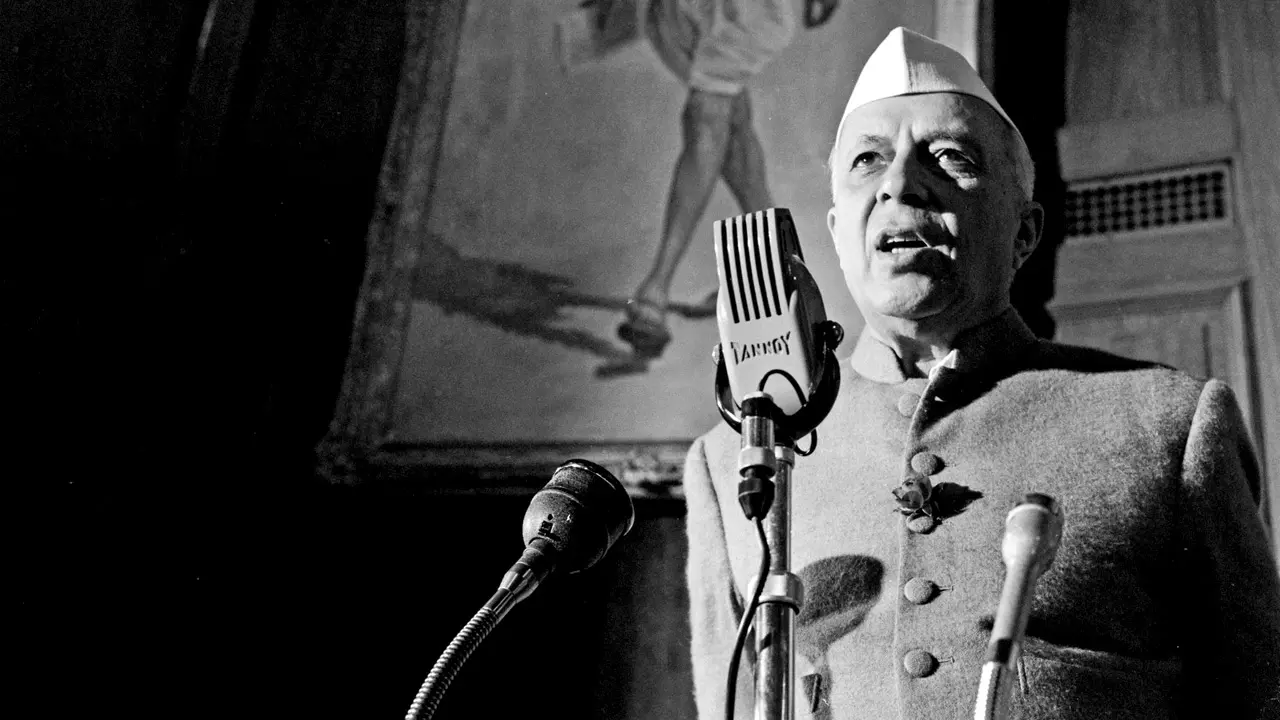
Former Indian Prime Minister Jawaharlal Nehru holds a press conference in London on September 20, 1962. PIC/GETTY IMAGES

Ajaz AshrafMother’s sisters and brothers sat around the dining table on which were stacks of photographs that had been retrieved from their father’s house in Patna, before it was sold and handed over to its new owner. The aunts and uncles, and Mother too, were in these photographs, looking 40 to 60 years younger than now, in styles of clothes and hairdos not worn today. And we, of the third generation, gasped in disbelief as they were identified to us, and giggled at our own images as infants in the arms of a relative or astride a tricycle.

“Nehru. Jawaharlal Nehru,” Mother exclaimed, and as we glanced at her, she turned the photograph, yellowing at the edges, towards us. That she recognised Nehru shouldn’t have surprised us, for even though her memory has been fading away for some years, her experiences are being erased from present to past — the newer a happening, the quicker it gets effaced. Mother can’t make new memories. She forgets an outing in an hour or two.


Yet the memories from her childhood are preserved in fragments. Mother remembers the alphabets and can construct words, the list of which continuously shrinks, though. When she talks, it seems she is reading a text from which words and sentences have been haphazardly deleted. Her narration often lacks coherence, for she tends to conjoin two separate events belonging to two different time periods. Or, at times, she simply imagines them. She often wants to visit her mother, my grandmother, who has been dead for two decades. She recalls family events that none of her siblings can vouch for. And when told she’s mixing up her remembrances, she accepts it, for she knows she is losing her memory, that she has been diagnosed with Alzheimer’s.


Mother’s eldest brother provided the context to Nehru’s photo that she still held. Nehru, according to him, came to a district in which their father, my grandfather, was the superintendent of police, a good 25 years before he was posted to Patna. Nehru stayed overnight there. “That photo was clicked at the feast held in honour of Nehru,” he said.

“The next day,” Mother filled in, “a plane went to Patna to fetch a rose for Nehru, for him to pin it to his jacket pocket. Stylish man!” The bemused faces around the table didn’t dissuade her from engaging in nostalgia, aloud. Mother said that at the cultural event organised before the feast, she recited a patriotic poem. Deeply moved, Nehru walked up to the stage, lifted her in his arms, and planted a kiss on her forehead. 

“Don’t you all remember?” Mother asked.

“Aapa will keep alive the memory of Nehru, even as India forgets him,” her youngest brother said.

To him, Mother responded, “Does India have Alzheimer’s?” We laughed. Pointing to Mother, my cousin said to her school-going son, who cribs that reading history is pointless, “When the past is forgotten, the present resembles a garbled fiction, a story without a beginning or middle.”

It was decided to frame and hang Nehru’s photo on the wall facing her bed, as a spark to light up daily the darkness engulfing her memories, so that she didn’t completely forget who she was —  and to whom she belonged. Nehru became, for us, the pathfinder for peeping into the recesses of her mind, an instrument for navigating Mother’s present, as he had been for the nation when he was alive.

Mother’s memory of Nehru continued to incredibly expand. She claimed she had been in regular correspondence with him. “He wrote the letters himself. He had manners,” she said. Nehru, she recalled, had suggested to her to tend, on her own, a patch of the garden at her father’s official residence — and grow roses of different colours there. She said she once parcelled a rose to him in Delhi. It must have withered away, someone quipped. She became silent. At another time, Mother said she pestered her father to get a puppy as a family pet. “Nehru suggested I name him Bijli,” she said.

As time passed, mother’s stories regarding Nehru became scarce — and then, ultimately, petered out. Perhaps the national contagion of forgetting icons had infected her, too, and was erasing her memory of Nehru, who had, to the family by then, become a dipstick to check the depth of the darkness clouding her mind. We weren’t surprised when one day, Mother called us into her bedroom and, pointing to Nehru’s photograph hanging from the wall, asked, 

“Who’s he?”

“Nehru.”

“Nehru? Is he from my village?”

We were taken aback at the coincidence that Mother forgot Nehru on August 15, 2025, the day the Ministry of Petroleum and Natural Gas released an Independence Day poster without Nehru in it, besides pictorially elevating the status of Savarkar over Gandhi. As India’s official remembrances are deliberately jumbled up and reconstructed, we worry —  whether, with Nehru wiped out from Mother’s memory, she would now falter carrying out basic human functions, for Alzheimer’s has a physical manifestation too. Would she, for instance, forget to chew and swallow food, and…

The writer is a senior journalist and author of Bhima Koregaon: Challenging Caste
Send your feedback to mailbag@mid-day.com
The views expressed in this column are the individual’s and don’t represent those of the paper.

"Exciting news! Mid-day is now on WhatsApp Channels Subscribe today by clicking the link and stay updated with the latest news!" Click here!

Did you find this article helpful?

Yes
No

Help us improve further by providing more detailed feedback and stand a chance to win a 3-month e-paper subscription! Click Here

Note: Winners will be selected via a lucky draw.

Help us improve further by providing more detailed feedback and stand a chance to win a 3-month e-paper subscription! Click Here

Note: Winners will be selected via a lucky draw.

mumbai columnists Ajaz Ashraf mumbai news

Mid-Day Web Stories

Mid-Day Web Stories

This website uses cookie or similar technologies, to enhance your browsing experience and provide personalised recommendations. By continuing to use our website, you agree to our Privacy Policy and Cookie Policy. OK