shot-button
E-paper E-paper
Home > News > Opinion News > Article > Doubt about ECI grows and grows

Doubt about ECI grows and grows

Updated on: 11 August,2025 08:10 PM IST  |  Mumbai
Ajaz Ashraf |

The presence of thousands of bogus voters on Mahadevapura’s electoral rolls points to, at best, gross negligence on part of the poll body whose lack of opacity calls into question its neutrality

Doubt about ECI grows and grows

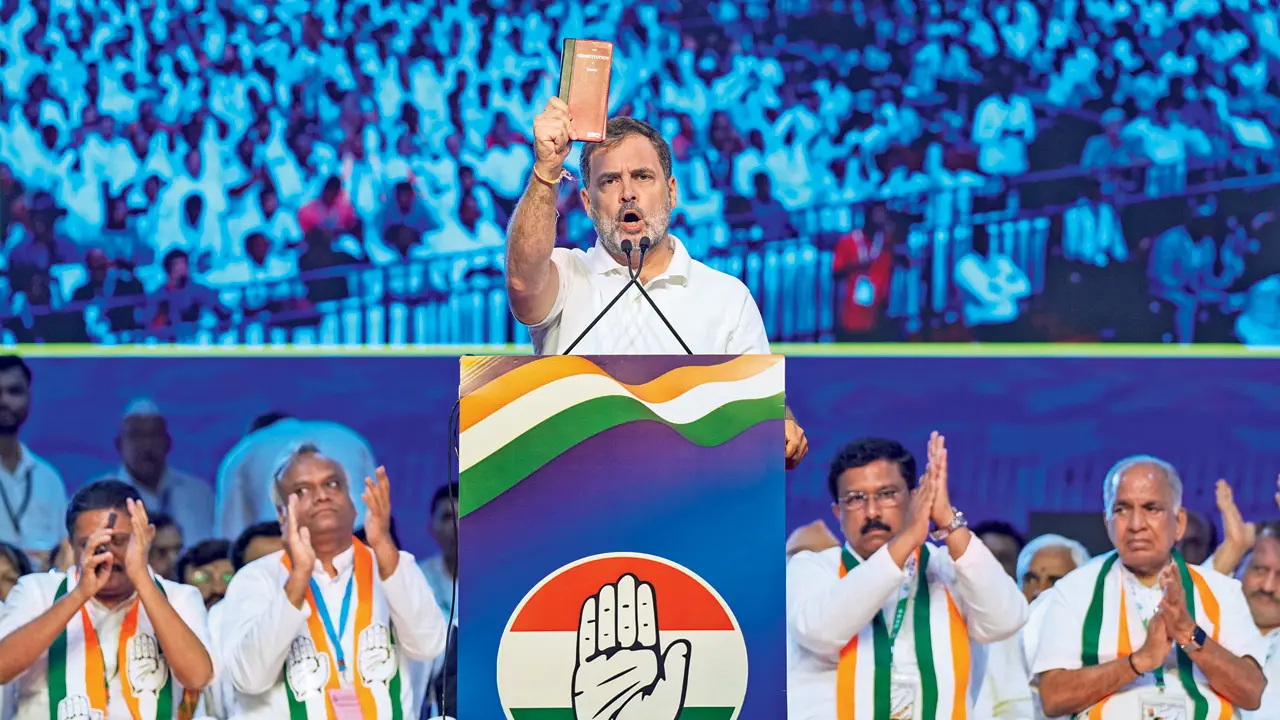
Congress leader and LoP in Lok Sabha Rahul Gandhi addresses the party’s ‘Vote Adhikar Rally’, in Bengaluru, Friday, August 8. Pic/PTI

Ajaz Ashraf For some years, a segment of Indian voters has nursed deep suspicion about Electronic Voting Machines, believing these are rigged to transfer votes cast for the Opposition to the Bharatiya Janata Party. This was their explanation, although without evidence, for the BJP’s electoral invincibility. Their suspicion has now given way to the popular worry that those who press EVM buttons could themselves be voters fraudulently listed in the electoral rolls. The fault is not in machines, but in humans, so to speak.

The new worry has emanated from Congress leader Rahul Gandhi’s presentation last week. He persuasively established that Mahadevapura, one of the seven Assembly segments of the Bangalore Central Lok Sabha constituency, had on its electoral rolls over one lakh bogus voters. Minus these votes, the Congress would have romped home, not the BJP, which won Bangalore Central by 32,707 votes in the 2024 Lok Sabha elections, Gandhi claimed not unreasonably.


There is no certainty whether all one-lakh bogus voters exercised their franchise in Mahadevapura. Gandhi showed, at least, two voting slips signed by one Shakun Rani. Yet the issue here is not just the number of bogus voters who actually pressed EVM buttons, but their inclusion in Mahadevapura’s electoral rolls based on palpably false information.


Glance at the data Gandhi furnished: around 12,000 were registered as voters more than once in Mahadevapura. This is a shocker given that the electoral rolls are digitised, eschewing the need for manually checking duplicate, triplicate or even quadruplicate registrations. Thousands were shown residing at fake or invalid addresses, with streets bearing the number zero. Scores of people claimed they were living in the same one-room apartment that they couldn’t have possibly shared. The electoral rolls listed people with photos that were either miniaturised or were missing. None of the first-time voters was between 18 and 23 years of age.

It defies common sense that these one lakh voters would risk punishment by furnishing false information without having the intention to vote. It’s also logical to assume that a large percentage of these bogus voters provided fake addresses because they didn’t reside in Mahadevapura — and were, at the same time, certain they wouldn’t be excluded from the electoral rolls on this count. What explains their certitude?

The inclusion of those in Mahadevapura who provided false information, obvious at a glance, suggests Election Commission of India officials were guilty of gross negligence, or they harboured an unfathomable insidious intention, or they were instructed to gloss over these anomalies. Any which way you look at Mahadevapura, the sanctity of its electoral rolls stands diminished. A fraudulent voter list cannot but vitiate the electoral process.

Yet the morass of one lakh fake voters in Mahadevapura runs deeper than the apparent. How could those who allegedly voted several times did so given that their fingers were dabbed with indelible ink? Did they possess a solution to remove the ink? Or was it that officials at polling booths didn’t ink their fingers or allowed them to vote despite their inky fingers? Didn’t they match the voter’s face with their photos? Above all, why didn’t the polling agents of the Congress, which rules Karnataka, object to electoral cheating? Were they bribed or threatened into keeping mum?

We don’t know the answers to these questions, but it can be said with certainty that the ECI’s conduct of elections has increasingly become sloppy. For Gandhi, though, Mahadevapura vividly illustrates that the ECI has deliberately skewed the once robust system for ensuring that the BJP retains its grip over power. Gandhi’s proposition will now have many takers, not least because the Union government has a decisive say in choosing the ECI’s commissioners.

Another reason for people doubting the ECI’s neutrality is its own opacity. It has always opposed the counting of 50 per cent, let alone 100 per cent, of Voter Verifiable Paper Audit Trail, or VVPAT, slips in all constituencies. When journalist Poonam Agarwal quizzed the ECI on the difference between the number of votes polled and votes counted, the data from its website disappeared. More recently, the government amended ECI rules to deny public access to CCTV footage of polling booths on the voting day. The footage could have helped cross-check the allegation of bogus voting. It refuses to provide machine-readable electoral rolls in order to thwart, it would seem, their quick and incisive analysis.

The ECI has also failed to provide a convincing explanation as to how 40 lakh voters were added to Maharashtra’s electoral rolls in the five months between the Lok Sabha and Assembly elections of last year, in contrast to only 32 lakh new voters being added in the previous five years. From 2004, in all previous election cycles, a substantially larger number of voters swelled Maharashtra’s electoral rolls over five years than they did in five months between the Lok Sabha and Assembly elections. Gandhi cited Mahadevapura as an explanation for the surge in Maharashtra’s electoral rolls.

Gandhi’s presentation has come in the wake of the disquiet over the ongoing revision of Bihar’s electoral rolls deepening. Already 65 lakh voters who were on the earlier electoral rolls have been deleted. This number will likely grow when the ECI publishes the final voter list for Bihar. Instead of trying to intimidate Gandhi, the ECI must quell the growing impression that Indian democracy needs to be saved from it.

The writer is a senior journalist and author of Bhima Koregaon: Challenging Caste.
Send your feedback to mailbag@mid-day.com
The views expressed in this column are the individual’s and don’t represent those of the paper.

"Exciting news! Mid-day is now on WhatsApp Channels Subscribe today by clicking the link and stay updated with the latest news!" Click here!

Did you find this article helpful?

Yes
No

Help us improve further by providing more detailed feedback and stand a chance to win a 3-month e-paper subscription! Click Here

Note: Winners will be selected via a lucky draw.

Help us improve further by providing more detailed feedback and stand a chance to win a 3-month e-paper subscription! Click Here

Note: Winners will be selected via a lucky draw.

mumbai columnists Ajaz Ashraf congress Lok Sabha rahul gandhi mumbai news

Mid-Day Web Stories

Mid-Day Web Stories

This website uses cookie or similar technologies, to enhance your browsing experience and provide personalised recommendations. By continuing to use our website, you agree to our Privacy Policy and Cookie Policy. OK