We should stop worrying about how the past is constantly being erased and start focusing on new roads or bridges instead

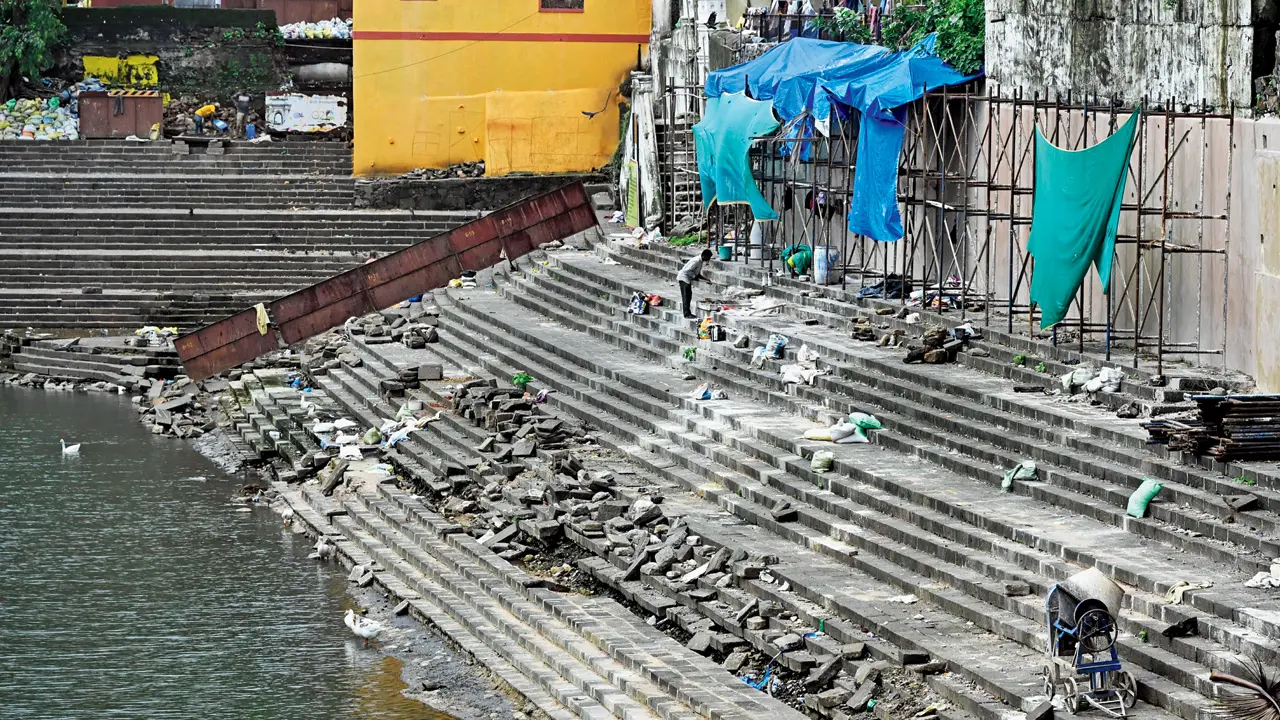
Restoration work going on the iconic Banganga Tank in June this year. PIC/ASHISH RAJE

A little over a decade ago, when the offices of this newspaper were located at Parel, I recall an old stone monument of some importance to the city’s historians being demolished a street away. It happened during one of those regular repaving exercises that every road in Bombay is subject to, and there was anger in some circles because contractors had allegedly been warned about the importance of that structure. I remember walking past it the day after it had been pulled out of where it had stood for 100 years and discarded to the side of the road.
No one knows what happened to that edifice, and it’s safe to assume no contractor paid a penalty for the act of destruction, but I was reminded of the incident a few weeks ago after a plaque on the Elphinstone bridge was reportedly damaged during some routine demolition work. Apparently, it dated to 1913 and was one of the few surviving artefacts linking Bombay to its early 20th-century railway heritage.
I can’t say I was surprised when I read about this mistake, because no one who has spent any time in India would refer to us as people who care about our past or heritage unless it’s to score a few points while arguing with Caucasians. So, naturally, given that renovations will always be more important in a country of 100 Smart Cities, assurances of protecting the plaque were ignored and the damage was done.
It happened again a month or so ago, when a portion of a heritage building owned by the Salvation Army Church collapsed, injuring two people. That was attributed to unauthorised repair work, but the argument was the same: how everything that ought to be protected almost never is.
Not long before that occurred, trustees of the Grade IIA heritage JN Petit Institute reported damage to their neo-Gothic structure thanks to construction work for the Metro III line underground. It wasn’t the only building affected by the Metro, and will certainly not be the last, but to list complaints about damaged foundations from residents across the city makes little sense. We all know that these people who complain only prioritise health and safety over the country’s progress. It makes me question their patriotism, as every right-thinking Indian should.
Last year, a contractor hired to clean the 1100-year-old Banganga tank used a machine to level its ancient steps, causing irreparable damage and prompting criticism from the Archaeological Survey of India. I was pleasantly surprised to hear from the ASI at the time, because I had no idea it was still functional. I blame my ignorance on visits to multiple heritage sites across Maharashtra and the country, few of which display signs of care, but maybe they act in mysterious ways that aren’t immediately obvious to the rest of us non-archaeology folk.
Reading this, I can see an outsider jumping to conclusions about lawlessness in Bombay when it comes to protecting the past. I must therefore hasten to point out that there has been a law in place for almost three decades now, aimed at identifying and protecting our heritage. Many neighbourhoods and precincts made it to the list, and if they don’t seem protected these days, it’s only because having a law and following it are two different things. There’s probably a law that prevents criminals from entering politics, for instance, but I don’t want to state the obvious here.
By 2017, historians were starting to point out that heritage precincts had already shrunk by up to 50 per cent on account of redevelopment, rising land values, and the erosion of rules. I shudder to think of what that figure must be now, whenever I take a taxi and find it moving past towers in places that weren’t supposed to have any.
I suppose the question of heritage is always going to be tricky in a city that has little time for the present, let alone the past. It seems unreasonable because, on the one hand, our government must make sure that vehicle owners and real estate companies — the most important people in Bombay — are well taken care of, with infrastructure projects planned and launched based on how life can be made more convenient for them. On the other, there are a few annoying critics who believe that a city loses an important part of its soul when it treats its history, culture, and legacy like garbage. Luckily for our future generations, everyone’s eyes are on a new coastal road.
When he isn’t ranting about all things Mumbai, Lindsay Pereira can be almost sweet. He tweets @lindsaypereira
Send your feedback to mailbag@mid-day.com
The views expressed in this column are the individual’s and don’t represent those of the paper.
Subscribe today by clicking the link and stay updated with the latest news!" Click here!