The media narrative began with a tale of babies killed in the October 7 attack.

Illustration/Uday Mohite
What is it about the skeletal body of the malnourished person, skin and bones from starvation, that kindles the compassion of the white person?
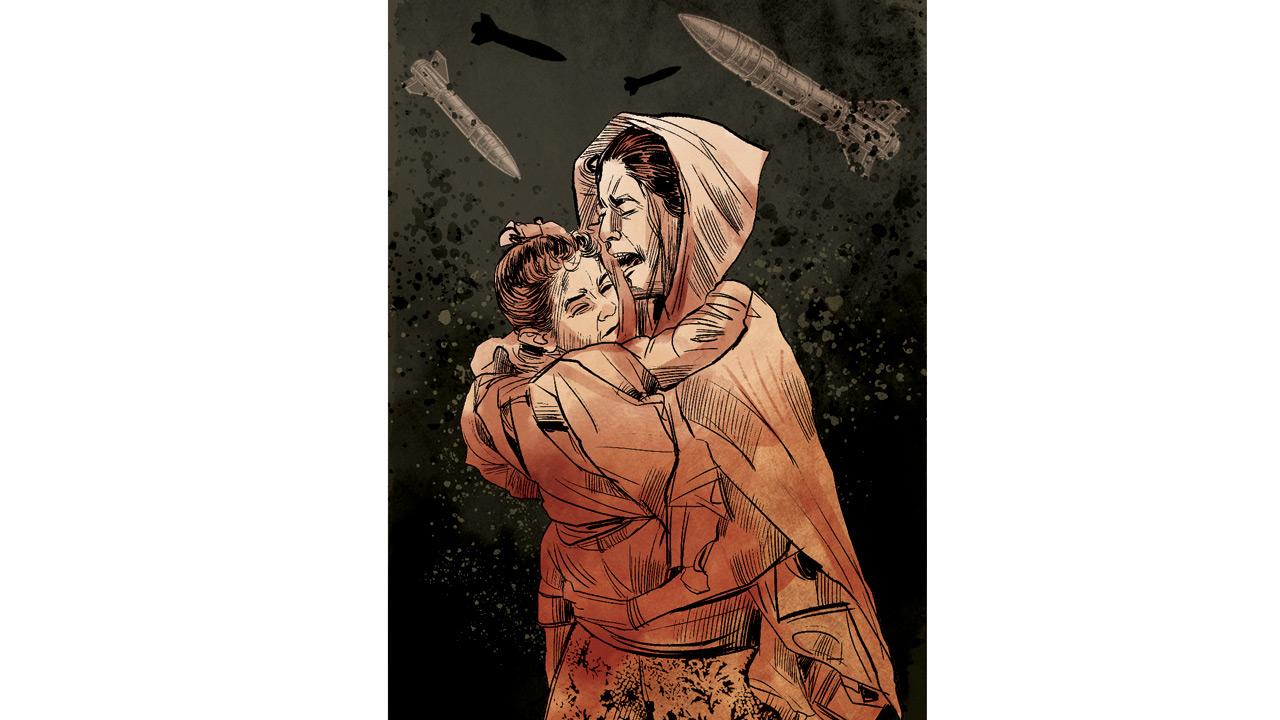
In October, it will be two years since the internationally supported war on Gaza began — close to two years that our screens have shown us horrific images of bloodthirsty aggression. We have watched, heartbroken and helpless as parents wept over the bodies of their children, and children wept over the bodies of their parents. It is also close to two years of watching Western media refuse to acknowledge the cruelty of the war, insisting that the oppressor is the victim, through the unceasing question: “But do you condemn Hamas?”
The media narrative began with a tale of babies killed in the October 7 attack. Though proven false in a few days, the story set the tone of moral outrage that justified an unjust war. Deftly, it put the onus on Palestinians to be reasonable in the face of an unreasonable aggression rooted in an unreasonable history. This emotional theatre, permitted Western outrage and made Palestinian anger and pain impermissible. If emotion makes us human, then it was clear how power determines who is allowed to be seen as human and who is not.
But now, for instance, Piers Morgan is no longer singing the “do you condemn Hamas?” chorus and feels things have “gone too far”. Bob Geldof has been invoked. Comparisons with Jewish skeletons of the concentration camps have begun.
I remember a friend in medical school saying their entire class was going to provide aid after an earthquake. Curious, I asked if they also had gone after some terrible riots. “That’s different. That’s political, this is human” they said.
The idea of famine transposes the question from political to humanitarian one — as if starving is a “natural” misfortune, not one that has been architected by colonisation. But as Emma Graham, Middle East correspondent for The Guardian writes, “the mathematics of famine are simple in Gaza. Palestinians cannot leave, war has ended farming and Israel has banned fishing, so practically every calorie its population eats must be brought in from outside.” This amount has been controlled for decades based on calculation of what the bare minimum calorie intake for survival must be. In 2006, a senior advisor to the Israeli Prime Minister said “The idea is to put the Palestinians on a diet, but not to make them die of hunger.” Currently, only a quarter of the minimum food needs of the population have been allowed to enter the territory.
Manmade famines are caused by a hunger for power, an appetite for cruelty, a zealous capitalist fundamentalism and the systematic cultural dehumanization of others in the service of these. Those who excused the very acts that have culminated in this demise of an entire people, are shocked now, but not when it was in the making, because it is undeniable proof of their complicity which must now be unmade, perhaps to drown out the questions they should be asking of themselves.
Paromita Vohra is an award-winning Mumbai-based filmmaker, writer and curator working with fiction and non-fiction. Reach her at paromita.vohra@mid-day.com
Subscribe today by clicking the link and stay updated with the latest news!" Click here!