Kantara: Forests with gods
Updated On: 06 November, 2022 07:56 AM IST | Mumbai | Meenakshi Shedde
Along with that primal scream of the Bhoota Kola dancer, which is also the cry for justice from the tribals—and Aakrosh





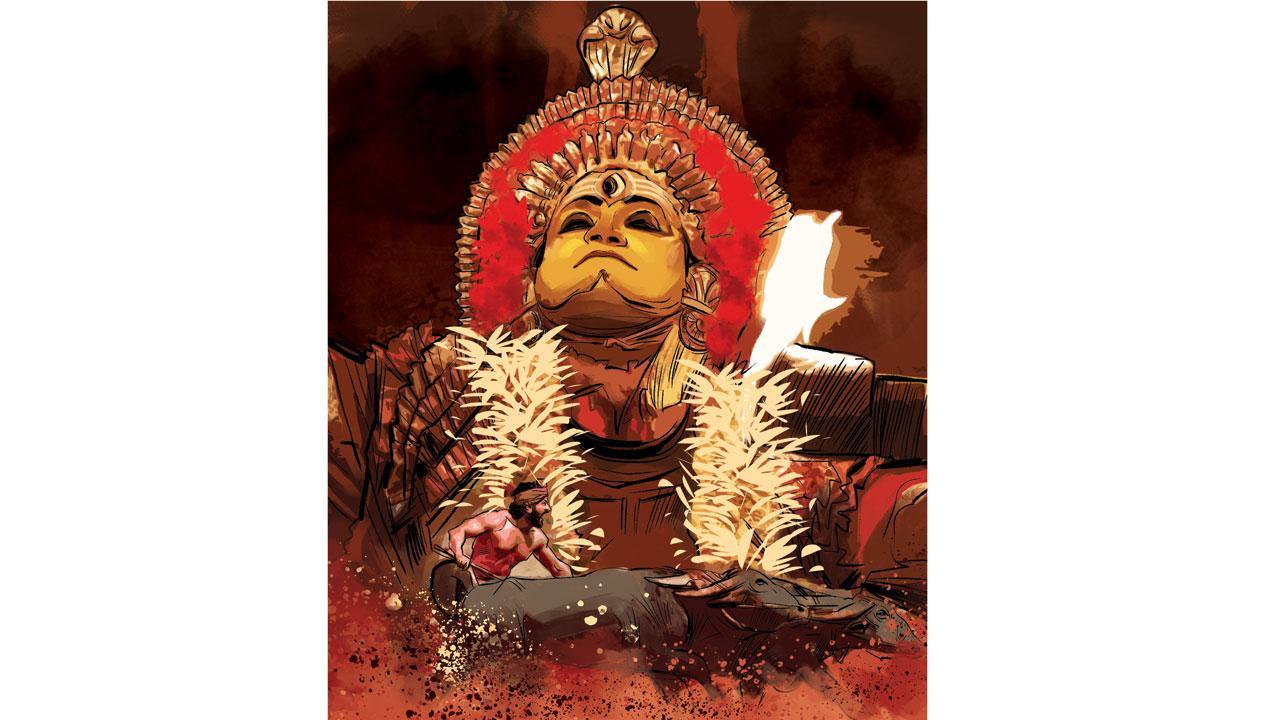
Illustration/Uday Mohite
 India lives in several centuries at the same time, as Shyam Benegal once said. Director-actor-writer Rishab Shetty’s Kantara (Mystical Forest, Kannada), is a strong mainstream film, yet explores the vital jal-jangal-jameen theme, and how our present is deeply informed by the past, faith and tradition. It is currently still in cinemas, including dubbed in Hindi, and in English subtitled versions.
It is fascinating how the varied strands of mainstream South Indian cinema contrast with Bollywood. If SS Rajamouli’s Baahubali and RRR (Telugu) are a reference point in terms of imagination, rootedness, VFX, scale and box office, then Mani Ratnam’s Ponniyin Selvan PS-1 (Tamil) showed how you can make compelling historical fiction without overwhelming VFX. In Kannada cinema, Prashanth Neel’s KGF 1 and 2 are more in Baahubali/RRR mode, emphasising high-octane action, cinematography and VFX. Rakshit Shetty’s Ulidavaru Kandanthe (As Seen by the Rest, Kannada) was fabulous—a mainstream crime drama set in a fishing village, rooted, yet ultra cool in execution, and Raj B Shetty’s Garuda Gamana Vrishabha Vahana (Kannada), a crime thriller deeply rooted in the epics and local small town detail, was excellent. Rishab Shetty’s Kantara is closer in spirit to the last two, more interested in a rooted story, than flash. Bollywood, obsessed with stars, is less interested in the story, our epics or ordinary lives around us. Rishab Shetty has even courageously produced diverse indie films Natesh Hegde’s Pingyao festival winner Pedro and Jaishankar Aryar’s Busan festival winner Shivamma.
Trending Stories
Latest Photos
Latest Videos
Latest Web Stories
ADVERTISEMENT

Ganeshotsav 2026

ADVERTISEMENT