










NASA and Lockheed Martin successfully conducted the first test flight of the X-59, a quiet supersonic jet designed to reduce the sonic boom to a gentle thump. The flight over California marks a major step toward faster, quieter commercial air travel that could one day cut coast-to-coast flight times in half in the United States
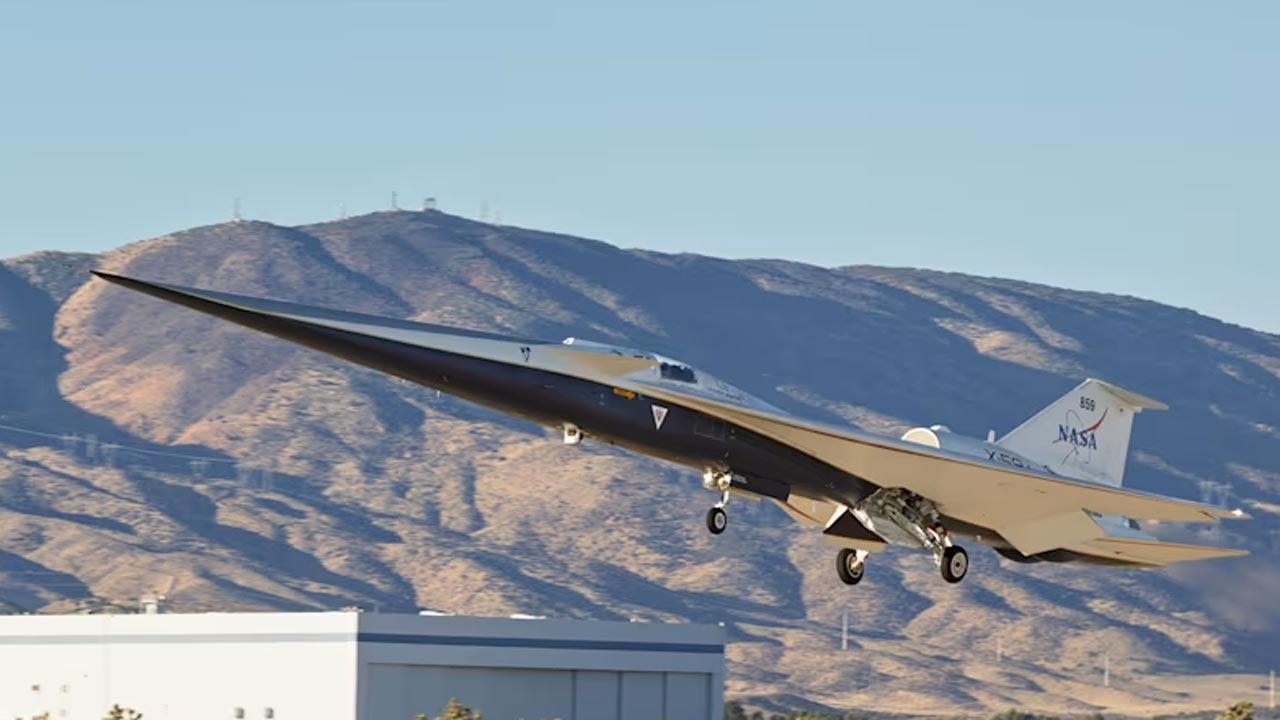
Pic/AP
A supersonic jet plane designed to make very little noise took flight for the first time this week, cruising over the southern California desert just after sunrise in what could be the first step toward much faster commercial travel, according to NASA. NASA and the US weapons and aerospace manufacturer Lockheed Martin successfully tested a jet Tuesday that is capable of travelling faster than the speed of sound. Aircraft have been capable of flying at supersonic speeds since the 1940s. The problem is that ultra fast planes are banned for commercial travel over land because they make an explosive " and frightening " "sonic boom" that disturbs the public.
The supersonic aircraft Concorde, operated through British Airways and Air France, made transatlantic flights starting in the 1970s. But those were halted in 2003 after a fatal crash three years earlier tanked demand for the expensive service. If NASA and Lockheed Martin can successfully lower the volume, the new jets could slash travel time between places like New York City and Los Angeles roughly in half, opening up an entirely new air travel industry. The X-59 is capable of flying faster than the speed of sound with what Lockheed Martin described as only a "gentle thump."
Tuesday's test flight was still slower than the speed of sound and was intended primarily to test the plane's structural integrity. Still, it was celebrated as a significant step toward the widespread use of supersonic travel. The compact, 100 foot plane launched from the Lockheed Martin Skunk Works facility in Palmdale, about 60 miles north of Los Angeles, coasted over the desert and landed near NASA's Armstrong Flight Research Centre about 40 miles away.
The first airplane to move faster than the speed of sound 1,235 kph took off nearly 80 years ago in 1947, according to NASA. But flights at that speed were banned over land in the United States soon in response to polling. Residents complained that the noise reverberated through large cities, rattling windows and startling the public. NASA and Lockheed Martin have for years been working on a solution that would circumvent the noise and lead to regulatory change, in large part to make commercial supersonic travel within the United States possible.
This story has been sourced from a third party syndicated feed, agencies. Mid-day accepts no responsibility or liability for its dependability, trustworthiness, reliability and data of the text. Mid-day management/mid-day.com reserves the sole right to alter, delete or remove (without notice) the content in its absolute discretion for any reason whatsoever
 Subscribe today by clicking the link and stay updated with the latest news!" Click here!