Home / News / World News / Article /
Tiny elephant 3-D printed inside a cell
Updated On: 11 July, 2025 01:01 PM IST | Berlin | Agencies
That makes it possible to create incredibly detailed microstructures by moving the location of the laser’s focus.





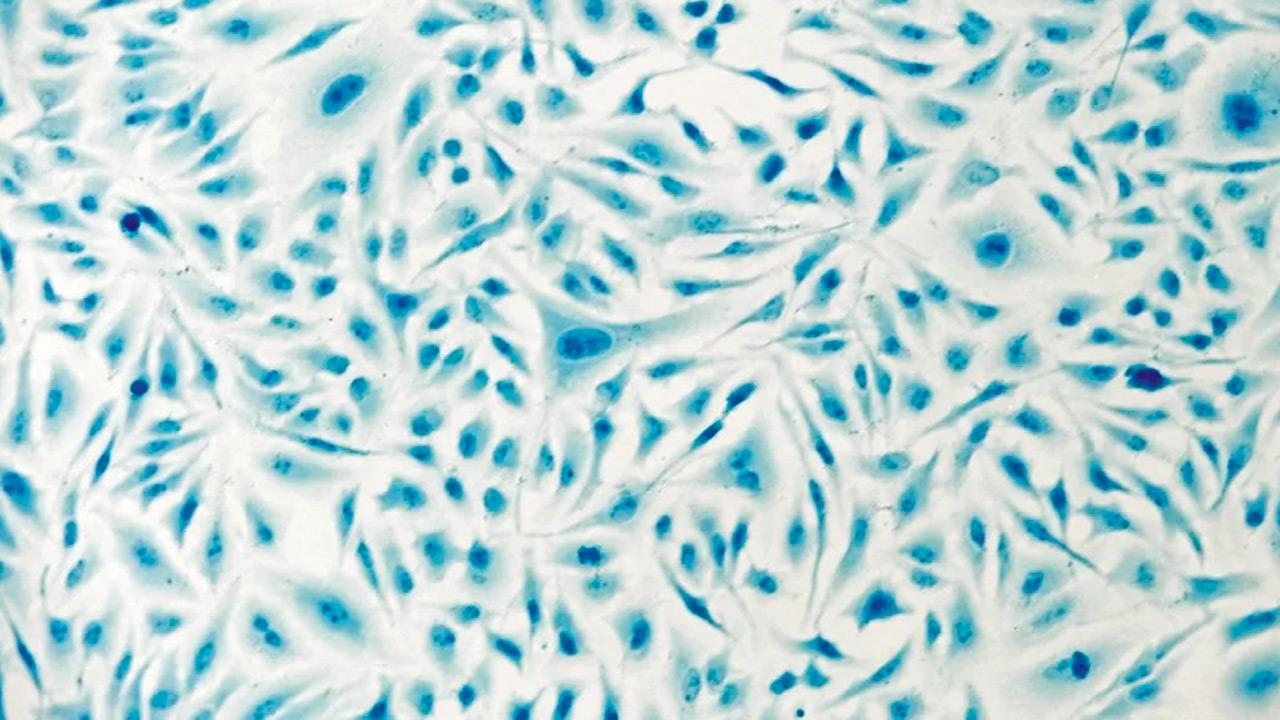
Microstructures 3-D printed in human cells. PIC/arXiv.org
For the first time, scientists have 3-D printed objects within living cells, including a 10-micrometer long elephant and tiny “barcodes” that could help track individual cells. Remarkably, many of the cells lived to tell the tale, researchers reported in a paper submitted June 16 at arXiv.org.
The researchers used a technique called two-photon polymerisation, in which a liquid resin called a photoresist solidifies when it absorbs two photons from a laser simultaneously. The laser’s light is focused enough to produce that double whammy only in a small volume. That makes it possible to create incredibly detailed microstructures by moving the location of the laser’s focus.
Scientists have previously implanted trinkets in cells via the process of phagocytosis, in which a cell swallows up a foreign object. But only certain varieties of cells are keen gobblers. 3-D printing has the advantage of working in other types of cells. But even with precautions, many of the cells died within 24 hours.
Trending Stories
Latest Photos
Latest Videos
Latest Web Stories
ADVERTISEMENT

Ganeshotsav 2026

ADVERTISEMENT