shot-button
E-paper E-paper
Home > News > World News > Article > Syria Bedouin clans withdraw from Sweida after US brokered ceasefire aid convoys enter

Syria: Bedouin clans withdraw from Sweida after US-brokered ceasefire, aid convoys enter

Updated on: 20 July,2025 08:49 PM IST  |  Mazraa
AP |

Following a US-brokered ceasefire and over a week of intense fighting, Syria's armed Bedouin clans have withdrawn from the Druze-majority city of Sweida, allowing humanitarian aid to enter. The clashes, which caused hundreds of deaths and involved Israeli airstrikes targeting government forces siding with Bedouins, sparked targeted sectarian attack

Syria: Bedouin clans withdraw from Sweida after US-brokered ceasefire, aid convoys enter

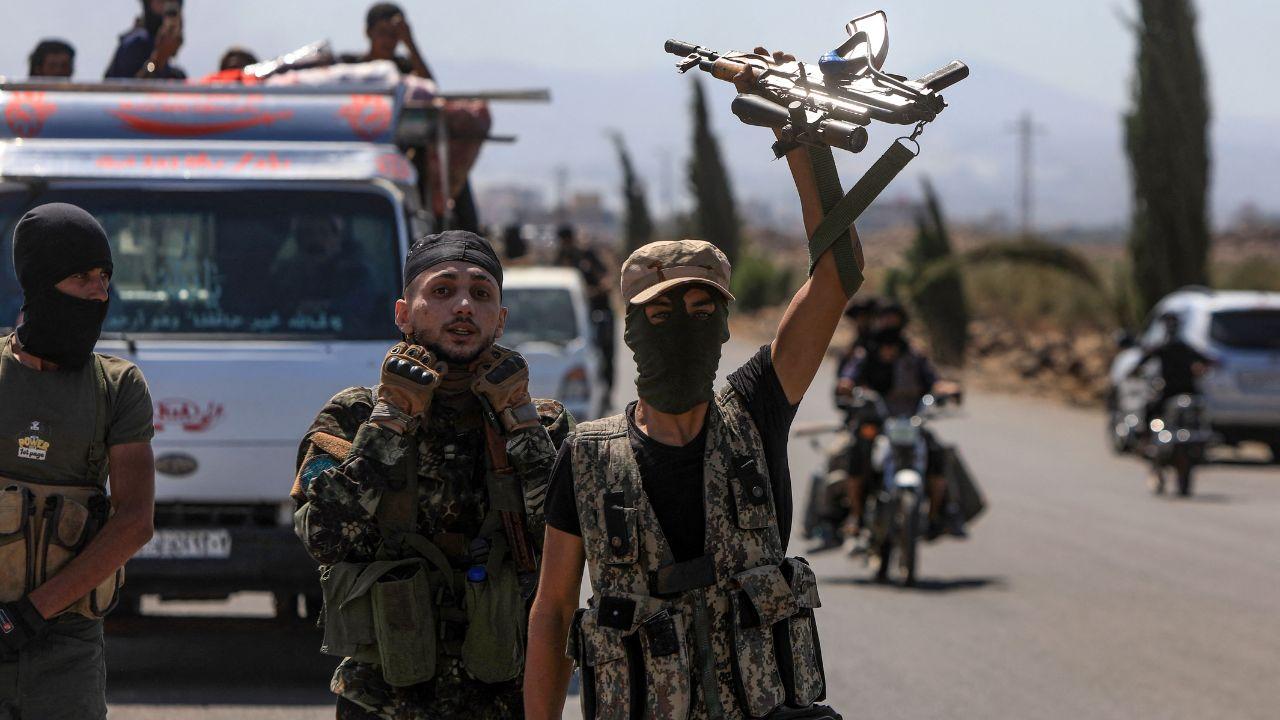
Fighters from Bedouin tribes gather in the al-Mazraa village in Syria's southern Sweida governorate, as clashes with Druze gunmen continue. Pic/AFP

Syria's armed Bedouin clans on Sunday announced their withdrawal from the Druze-majority city of Sweida, following over a week of intense clashes and a US-brokered ceasefire. This development allowed humanitarian aid convoys to begin entering the battered southern city.

The fighting between militias of the Druze religious minority and Sunni Muslim clans resulted in hundreds of deaths and threatened to destabilise Syria's already fragile post-war transition. Israel also launched dozens of airstrikes in the Druze-majority Sweida province, targeting government forces that had effectively sided with the Bedouins. The clashes also triggered a series of targeted sectarian attacks against the Druze community, which were subsequently met with revenge attacks against the Bedouins.


A series of tit-for-tat kidnappings initially sparked the clashes in various towns and villages within the province, which later spread to the city itself. Government forces were redeployed to halt renewed fighting that erupted on Thursday, before withdrawing again.


Interim President Ahmad al-Sharaa, who was seen as more sympathetic to the Bedouins, had attempted to appeal to the Druze community while maintaining his criticism of their militias. He later urged the Bedouins to leave the city, stating that they "cannot replace the role of the state in handling the country's affairs and restoring security." In an address broadcast on Saturday, he said, "We thank the Bedouins for their heroic stances but demand they fully commit to the ceasefire and comply with the state's orders."

Dozens of armed Bedouin fighters, alongside other clans from around the country who came to support them, remained on the outskirts of the city. They were cordoned off by government security forces and military police. These groups attribute the clashes to Druze factions loyal to spiritual leader Sheikh Hikmat al-Hijri and accuse them of harming Bedouin families. "We will not leave until he turns himself in alongside those with him who tried to stir sedition. And only then will we go home," Khaled al-Mohammad, who travelled to the southern province with other tribesmen from the eastern Deir al-Zour province, told The Associated Press.

The Bedouins' withdrawal brought a cautious calm to the area, facilitating the movement of humanitarian convoys. The Syrian Red Crescent announced on Sunday that it had dispatched 32 trucks loaded with food, medicine, water, fuel, and other aid, as the recent fighting had left the province grappling with power cuts and severe shortages.

Syria's state news agency, SANA, reported the convoy's entry into Sweida on Sunday, but accused al-Hijri and his armed supporters of turning back a government delegation that had accompanied another convoy. The Foreign Ministry, in a statement, clarified that the convoy accompanying the delegation included two ambulances loaded with aid provided by local and international organisations.

Al-Hijri, in a statement, did not directly address the accusations but welcomed any assistance for Sweida and slammed what he claimed were distorted campaigns against him. "We reaffirm that we have no dispute with anyone on any religious or ethnic basis," the statement read. "Shame and disgrace be upon all those who seek to sow discord and hatred in the minds of young people." The UN International Organisation for Migration reported that 128,571 people were displaced during the clashes, with 43,000 of those displacements occurring on Saturday alone.

Washington's special envoy to Syria, Tom Barrack, stated that the clashes and atrocities had "overshadowed" an initial cautious optimism about the country's post-war transition and the international community's lifting of sanctions. "All factions must immediately lay down their arms, cease hostilities, and abandon cycles of tribal vengeance," Barrack posted on X. "Syria stands at a critical juncture – peace and dialogue must prevail – and prevail now."

Dozens of Druze civilians were killed in a series of targeted attacks within the city at the hands of Bedouin fighters and government forces. Videos also surfaced online showing fighters destroying portraits of Druze religious officials and notables in homes, and shaving the moustaches of elderly Druze men, an act deeply insulting to their culture and tradition. In retaliation, Druze militias attacked Bedouin-majority areas on the outskirts of the province, forcing families to flee to the neighbouring Daraa province.

More than half of the roughly 1 million Druze worldwide reside in Syria. Most of the remaining Druze population lives in Lebanon and Israel, including in the Golan Heights, which Israel captured from Syria in the 1967 Mideast War and annexed in 1981.

Syria's Druze largely celebrated the downfall of the Assad family, which ended decades of tyrannical rule. While they held concerns about al-Sharaa's de facto Islamist rule, a large number wished to approach matters diplomatically. Sheikh Hikmat al-Hijri and his supporters, however, appear to have favoured a more confrontational approach with al-Sharaa, contrasting with most other influential Druze figures. His critics also point to his previous allegiance to Assad. Nevertheless, the recent clashes and sectarian attacks on the minority community have made a growing number of Druze in the area more sceptical of Damascus' new leadership and increasingly doubtful of peaceful coexistence.

This story has been sourced from a third party syndicated feed, agencies. Mid-day accepts no responsibility or liability for its dependability, trustworthiness, reliability and data of the text. Mid-day management/mid-day.com reserves the sole right to alter, delete or remove (without notice) the content in its absolute discretion for any reason whatsoever


"Exciting news! Mid-day is now on WhatsApp Channels Subscribe today by clicking the link and stay updated with the latest news!" Click here!

Did you find this article helpful?

Yes
No

Help us improve further by providing more detailed feedback and stand a chance to win a 3-month e-paper subscription! Click Here

Note: Winners will be selected via a lucky draw.

Help us improve further by providing more detailed feedback and stand a chance to win a 3-month e-paper subscription! Click Here

Note: Winners will be selected via a lucky draw.

syria news world news International news united states of america

Mid-Day Web Stories

Mid-Day Web Stories

This website uses cookie or similar technologies, to enhance your browsing experience and provide personalised recommendations. By continuing to use our website, you agree to our Privacy Policy and Cookie Policy. OK