There are old-school feminists and then there are social media feminists. But they are both doing the Lord’s work — telling off patriarchy, men, and society, one lesson at a time. Why choose when we can have our pick?

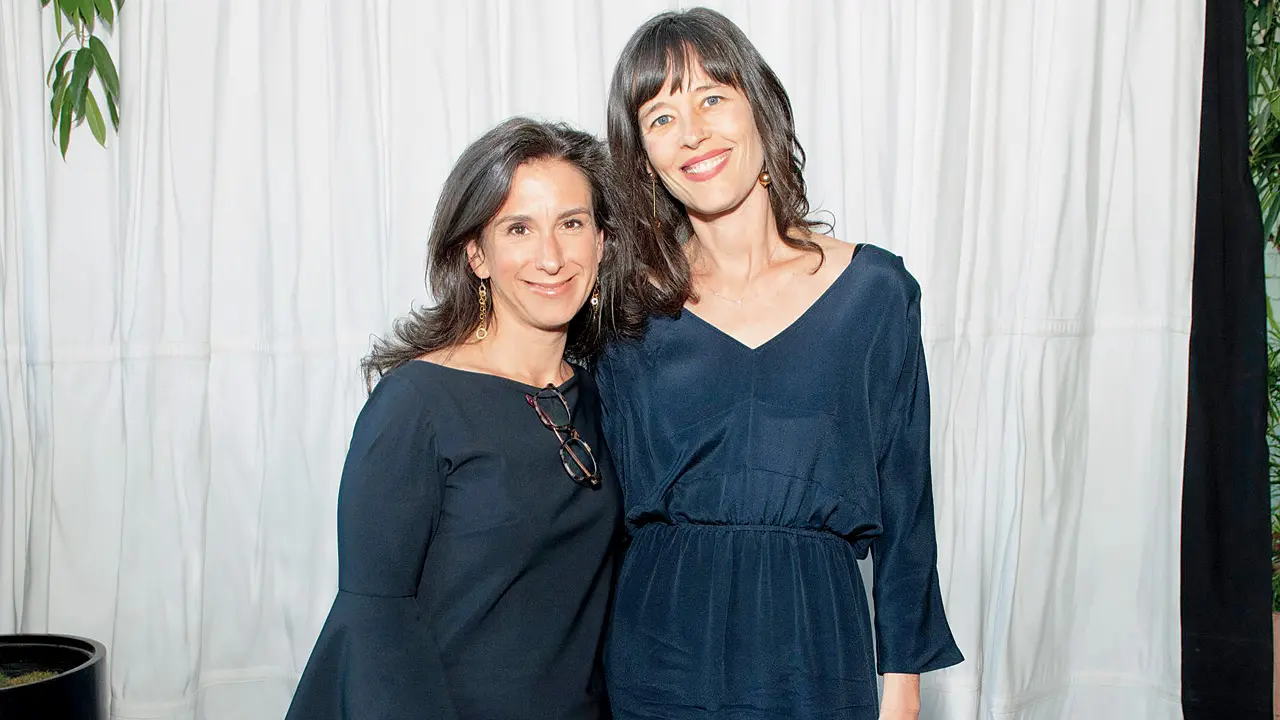
Jodi Kantor and Megan Twohey are two journalists who broke the Harvey Weinstein sexual assault story in Hollywood that started the original #MeToo movement in the United States. PIC/GETTY IMAGES
Hairy underarms, Karva Chauth, trad wives — women have something to say and social media is the medium. At first glance, online feminism might feel skin-deep. But a closer look will tell you that maybe for the woman who has no access to the “privileged” concept, that men and women are equal (yes, that’s feminism in a nutshell) and not one better than the other.

Tanushree Dutta accusation against ex-colleague Nana Patekar, was the spark that ignited the #MeToo movement in India. PICS/GETTY IMAGES
We spoke to women who said that many times, the symbolism of feminism trumped the understanding of it, and ground issues like women’s autonomy, education, rape, and abuse were missing in the conversation. On the other hand, feminists with a heavy social media presence told us that women and girls living in small towns and villages often DM them asking for help, needing advice and sometimes just to vent. But they all agreed: Not being a feminist was not an option. Instead of quibbling over it, why not choose your feminist, and go all the way.

Malala Yousafzai was shot in the head by Taliban in 2012 while going to school. She has become a symbol of women’s right to education
‘I talk about issues that affect me daily’
Pujarini Pradhan (@lifeofpujaa) Homemaker, 26
People think I am poor,” says Pujarini Pradhan, a 26-year-old young mother, whose content on Instagram has garnered her over 2.3 lakh followers in barely a month and a half. “They think we don’t have food or we don’t have clothes, but this is how middle-class rural India looks,” she says.

Pujarini Pradhan’s raw explanation on her experience as a woman in a village in West Bengal is unique, garnering her over 2.3 lakh followers
Pradhan is a housewife from East Midnapore in West Bengal, but has become a social media influencer as a result of her raw, unapologetic, and grounded take on women’s rights and issues. The reason is probably because this saree-clad housewife living in the village speaks English, a tactic that she deployed so that the people around her village wouldn’t understand what she was saying. “I can’t believe that people are listening to what I have to say, I just wanted to talk about issues that were affecting my day-to-day life,” she says.
Pradhan talks about everything that affects her and women at large. One of her most interesting Reels is one in which she speaks of completing her education, that she had given up during the COVID-19 pandemic. “In 2018, I moved to the city and was pursuing my BA honours in English when the pandemic hit. I got married after sitting at home for one-and-a-half years. But, I am lucky because my husband wants me to complete my studies,” she says. Soon after her marriage, her husband registered her at college to complete her BA, and she moved to the city alone again, but she moved closer back home soon due to some unforeseen circumstances. “On the insistence of my husband, I began to prepare for UPSC exams, but I got pregnant. So, that didn’t happen,” she adds.

Gisele Pelicot has become a feminist icon after she took on her husband and 51 other men on charges of rape
Pradhan’s feminism is grounded in reality. She made a Reel about how she enjoyed wearing jeans in college, even though she has replaced them with sarees now. “I do wear churidar when at my parents home. It’s easy for someone who doesn’t understand the society I live in to tell me to wear jeans and keep my hair open. I have to be cognisant of the place where I live, about my family, and that’s okay because my freedom doesn’t depend on what I wear,” she says. She feels her freedom lies in completing her education, “I hope one day I will be able to finish that degree, and move closer to the city. If I can earn a bit from Instagram, it will help,” she adds.
Pradhan has constantly praised her husband, who shares responsibilities with her around the house, as well as her mother-in-law, be it in cooking or raising their one-and-a-half-year-old son, Shreyan. “My husband is very aware that I have these hopes and dreams, and he has always been my rock. I just want people to understand that just because I don’t dress like them or look like them, doesn’t mean that I am unhappy,” she says. “Realities of women in rural India are different, and it takes time to build a life anywhere, be it a city or village,” she adds.
‘Social media feminism makes women feel less alone’
Divija Bhasin (@awkwardgoat3) Social media feminist, 28
For Divija Bhasin, who is better known on Instagram as Awkward Goat (@awkwardgoat3), feminism has quite controversially led her to reclaim the r-slur for women. But that’s not how it started. Change always begins at home. Her parents taught her to be a free thinker and fight for equality. At 28, this has translated into a social media presence of over five lakh followers on Instagram. She educates them about how patriarchy cages women, in smaller ways, like wearing a mangalsutra, or bigger ways like violence against women.

Divija Bhasin has controversially reclaimed the slur ‘r**di’ on Instagram
Though she has garnered a loyal fanbase of women who credit her with teaching them the ways of feminism, there’s just as much hate. Repeatedly, she has been called the r-slur. “For them [haters], r**di means an independent woman who isn’t scared. So yes, I am that. I guess I am r**di,” she says. Bhasin is a Delhi-based professional psychologist. In her content, she also speaks of feminism. Being recently married, she talks about how to bridge the gaps of equality in marriage and religion.
The reclaiming of r**di has garnered a lot of hatred from those who call her the slur, but also, from staunch feminists. Critics say that Bhasin is not a sex worker. She is no one to reclaim this word. Bhasin says, “I’m not a sex worker, yes, but they’re [haters] not using it in that context. They call me that because they don’t agree with what I’m saying and want me to be quiet.”
“I’m trying to say that being called a sex worker is not an insult. It’s literally someone’s job, and while there’s exploitation in that industry, putting that aside, we’re not being called r**di in its literal sense,” she says. Bhasin’s audience of young girls often confides in her. “I started getting DMs from girls saying their parents call them a r**di to control or punish them. That shocked me,” she says, “I got messages from girls — literally 15-year-olds — saying it made them feel better.”
Bhasin feels that social media can help, because while we usually talk about broad issues like crimes against women in the mainstream, we skip the everyday things that are equally detrimental. “Of course, it won’t lead to complete change — that takes time — but it’s a way to disseminate information. Also, feminism on social media helps women feel less alone. For example, a lot of my followers tell me about how I put into words what they’ve always felt but couldn’t articulate. That’s powerful.”
‘I don’t want to label anyone’s feminism’
Trisha Shetty, Founder of SheSays, 35
Trisha Shetty is an Indian feminist, lawyer, and social activist best known as the founder of SheSays, a youth-led non-profit that works towards gender equality and ending sexual violence. She’s one of the first feminists who has been able to optimise digital advocacy to sharpen her grassroots activism. Currently she lives between Paris and Mumbai.

Trisha Shetty optimised social media by launching viral campaigns like #LahuKaLagaan to bring real-life change
But what made the transition to social media so smooth? “Because before starting my online advocacy, I did my on-ground work first,” she says, “Everything that I speak for is grounded in the fact that I have worked for years within communities. I’ve gone to police stations, I’ve gone to hospitals, I’ve gone to courtrooms, I know what the system looks like, which is why I’m able to advocate for a better system.”
As a lawyer by training, Shetty spent extensive time visiting police stations and hospitals to understand how laws around sexual assault function in practice. Despite the Criminal Procedure Code clearly stating that rape survivors are entitled to immediate medical care without first filing a police complaint, nearly every hospital she approached — government and private alike — refused to treat survivors without one. Private hospitals, in particular, cited the “headache” of legal paperwork and courtroom testimonies as reasons to turn survivors away. “My online advocacy is shaped by knowing what actually happens on the ground,” she says.
Shetty has found social media to be an excellent way to amplify her cause. SheSays launched the viral #LahuKaLagaan campaign in 2017, calling for the removal of the “tax on blood” — the 12% GST on sanitary pads and tampons when they were categorised as luxury products. Its widespread public support ultimately led to the government scrapping the tax in 2018. “Before we used social media to launch the campaign, we filed petitions with all government agencies. We went to the Bombay High Court, but no one paid attention to us,” she says, “It took going on social media, leveraging Twitter back then, to become this huge viral campaign.”
As all other feminists, Shetty too is no stranger to haters on the internet. “I call them popcorn-eating bystanders. Working on ground means getting abused, having seen people you know get arrested, yourself getting threatened to get arrested. You getting systematic death threats, you witness people firsthand, who’ve been raped and you’ve been walking by their side and seeing whether they’re provided justice or not,” she says, “If you’ve done this work, I will take all your criticism, all your feedback.”
Shetty is especially frustrated with the infighting that happens among people of the same ideology. “We can become a circular firing squad,” she says, “Is it a lifestyle feminist, social media feminist? I don’t know what these labels even are. I don’t want to label your feminism. Because the more I judge people, the more I will get judged. And if I’m asking for compassion, I want to lean on the same. I always say, ‘If you’re not old enough to know, you’re young enough to learn’.”
‘Women today stand on the shoulders of older feminists’
Amol Kerkar, Vice President of Stree Mukti Sanghatana (SMS), 58
Back in 1985, the United Nations (UN) declared it to be the International Women’s Year. Amol Kerkar was 18 years old at the time and, after attending the UN programme for the same, Kerkar and a group of older and young women decided to form the Stree Mukti Sanghatna in Mumbai. “We told ourselves that we need to do something for women,” she says.

Amol Kerkar of the Stree Mukti Sanghatana is celebrating its golden jubilee this year. PIC/SAYYED SAMEER ABEDI
It was difficult to build awareness, because many women were uneducated, and so the message was delivered through skits and catchy songs. “As a result we had to give them the information about their rights, the idea of equality, and much more through street plays that we staged at farms and industrial estates,” says the ex-RBI employee. Kerkar has been crowdfunding a lot of campaigns through donations from her colleagues and friends. “The campaigns addressed domestic violence and told women that they were not second to anyone,” she adds.
Ask her about social media feminism, and Kerkar draws back to 1990 when Foreign Direct Investment entered the country. “I am glad that there is discourse about feminism on social media. But I feel that we are unable to go deep; I don’t blame the young women for it though,” she says. “Financial markets, political symbolism, as well as consumerism, have created an atmosphere where women are competing against each other. For example, we might applaud Gudi Padwa rallies where women ride motorbikes in navvaris [nine-yard saree], phetas [turban] and goggles. But this might distract us from actual feminism,” she adds.
‘Forget the optics, the right to say anything is non-negotiable’
Shobhaa De, Journalist and writer, 77
Shobhaa De feels that social media is a weapon and a platform that feminists should and must wield. “Social media provided a loud and clear voice to women — sans filters. They could express themselves openly, and fearlessly — a basic right which had been denied to them for centuries,” she says. While admitting that the medium might have some pitfalls, she feels it offers more good than bad: “It’s [social media] a mixed bag, for sure, but with more upsides than downs. Women finally got the chance to be seen and heard on their own terms,” she adds.

Journalist Shobhaa De feels that women have right to say their piece. PIC/GETTY IMAGES
De feels that social media is a great equaliser, and cuts across social strata and status. “It is not reserved for the elite. In fact, some of the most radical and thought-provoking content is being shared by women in small towns and villages across India,” she says. Regarding the accusation that social media is often more frivolous, De feels every woman has a right to present the way she wants, “What a woman chooses to project is entirely up to her. Forget the optics. If the conversation is about flashing underarm/pubic hair, or wearing thongs, or bikinis, it may seem like a cosmetic symbol. But maybe, it’s a way of defying old rules and
norms,” she adds.
She had started writing at the age of 16, and her experiences have informed her own theory on feminism. “Feminism is instinctive and non-negotiable. I have always taken my personal feminism for granted. The wonderful part is how many of today’s young girls feel the same internal strength to be themselves,” she adds.
1848
The year pioneers like Savitribai Phule, founded India’s first school for girls
1882
Tarabhai Shinde wrote one of the country’s first feminist texts, Stri Purush Tulana (A Comparison Between Women and Men)
2012
Malala Yousafazai was shot for demanding education. She became an icon for Gen Z, who studied about her in school and realised that she not only survived, but is thriving
2018
Actor Tanushree Dutta brought the American #MeToo movement to India
2024
Gisèle Pelicot won the case against her husband and 51 other men who raped her. Refusing to cover her face during the trial, she stated, “The shame isn’t ours to feel.”
Subscribe today by clicking the link and stay updated with the latest news!" Click here!