











From Apulian tradition to global technique, a chef’s story unfolds course by course

Polpo Scottato; (right) Uovo Croccante
On the final day of Masters of the Table at Celini, we met Chef Vittorio Lepore just before service began. The menu, he told us, was deeply personal. “It reflects who I am, where I come from, and the journey that has shaped me as a chef,” says the Bari-born chef who now leads the kitchen at Verso, Grand Hyatt Abu Dhabi.
He’s here in the city for the launch of Masters of the Table 2026, a year-long culinary series by Grand Hyatt Mumbai that spotlights globally celebrated chefs across its signature restaurants. The opening chapter, L’Essenza d’Italia, offered an elevated, modern expression of Italian cuisine, rooted in heritage, travel, and thoughtful technique. It spelled the story of Italy, but also of many things beyond it, including the international journeys that took him from Florence to Copenhagen, Oxfordshire to Beijing, thus carrying a distinctly global sensibility. Michelin-trained, he has honed his craft in some of the world’s most celebrated kitchens, including Noma in Copenhagen and Belmond Le Manoir aux Quat’Saisons in England. However, at its core, his cuisine remains rooted in Apulian tradition, elevated through modern technique and ingredient-led storytelling, reflecting an evolving, contemporary expression of Italian cuisine shaped by travel, curiosity, and craft.
Bari, where Lepore was born, is a port city in the beautiful Puglia region in southeast Italy, on the Adriatic Sea, where seafood is part of everyday life. “That love for the sea naturally finds its way onto my plates. At the same time, the menu also traces my travels across Europe, Asia, and now the Middle East, each place adding a layer to how I cook and think about food,” he adds.
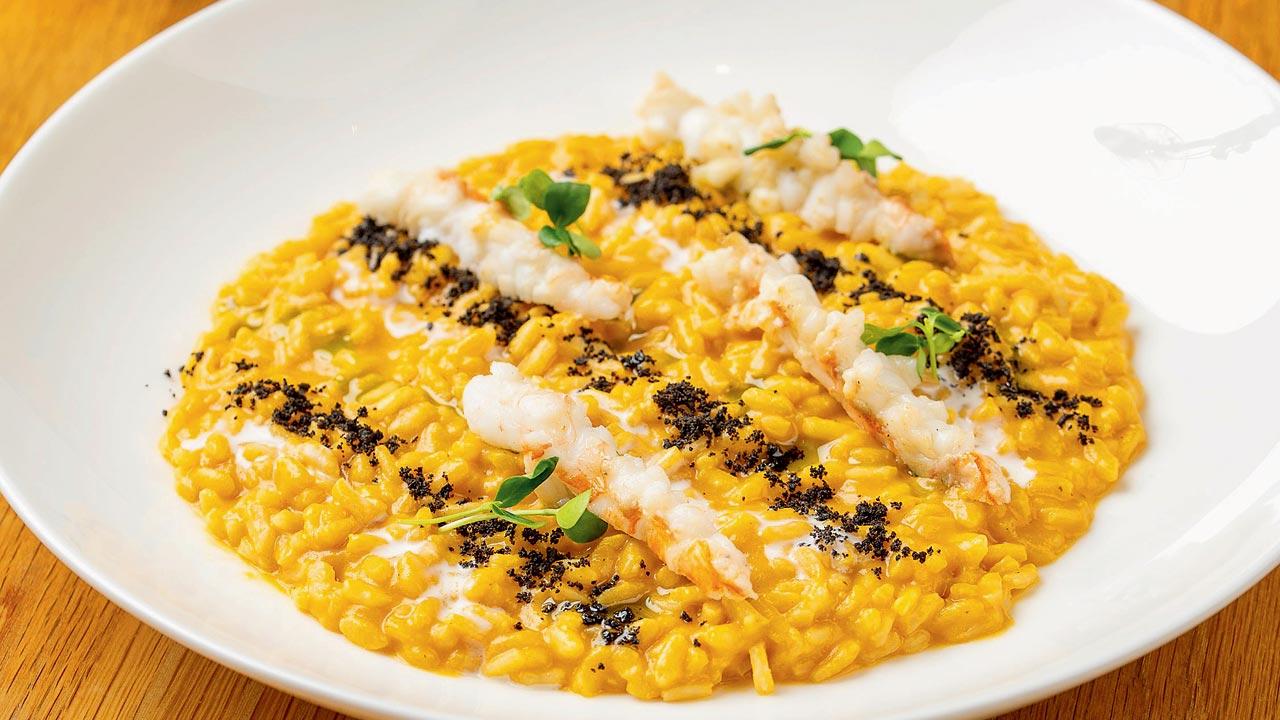 Risotto Agli Saampie Agrumi
We start the meal with Uovo Croccante that had crispy egg, made by soft boiling or poaching the egg, breading it, before deep frying. This was served with peas and leeks. Making the dish involves a technique Lepore learned while working in northern Italy, in the Dolomites, under Chef Martin Noflatscher. “He is an incredible mentor who taught me not just technique, but discipline. Eggs are central to Italian cooking, but this preparation has evolved for me over time, even drawing inspiration from Japanese methods I later encountered.”
The Risotto Agli Saampi e Agrumi was this creamy bell pepper risotto with langoustine that came next. “I love layering seafood with citrus, a pairing deeply rooted in southern Italian tradition, especially in my hometown. Then there’s the turbot, a fish I adore for its delicate flavour and meaty texture,” he adds. Rombo, Asparagi Bianchi, Salsa ak Prosecco had the turbot paired with white asparagus, prosecco sauce, and asparagus beans. “The beurre blanc-style base nods to my time at a Michelin-starred French restaurant in the UK, Le Manoir aux Quat’Saisons, under Chef Raymond Blanc. That’s really how I cook; mixing heritage with discovery. If I were to work in India some day, I’d love to explore an Italo-Indian culinary expression. Travel teaches you more than recipes; it teaches you cultures, people, and perspectives. In China, for example, I discovered ingredients that I now use to create authentic Italian dishes in entirely new ways,” says Lepore.
Dessert brings him back home again. The zeppola di San Giuseppe is a traditional choux pastry filled with vanilla cream, cherries, and mint, eaten in Italy on Father’s Day, March 19. “It’s nostalgia on a plate.”
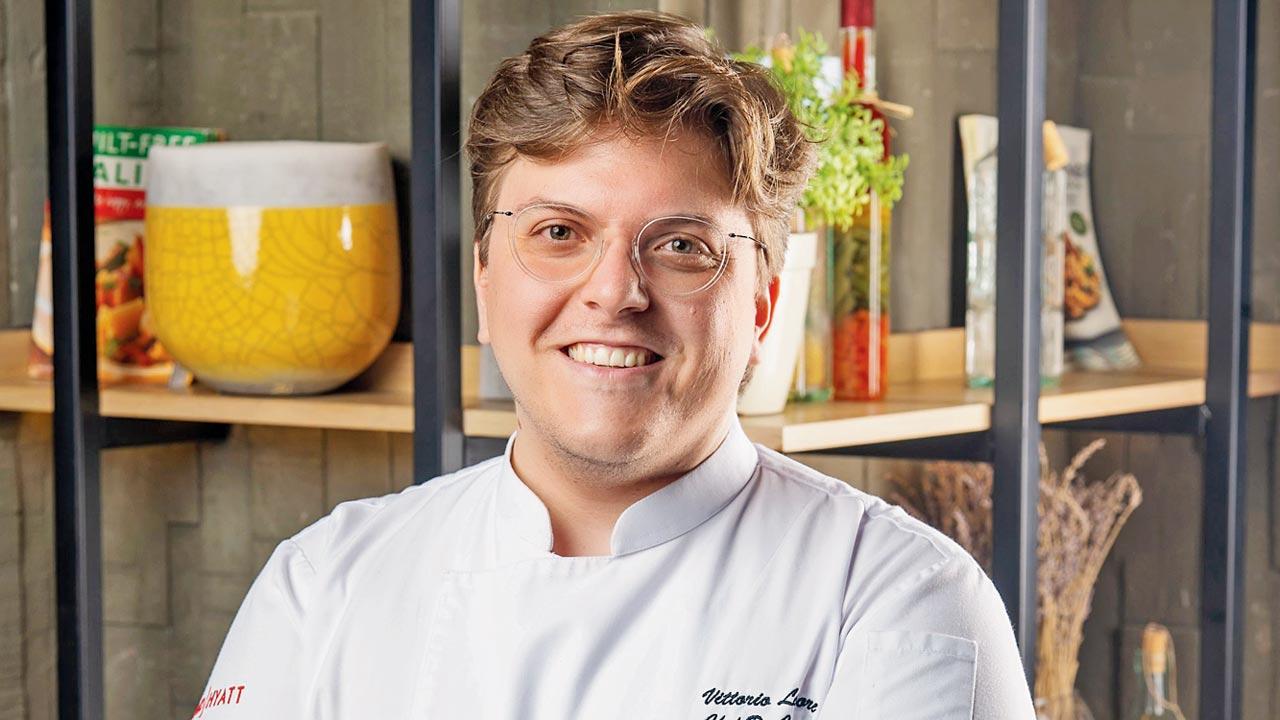 Vittorio Lepore
Lepore turned 31 last week and is the first and only chef in his family. “There’s no formal culinary lineage, but like most Italians, I grew up watching my mother and grandmother cook for family gatherings. That’s where the passion began. You’ll also find orecchiette, the most iconic pasta from Bari, still handmade by grandmothers on the streets, a living tradition you can even find on YouTube. Italian food isn’t something I love because I am Italian; it’s part of who I am,” he adds.
Lepore has had all kinds of experiences: making burgers during the COVID pandemic, working at Noma (five times named the world’s best restaurant) just before the second lockdown in 2020, and cooking across Italian, French, Peruvian, and Asian kitchens. His professional journey started unexpectedly in a Peruvian restaurant, which opened his eyes to flavours beyond Italy. “From there, I worked in South Tyrol, England, Denmark, and China, and now in the UAE. Each place taught me something different. It’s impossible to name one favourite country when it comes to food. What we know about cuisines often comes from the media. Only by travelling do you truly understand why people cook the way they do. Even the UAE’s food, frequently overlooked, is extraordinary, shaped by a melting pot of cultures and a rich Emirati tradition.”
Lepore uses techniques from different cuisines. For example, beurre blanc, a French classic, is prepared entirely with Italian ingredients. For stuffed pasta, he uses a method he first encountered in China, which gives ravioli the bite and presence he seeks. “Traditionally in Italy, ravioli is meant to be a thin wrapper for the filling. But I like to give both the pasta and the filling equal importance, making them co-protagonists. That philosophy carries into dishes like rabbit ravioli, which is deeply rooted in my region. Rabbit is tender, slightly gamey, and familiar to us. I want both the pasta and the filling to speak clearly,” he adds.
Besides cooking, Vittorio loves reading and the cinema. “Film, like food, is a powerful cultural language. Italian cinema, Bollywood, and world cinema all shape how we see humanity. Food works the same way,” he says, “Food is never just about ingredients. It’s about people, culture, and emotion. Everything happens around a table: family gatherings, celebrations, arguments, love, business. Across cultures, across continents, the table is where life unfolds. That’s why I chose to be a chef. Everything begins and returns there.”
Eating little ears
Known as the ‘bread basket of Italy’, Puglia is famous for orecchiette pasta (shaped like little ears), burrata cheese, focaccia barese, and fave e cicoria.
Peasant’s cooking
Apulian cuisine is a celebrated Mediterranean, peasant-style tradition centered on fresh vegetables, premium olive oil, durum wheat pasta, and seafood.
 Subscribe today by clicking the link and stay updated with the latest news!" Click here!


