










From podcasts and potlucks to collectives and myth-busters, these voices are reshaping how India engages with food — well beyond the scroll
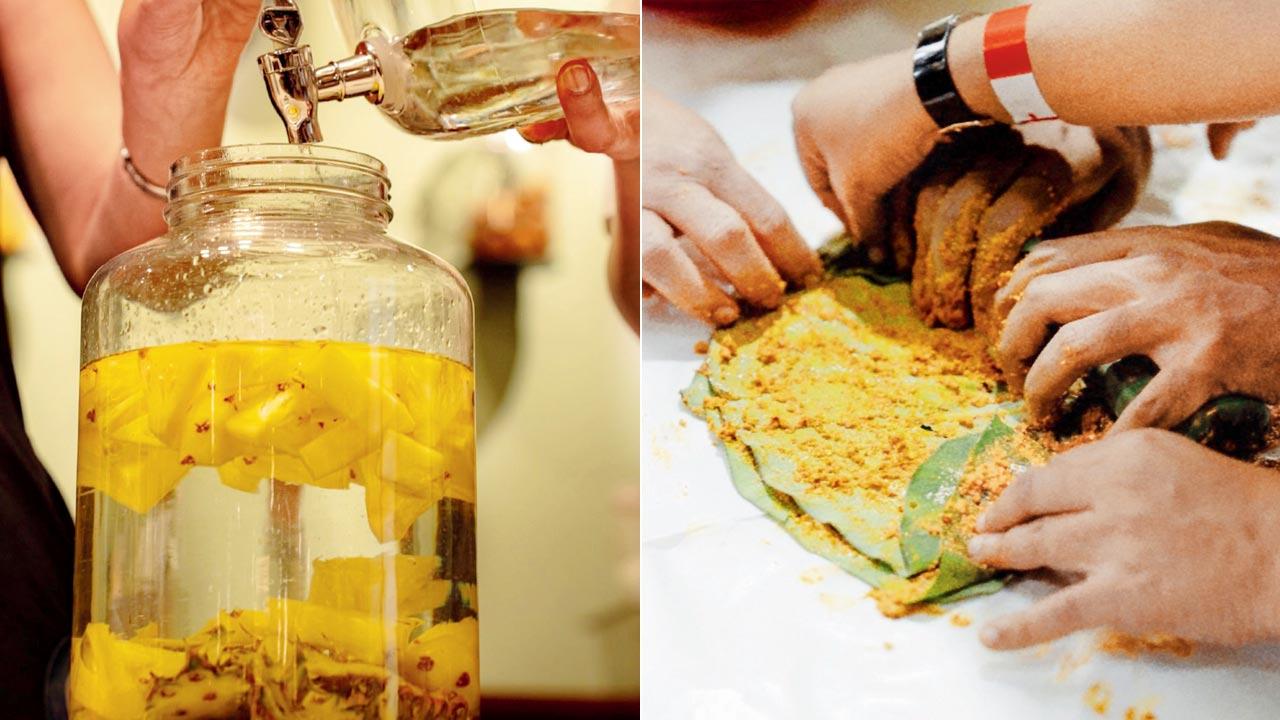
The new mediums are swapping glossy features for potlucks, replacing trends with truth-telling, and using listening, gathering, questioning, and debunking as their tools.
In a world crowded with paid reels and fleeting “hidden gems,” a new wave of storytellers is building something deeper — communities and conversations that outlast the scroll. They are turning food media on its head: swapping glossy features for potlucks, replacing trends with truth-telling, and using listening, gathering, questioning, and debunking as their tools. What emerges is more than content; it’s a living dialogue where India’s food culture is reimagined — not just as what we eat, but how we connect, remember, and make sense of the world around our plate.

TASTE
“We didn’t set out to build what Edible Issues is today,” says its co-founder, Elizabeth Yorke. What began in 2018 as a simple newsletter, a way to stay connected to India’s food system while on a global fellowship, has grown into a collective shaping how we think about food in India. At the time, global conversations around plant-based diets or “future foods” felt disconnected from India’s culinary traditions and everyday realities. The newsletter became a way of asking: what do these global shifts mean in the Indian context? It had only a few hundred subscribers.
 Elizabeth Yorke
The first public event, ‘What is the Future of Food’ at The Bombay Canteen in 2018, revealed a hunger for spaces where chefs, farmers, researchers, entrepreneurs, and eaters could connect across silos. “Food systems aren’t a single industry — they intersect with policy, climate, culture, and community — and Edible Issues needed to reflect that complexity. The challenge, then and now, has been definition: many still see it as just a newsletter, but it has grown into a collective for dialogue, experiments, and participatory projects, evolving in response to the needs of those working in food systems,” says co-founder Anusha Murthy.
“It started as two people writing a newsletter, and became a collective curating events, archiving stories, facilitating workshops, and convening conferences,” adds Yorke. These formats emerged organically, inspired by the energy of chefs, farmers, researchers, policy thinkers, artists, and organisers who wanted to build something together. That growth — from newsletter to movement — is both their biggest surprise and their most significant source of energy.
For Edible Issues, all edible issues are urgent. It’s not about solving one problem, but keeping critical conversations alive. What does it mean to demand biodiversity or millets from overburdened farmers? How does quick commerce shape urban food habits? Who owns the data from food platforms? How will climate change alter our staples and meals? The urgency lies in asking these questions and creating spaces for farmers, eaters, policymakers, and technologists, to wrestle with them together.
 Anusha Murthy
Taste is central to their approach. A banana tasting with 22 varieties sparked discussions on trade, monocropping, biodiversity, and climate change, turning abstract issues into something personal, sensory, and immediate.
India’s food stories stand out for their diversity of crops, cuisines, ecologies, and communities, yet they echo global concerns about resilience, equity, and innovation. By using tastings, archives, and participatory projects, Edible Issues ensures these stories are felt, not just told. Today, the collective unites collaborators from design, policy, nutrition, education, journalism, art, and culinary worlds, signalling a strong appetite for deeper, creative conversations around food in India.
Looking ahead, Edible Issues sees itself not as a voice with answers, but as a space for collective questioning. At home, it amplifies India’s food stories rooted in biodiversity and community knowledge; globally, it connects India’s systems to wider conversations on climate, culture, and justice—because what happens here shapes food futures everywhere.
LISTEN
Journalist Smitha Menon often saw long, engaging interviews with chefs and food personalities reduced to a few lines to fit word limits. Her podcast, Big Food Energy, became a space to fuel curiosity and dive deeper into India’s food stories. “It’s not about one medium being more powerful than another. Someone might read a 3000-word feature one day, listen to a 45-minute podcast the next, or scroll through reels another. Storytelling is about finding fresh, relevant ways to connect.”
 Journalist Smitha Menon delves deeper with her podcast, interviewing industry stalwarts like Riyaaz Amlani (left), AD Singh (centre)
This season’s guests champion India’s food story in distinct ways — from AD Singh and Riyaaz Amlani, who are building India-focused concepts and advocating better governance, to chefs like Himanshu Saini and Ritu Dalmia, who are pushing culinary boundaries abroad. Backed by deep research and medium expertise from her Maed in India team, conversations go beyond the obvious. For instance, Chef Saransh Goila discussed scaling his food brand while leveraging his creator personality for business. Akhil Iyer (Benne) and Kavan Kuttappa (Naru Noodle Bar) revealed surprising parallels between dosa and ramen.
“For years, India’s food story carried the weight of colonial hangovers and an inferiority complex. Today, with our growing cultural confidence, the focus is shifting to regional specialities, revealing the true depth of our cuisine. Taking pride in our traditions and sharing them with younger generations and the world places Indian food on the same stage as French, Italian, or Japanese,” she says. Voices like those of New York Times journalist Priya Krishna and Swiggy’s Rohit Kapoor on the podcast signal this shift: Indian cuisine is shaping global food culture and economy.
 Saransh Goila. Pics. Big Food Energy
Menon has long been conscious of maintaining editorial independence in a media landscape where stories often blur into brand plugs. What began as a personal experiment has grown into a niche but influential platform. Beyond food enthusiasts, entrepreneurs from other industries now tune in, drawing lessons from conversations with F&B leaders. Diaspora stories, such as a listener in Indonesia hauling an entire suitcase of Mota Chips for family, illustrate how food serves as a powerful memory. The podcasts’ audience extends beyond India, the US, and the UK, reaching Canada, Ireland, Vietnam, and beyond. Menon doesn’t obsess over downloads, but tracks geography, repeat listens, and duration to understand her audience. For her, success lies less in numbers than in impact—sparking curiosity, preserving traditions, and building community around India’s evolving food culture.
ATTEND
Since its launch in May 2025, the Local Food Club has brought hundreds together on the first Sunday of every month at locally led, volunteer-run, free events. What’s most heartening is how naturally the movement spreads — not through marketing, but word of mouth. “The Local Food Club began with a simple question — how do we bring people closer to what they eat?” says founder Thomas Zacharias. At The Locavore, they realised that real change starts not just with farmers or chefs, but with everyday eaters, many of whom have drifted from food’s origins. Today, the Club counts nearly 5,000 members across more than 200 towns and cities — from Mumbai, Bengaluru, and Delhi to smaller ones like Bhubaneswar, Bhopal, Thiruvananthapuram, and Dahanu. People attend once, return as facilitators, and often bring friends and neighbours, proving the desire to connect through food has always existed; it just needed a welcoming space and a shared table to flourish.
 Thomas Zacharias builds communities through the Local Food Club
Each month, a national theme — Know Your Desi Ingredients, Cooking Without Waste, or Monsoon Memories — links meetups through WhatsApp groups, inviting members to rediscover what’s around them, from kitchens to local markets. Drawing inspiration from partner producers and grassroots organisations, the Club highlights seasonal, climate-resilient, and culturally rooted ingredients such as wild greens, forest honey, heritage rice, and millets. “The idea isn’t to dictate what anyone should cook, but to spark curiosity,” says Zacharias.
“Each city interprets the theme differently, reminding us that ‘local’ is many worlds coexisting on the same plate.”

Over time, gatherings evolve into self-led communities that host ingredient swaps, storytelling sessions, farmer visits, and social initiatives. Here, strangers leave as friends, bonded by flavours and memories. Grandmother’s spice blends spark cross-generational conversations and familiar wild greens inspire culinary experiments. All this while the Locavore’s website documents stories and dishes, building a living archive of India’s shared food culture.
Looking ahead, the Club aims to shift the focus from consumption to participation, promoting acts of sustainability through shared meals, ingredient swaps, and simply being present. Zacharias thinks of it as a growing network of local changemakers — quietly reshaping India’s food culture. The dream is simple: a Local Food Club in every neighbourhood, changing the world, one potluck at a time.
UNDERSTAND
When Krish Ashok wrote Masala Lab in 2020, on the insistence of his publisher he reluctantly launched an Instagram account and a YouTube channel. What began as a marketing exercise took on a life of its own.
 Krish Ashok busts myths, backing it with high school science on his insta handle, Masala Lab, making you think everything the controversial media wants you to believe
“As I started sharing ideas about the science of cooking, I realised the internet was full of fear around trivial things,” he recalls. “I’d explain how to use a microwave, and people would respond with, ‘Oh my God, microwaves cause cancer!’ That’s when it struck me to not just share cooking science, but also use basic high-school science to debunk misinformation.”
Today, the Masala Lab page has eclipsed the book itself, reaching over 1.1 million followers on Instagram and another 250,000 on YouTube. In just two and a half years, Ashok has created nearly 500 videos, demonstrating a growing appetite for credible and accessible science communication.
 Krish Ashok
At the heart of his work is a simple belief: there are no shortcuts to health. “The most fundamental myth on social media is that quick fixes work,” he says. “Replace sugar with jaggery, don’t eat leftovers, avoid the freezer —people think these small tweaks will make them healthy. However, the truth is that eating less over time, exercising regularly, adding more protein and fibre, and reducing carbs and fats are essential. In an Indian diet, that’s especially tough.”
Ashok traces his approach to teaching. “The best way to learn something is to explain it to others. Teaching isn’t just about mastering content — it’s about empathy. If you can explain cellular biology to both a seven-year-old and a 70-year-old, you truly understand it.” That ethos shapes his videos, which aim to break down complex topics into simple, joyful explanations.
He urges audiences to be sceptical of sensational claims. “If someone says, ‘This is something you’ve never been told,’ be suspicious. In a world of peer-reviewed publishing, it’s almost impossible that valid science was kept hidden from you. A YouTube video or blog post is just content. Real science is evidence.” Despite his popularity, Ashok is clear about his role. “I’m not here to give health advice — I’m not qualified. I see myself as a science communicator who helps people discover the joy of scientific thinking, apply common sense, and feel less anxious about food.
 Subscribe today by clicking the link and stay updated with the latest news!" Click here!