shot-button
E-paper E-paper
Home > Sunday Mid Day News > Matcha ado about something Why more people are consuming the Japanese powdered green tea in India

Matcha ado about something: Why more people are consuming the Japanese powdered green tea in India

Updated on: 29 June,2025 08:53 AM IST  |  Mumbai
Nasrin Modak Siddiqi | smdmail@mid-day.com

Once a meditative Japanese ritual, matcha is now a mainstay in cafés, coolers, cocktails — and culture

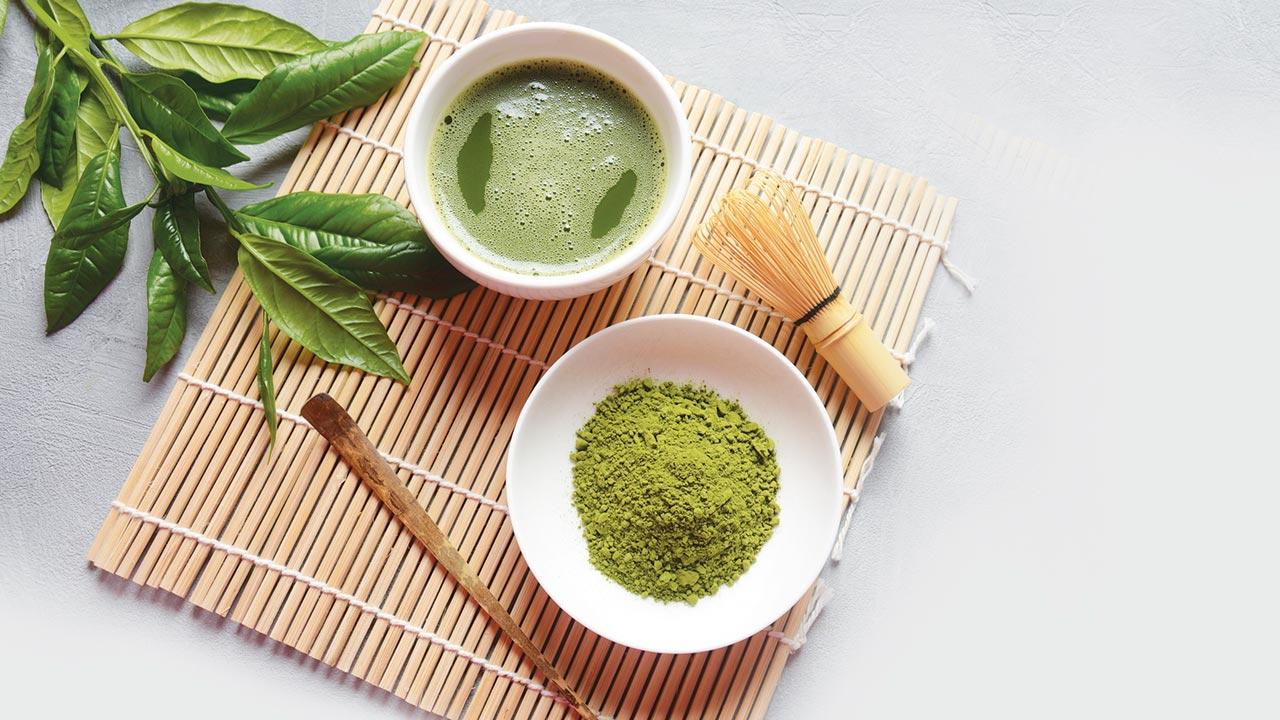
Matcha ado about something: Why more people are consuming the Japanese powdered green tea in India

Pic/iStock

When Gaijin’s chef-partner Anand Morwani was on a long trip to Japan in 2024, he noticed that the best matcha — the kind used in tea ceremonies in Japan — had this natural sweetness, a sort of umami depth that’s almost broth-like, and had a complete absence of bitterness when handled right. “The aroma is grassy, clean, almost floral. It’s shade-grown, handpicked, stone-milled — it’s cared for like a living thing. You don’t gulp it. You sit with it.”

(From left) Matcha in the making at Mokai: From powder to liquid ritual — beneath the froth is 800 years of tradition. Pics/Kirti Surve Parade(From left) Matcha in the making at Mokai: From powder to liquid ritual — beneath the froth is 800 years of tradition. Pics/Kirti Surve Parade


According to Global Info Research’s Global Matcha Supply, Demand and Key Producers, 2023-2029 Report, the global matcha market was valued at approximately USD 5.54 billion in 2023 and is expected to reach USD 11.22 billion by 2032, reflecting a projected CAGR of ~8.2%. Japan’s matcha production surged from 1471 tons in 2010 to 4176 tons in 2023 — an almost 200 per cent increase — primarily driven by export demand. The world is going wild over matcha, and Morwani has mixed feelings about it. “On one hand, I love that people are curious. Matcha deserves attention — it’s complex, it’s rooted in ceremony, and it’s one of the most meditative ingredients I’ve worked with. However, in many cases, it has become a wellness accessory. A green badge of “clean living” And the cultural context gets stripped away. At Gaijin, we offer one cocktail —Midsummer Ritual — that features matcha. We are careful of the representation, but Gaijin is an outsider viewpoint, so you won’t see it in our desserts (currently!),” he explains. The culinary-grade matcha used in lattes, desserts, and ice creams — still good — is made from older leaves, more bitter, and a little more assertive. That bitterness works better in sweets because it cuts through sugar and dairy.


Suraj GuptaSuraj Gupta

Nooresha Kably, chef-owner of Izumi, Bandra and the Goodwill Ambassador for the Promotion of Japanese Cuisine, appointed by the Japanese government, says, “During my time in Japan, I saw matcha seamlessly woven into everyday life — far beyond the tea ceremony. It popped up everywhere, from soft-serve ice cream and bubble tea to delicate desserts. While some people enjoyed it for its health benefits, others had developed an authentic taste for its nuanced, slightly bitter profile and gentle, grassy fragrance. The traditional chanoyu ceremony, however, left a lasting impression. It felt so sacred, meditative and deeply rooted in Zen culture.

Lonavala’s Fiori’s new matcha menu turns the trend into a sensory story, inspired by Yayoi Kusama’s themes of repetition and layered detail.Lonavala’s Fiori’s new matcha menu turns the trend into a sensory story, inspired by Yayoi Kusama’s themes of repetition and layered detail.

Following the herd

As Indian consumers become increasingly informed about the health and wellness benefits of matcha — thanks in part to social media and wellness influencers — there is a clear shift in how it’s being embraced. Tokyo Matcha Bar’s co-founder Meher Kohli shares, “From its impact on skin and hair health to its metabolism-boosting and anti-inflammatory properties, matcha is recognised for more than just being a green tea. Many also turn to it as a calmer alternative to coffee, appreciating its focus-enhancing qualities without the crash. That said, introducing matcha to the Indian palate wasn’t without its challenges. To bridge the unfamiliar, we anchored it in familiarity — starting with drinks like the Fresh Lime Matcha, a twist on a local staple. Seasonal favourites followed: Mango Matcha with milk and ice in the summer and Strawberry or Blueberry Matcha Lattes during the cooler months. These flavour-forward blends made matcha more accessible while staying true to its benefits.

Actress Sanya Malhotra has co-founded Bree Matcha, a wellness brand bringing premium Japanese matcha to India in partnership with Essenzaa Nutrition.Actress Sanya Malhotra has co-founded Bree Matcha, a wellness brand bringing premium Japanese matcha to India in partnership with Essenzaa Nutrition.

When Mokai launched its full-fledged matcha menu in 2024, it had actually taken them over two years of research, sourcing, and tasting before they landed on the specific blends they now serve. Working with small-batch, limited-quantity producers meant the team had to be precise and strategic in their approach. But over time, they found their rhythm. 

Rugved VartakRugved Vartak

Inspired by founder Karreena Bulchandani’s travels across Japan, Singapore, and Hong Kong, Mokai set out to make matcha a true hero on their menu — blending traditional Japanese roots with contemporary flavours like Strawberry Elderflower Matcha to Honey Lavender Matcha. Their strawberry and blueberry matcha, made with in-house syrups is sugar-free, and natural, making it a big hit among the health-conscious. They also have collagen matcha on the menu.

Blondie in Bandra was designed as more than just a café—it’s a space where culture and community intersect. Matcha, says co-founder Natasha Hemani, fits naturally into that vision. “Wellness trends played a role, but we were driven by curiosity and the conviction that matcha, when done right, could challenge the coffee-first model.”

Meher KohliMeher Kohli

The café uses what is called ceremonial-grade matcha sourced from Japan — valued for its vibrant colour and umami-rich taste. “Our rule is simple: if it’s not excellent, it doesn’t make the menu. Margins are tighter, but we offset that with volume from signature drinks and limited drops.” One of those, the Mango Matcha Latte with oat milk, has become a consistent favourite.

Midsummer ritualMidsummer ritual

Blondie has also leaned on matcha to build identity and engagement. From limited-edition launches to wellness collaborations — such as the Cherry Matcha drop with The Pilates Academy and an upcoming pop-up at Nature Morte gallery — matcha serves as both a product and a platform. “It’s not just a drink. It’s a way to create atmosphere and connect with our audience in a more tactile, lasting way.”

Esha AsharEsha Ashar

In the hills of Lonavala, Fiori’s new matcha menu turns the craze into a sensory story — drawing inspiration from Japanese artist Yayoi Kusama’s themes of repetition, infinity, and layered detail. Founder Suraj Gupta shares how each drink mirrors the artist’s visual language: the Iced Matcha Latte, inspired by No. F, 1959, adds quiet complexity to a classic; the Mango Matcha, a nod to Polka Dots, fuses tropical mango with calming matcha; and the Apple Matcha Cloud, referencing Infinity Nets, balances apple juice and matcha foam in a smooth, gradient sip. For something more introspective, Matcha + Blueberry Jam, drawn from Infinity Mirrors, layers earthy and sweet with quiet restraint. And Matcha and OJ, inspired by Fireflies on the Water, offers a zesty, refreshing burst that’s as bold as it is bright.

Freshly picked, shade-grown tencha leaves are steamed and dried, then cooled, de-stemmed, de-veined, and  stone-ground into the fine, luminous powder we know as matcha. Pics/Yuzen MatchaFreshly picked, shade-grown tencha leaves are steamed and dried, then cooled, de-stemmed, de-veined, and  stone-ground into the fine, luminous powder we know as matcha. Pics/Yuzen Matcha

Balancing cost

Although Mokai started as a coffee-first space, matcha has steadily gained ground. What was once a 70:30 split between coffee and matcha has now shifted to nearly 50:40, with matcha taking the lead.

Collagen MatchaCollagen Matcha

“With that growth, our minimum order quantities have naturally gone up. But we remain committed to sourcing limited, high-quality batches from trusted producers in Japan,” says Bulchandani. “That sometimes puts pressure on supply, but we manage it with tight forecasting and safety ordering.”

Karreena BulchandaniKarreena Bulchandani

The team hasn’t shied away from investing in premium ingredients. “If the product delivers and customers come back for it, it’s worth the cost. Pricing isn’t just about margins — it’s about reflecting the quality we’re serving.”

Mango matchaMango matcha

While few customers walk in for a drink alone, the food menu complements the beverage experience and helps even out the numbers. “Matcha performs well, and that plays a key role in our overall profitability,” she adds.

Natasha HemaniNatasha Hemani

Hemani has seen a significant jump — close to 30 per cent — in the last six months alone. First-grade Japanese matcha is a small-batch product, and with demand surging globally, prices have followed. For us, the focus remains on quality, so instead of compromising, we’ve recalibrated elsewhere — optimising portioning, investing in strong vendor relationships, and keeping transparency with our guests about what makes good matcha worth it.

As a chef, Kably was struck by the precision and quiet reverence of it all. On the practical side, sourcing matcha remains a challenge. “There’s nearly a 50 per cent price difference between grades, and in Japan, it’s straightforward — the higher the price, the better the quality.” To balance cost and quality, a chef uses different matcha grades for tea versus desserts. “Our most popular item is matcha ice cream with grapes and Mirin syllabub — it’s familiar yet unexpected, and people love that contrast.”

Tokyo Matcha Bar sources its matcha from Uji, Japan — one of the world’s most renowned matcha-growing regions. As a matcha-first brand, flavour profile and authenticity are non-negotiable. “Prices have risen nearly 20 per cent since last year due to global demand,” Kohli said. “We’ve built a strong relationship with our farm partner in Japan, who we recently visited — it’s crucial to secure high-quality matcha in today’s climate.”

Despite rising costs, the brand has held back on passing the increase to consumers. “We’re still in the early stages of introducing matcha to the Indian palate. It’s already a premium product, and we don’t want price to become a barrier for first-time drinkers. That said, if the upward trend continues, we may have to reconsider.”

The brand acknowledges that while matcha’s deep cultural roots in Japan are significant, most Indian consumers are currently engaging with it on more casual terms. “It’s still in its ‘fun’ phase — people are curious and want to enjoy it in ways that are accessible and flavourful.” That includes a growing menu of flavoured matcha lattes, seasonal drinks, and inventive desserts like matcha tres leches, matcha soft serve, and their popular matcha-misu. Matcha birthday cakes have also become a cult favourite.

With seasonal menus and a steady stream of product innovations, Tokyo Matcha Bar is positioning itself at the intersection of tradition and trend — making matcha approachable without compromising on quality.

At Food Square, the matcha category has experienced significant growth, with sales increasing from Rs 3 lakhs per month to Rs 10-12 lakhs per month. We offer two grades of matcha: Ceremonial (priced at Rs 32,000- Rs 35,000 per kg) and Culinary (priced at Rs 25,000 per kg). To cater to the growing demand, they’ve expanded our product range to include matcha-infused mochi, bubble tea, latte, chocolate, cookies, and more. We stock matcha products from renowned brands such as Ippodo Tea, Marukyu Koyamaen, Encha, Blueprint, Tea Culture of the World, The Cha House, Sprig, and Urban Platter.

Over the past five years, rising awareness around matcha’s health benefits has driven steady growth, with even the hospitality sector (HORECA) placing orders for events and tasting menus. To meet the varied needs of consumers, Food Square stocks both ceremonial and culinary grades, catering to those who enjoy matcha as a beverage and those who incorporate it into health-focused cooking. Rugved Vartak, category head of Food Square (Landcraft Retail), shares, “Matcha prices have risen by about 10–12 per cent over the past year, in line with global demand. Yet Food Square’s matcha category is growing far faster — projected at 25–30 per cent year-over-year, compared to the global average of around 10 per cent. Much of this momentum is driven by social media trends. We’ve seen a strong wave of first-time users — about 70–75 per cent of buyers — largely influenced by what they see online, but we also see them return, thanks to consistent availability and perceived health benefits.”

Last week, actress Sanya Malhotra co-founded Bree Matcha along with Siddharth Shah and Dr Kunal Shah of Essenzaa Nutrition, a science-backed wellness brand with a presence in over 23 countries. It is organically sourced matcha from the fields of Kagoshima, Japan, where the land is renowned for the best-grown organic matcha. “I started reading about matcha and its benefits. It has less caffeine than coffee and is the only caffeinated drink that contains L-theanine, which relaxes your body and ensures you don’t feel jitters, anxiety, or a subsequent crash. Amid a high-pressure film career, matcha became my grounding force — a daily pause that offered clean energy without the crash. Bree is my way of sharing that ritual with the world — not as an endorsement, but as a co-creator of something truly aligned with me.

Shah says, “We see Bree as a natural evolution in our mission to offer thoughtful health solutions. The cultural and behavioural aspects of this initiative are key. “Bree Matcha is not just a beverage — it’s a movement towards conscious consumption and modern wellness. In a country bursting with ambition, screen time, hustle culture, and hyper-productivity, what’s missing is a ritual that offers clarity without chaos or energy without anxiety. People are looking for more than a boost — they’re seeking balance. Bree Matcha isn’t just energy; it’s Brewed Energy for a balanced Lifestyle.

Elaborating, Dr Shah says, “We want to make matcha a daily ritual in every household. This is why we offer two grades, along with an entire kit: Everyday Matcha, priced at '600 (approximately '20 per serving), and Ceremonial Matcha, which comes from the first harvest and is priced at '1600. Our matcha comes from the fertile volcanic soil of Japan, making it ideal for organically grown matcha. Our entire sourcing process is entirely transparent and organic-certified. 

When Esha Ashar  first explored India’s matcha landscape, what stood out wasn’t the hype — it was the gap. “Most of what was available was either overpriced or inauthentic,” she says. That disconnect became the foundation for Yūzen, a brand rooted in precision, tradition, and clarity.

The name itself comes from Yūzen-zome, a traditional Japanese dyeing technique known for its meticulous, hand-rendered detail. “It’s an artisanal process where every stroke matters — that’s exactly how I wanted to approach matcha,” she explains. The kanji adds another layer: (yū) for friendship, (zen) for calm. “That’s what tea should be — connection and stillness.”

Yūzen also sources its matcha from Uji, the birthplace of Japanese tea culture, which spans the prefectures of Kyoto, Nara, Mie, and Shiga. With over 800 years of tradition, Uji sets the global benchmark for matcha quality. Mineral-rich volcanic soil, high altitude, and misty microclimates shape a terroir that produces unmatched depth, umami, and complexity. “This isn’t commodity tea,” says Ashar. “It’s crafted, not manufactured.”

Rejecting generic labels like “ceremonial” and “culinary,” Yūzen classifies its blends — such as Sakura, Itsuki, and Kokoro — based on flavour profile, texture, aroma, and intended use. This stripped-down, transparent approach gives buyers clarity and control while maintaining uncompromising Uji-grade quality across every price point. 

As a B2B brand, Yūzen’s focus is twofold: partnering only with cafés that prioritise quality and care and making authentic matcha more accessible in India. “Matcha isn’t just a ritual — it’s a functional, high-performance ingredient,” she says. With its high levels of EGCG and L-theanine, matcha offers calm, sustained energy — bridging ancient tradition with modern wellness. With over 50 matcha varieties across first and second harvests, Yūzen provides clarity through clearly defined grades, each based on cultivar, processing, harvest timing, and origin. “We believe in helping partners make informed choices — balancing quality with budget without compromising transparency.”

Thanks to long-term partnerships with a trusted Japanese farm cooperative, Yūzen has remained steady despite global supply issues. This network allows them to maintain year-round consistency in both quality and volume — a key advantage for their B2B clients.

India remains Yūzen’s clear priority, even as global interest — particularly from Europe — continues to grow. “We’re excited about what’s ahead, but India 
is where we’re building something significant,” says the Ashar. “We want to grow slowly, thoughtfully, and with the right partners.”

This month, Yūzen is hosting a tea tasting at Kitchen Garden’s Palladium launch, showcasing Japanese teas alongside educational insights. It follows their May sourcing trip to Japan, with another visit planned for October to deepen relationships with partner farms.

While the current matcha trend in India is primarily driven by curiosity and aesthetics, Yūzen sees a deeper cultural alignment. “The Indian palate already values tea. With time and education, matcha appreciation will follow. We’re not here to ride the wave — we’re here to shape a more informed, enduring journey rooted in context, history, and quality.”

30% 
Average increase in matcha prices in the last six months

200% 
increase in matcha production in 13 years, driven by global demand

Rs 1,600
average retail price per 30 gms of first harvest matcha

Rs 600 
average retail price of everyday matcha (approxR20 per serving) 

Pic/iStockPic/iStock

True Green Gold

Esha Ashar of Yuzen matcha visits their partner farms in Japan every year during the first harvest, with the next sourcing trip set for October. “Matcha is deeply seasonal,” says Ashar. “To truly understand it, you need to be there — on the farms, in the process, with the people behind it.”

First-harvest matcha, concentrated with nutrients from the winter dormancy, commands a premium. The second harvest offers a more accessible alternative. “You can’t compare matcha to coffee or tea,” she adds. “It’s a category of its own — seasonal, labour-intensive, and rooted in terroir.”

The process reflects that care: Three to four weeks of shade cultivation boost chlorophyll and amino acids. Only the youngest, most vibrant leaves are handpicked, then steamed, dried, and carefully sorted to remove stems and veins. The resulting tencha is stored cold, then stone-ground into a fine, vibrant powder, capturing purity in every step.

"Exciting news! Mid-day is now on WhatsApp Channels Subscribe today by clicking the link and stay updated with the latest news!" Click here!

Did you find this article helpful?

Yes
No

Help us improve further by providing more detailed feedback and stand a chance to win a 3-month e-paper subscription! Click Here

Note: Winners will be selected via a lucky draw.

Help us improve further by providing more detailed feedback and stand a chance to win a 3-month e-paper subscription! Click Here

Note: Winners will be selected via a lucky draw.

mumbai food indian food Food and drink Sunday Mid-Day sanya malhotra Lifestyle news

Mid-Day Web Stories

Mid-Day Web Stories

This website uses cookie or similar technologies, to enhance your browsing experience and provide personalised recommendations. By continuing to use our website, you agree to our Privacy Policy and Cookie Policy. OK