An ongoing pop-up has laid out the authentic flavours of Wazwan and Pandit cuisine from the Union Territory

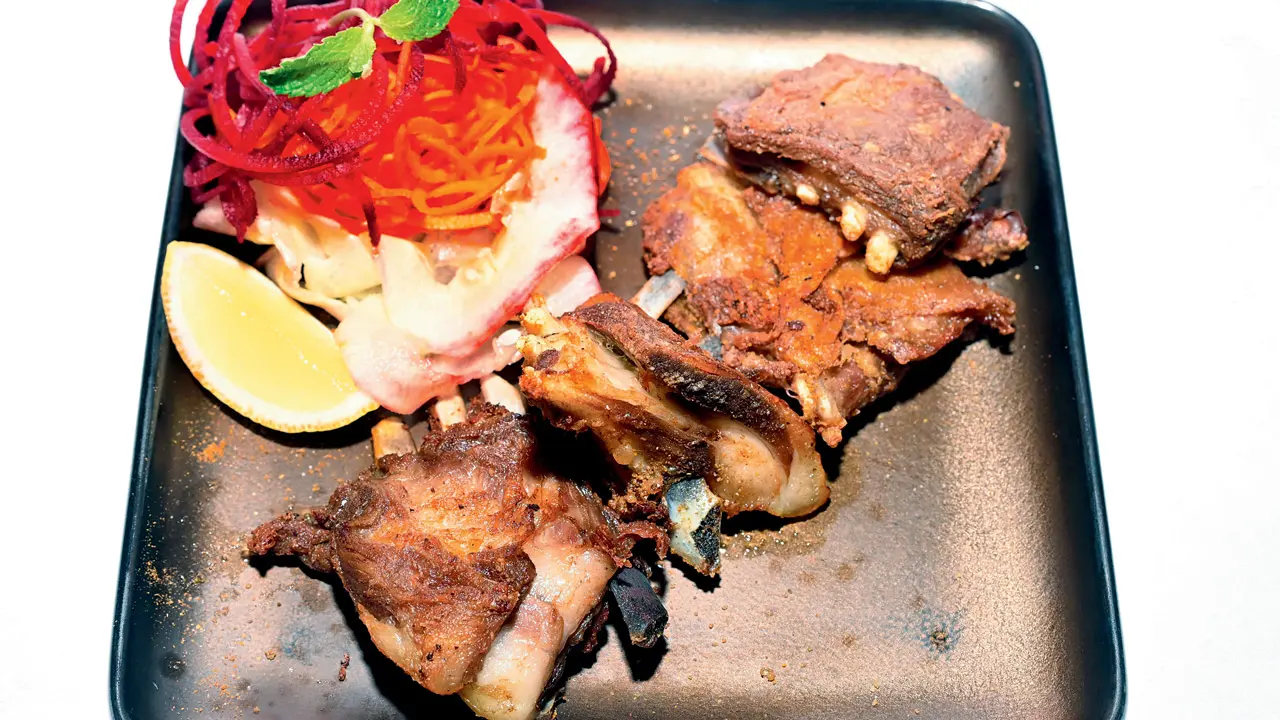
Tabak Maaz
We first met chef Mujeeb ur Rehman in 2015, when he was in Mumbai to host a Rampuri food festival, one of the lesser-known of Muslim cuisines. Rahman’s forefathers have served as khansamas since the 17th century. He trained under his grandfather to pick up the culinary art of Nawabi cooking. This time, he has spread out a Wazwan and Pandit cuisine menu at Saffron, JW Marriott Mumbai Juhu. In the forefront are two Kashmiri chefs from his team, Abdul Hameed War and Nasir Hussain. Both brothers hail from Baramulla, near Srinagar.

Nadru ki Yakhni
“When we take the cuisine to any other city out of Kashmir, people complain the curries are too thin [in consistency]. Even in Mumbai, people prefer Aloo Dum in a thick gravy,” he says. They have carried along saffron and Malwa flowers for natural colouring, and the Wadi masala made of urad dal and spices from Kashmir. Yogurt-based curries extensively feature in the cuisine, and the trick, War suggests, is to add cashew paste: “This ensures holding the gravy together, allowing it to be cooked for a longer time.”

Gustaba
Rehman, who studied engineering on his father’s insistence, focused on Muslim cuisine of Kashmir, North West Frontier, Delhi-Awadh, Nidampur, Murshidabad and Hyderabad since the last 30 years, and has fully dedicated his time to research, and spread awareness through food festivals and pop-ups. Currently, he is developing the vegetarian cuisine of Murshidabad. “The region was developed by Nawabs who hired Marwaris and Jains from Rajasthan and Gujarat to take care of their financial systems. “Their food dates back to 300 years,” he shares.

(From left to right) Chef Nasir Hussain, chef Abdul Hameed, and chef Rehman at Saffron, Juhu. Pics/Atul Kamble
The menu at the city five-star serves Wazwan dishes as well as Kashmiri Pandit cuisine, which includes Jheenga Kashmiri, Nadru Yakhni and Dum Aloo. From the à la carte menu we try the Gustaba. It has a delicate, watery gravy with mutton meat balls, and the Tabak Maaz, which is fried mutton ribs. Rehman recommends we try it with a fresh walnut and radish chutney. The Jheenga is delish. Typically, not featured in Kashmiri cuisine, Rehman explains the importance of adaptability. “A limitation of the cuisine is its focus on red meat, especially goat or lamb. So, we attempt to incorporate local seafood and meats with a Kashmiri spice rub.”
A standout dish is the humble Kashmiri-style Rajma Chawal. It’s prepared using wadi masala that is stored as a sun-dried cake to give it the punch. “The addition of badi elaichi, along with soonth (dry ginger powder), saunf (fennel), laung (clove) and dal chini (cinnamon) is the secret,” Rehman reveals, before heading back to the kitchen.
AT Saffron, JW Marriott Mumbai Juhu TILL February 28
TIME 12.30 pm to 3.30 pm (Saturday and Sunday); 7 pm to 11.30 pm
CALL 9004616506 (for reservations)
Subscribe today by clicking the link and stay updated with the latest news!" Click here!