shot-button
E-paper E-paper
Home > Mumbai > Mumbai News > Article > Bombay High Court ruling on MHADA and redevelopment leaves dilapidated buildings residents worried

Bombay High Court ruling on MHADA and redevelopment leaves dilapidated buildings’ residents worried

Updated on: 30 July,2025 08:07 AM IST  |  Mumbai
Ritika Gondhalekar | ritika.gondhalekar@mid-day.com

Lakhs fear losing homes as housing authority files plea in SC challenging lower court’s judgment deeming it incompetent to issue notices; the state housing body has, thus, filed a special leave petition (SLP) in the Supreme Court against the high court’s judgment dated April 3, 2025, in connection with a writ petition

Bombay High Court ruling on MHADA and redevelopment leaves dilapidated buildings’ residents worried

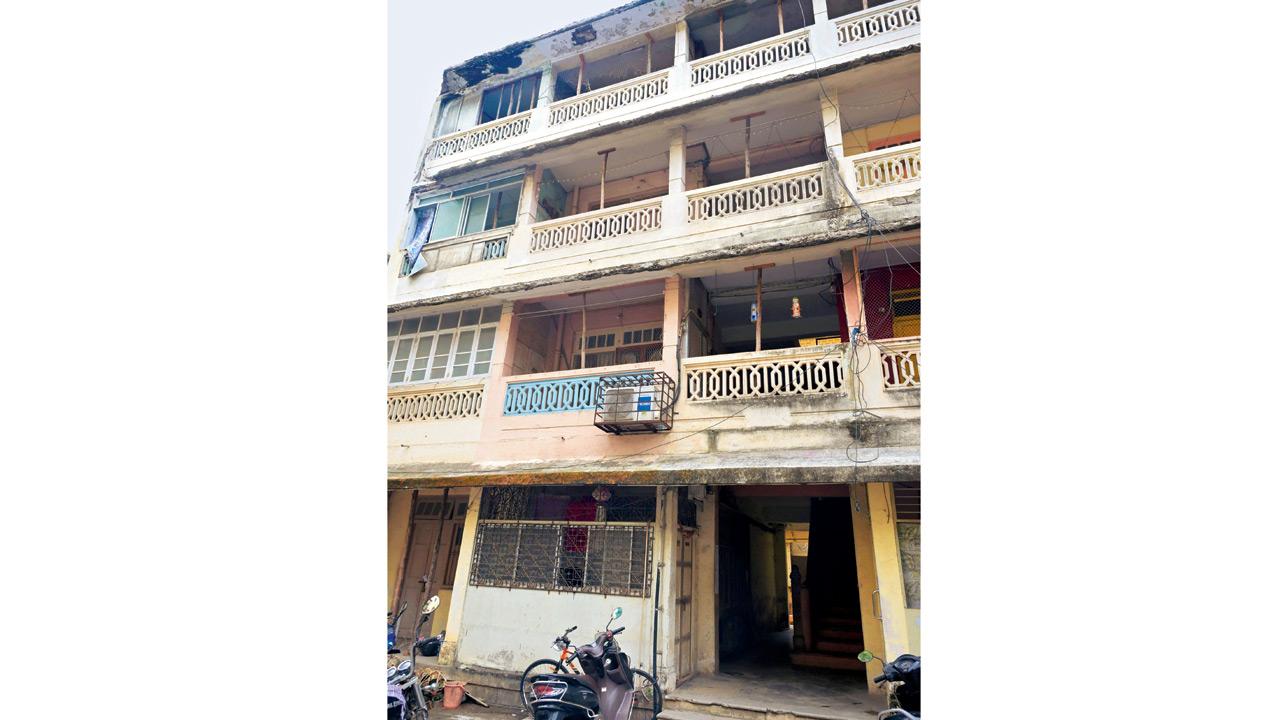
Kubal Niwas, a dilapidated house in Dadar West, which houses two families. FILE PIC/SAYYED SAMEER ABEDI

The Maharashtra Housing and Area Development Authority (MHADA) has approached the Supreme Court to challenge a ruling by the Bombay High Court, which held that it was not a “competent authority” to initiate redevelopment under certain provisions of law. This decision could affect lakhs of tenants and redevelopment projects across the state.

The state housing body has, thus, filed a special leave petition (SLP) in the Supreme Court against the high court’s judgment dated April 3, 2025, in connection with a writ petition. The petitioner, who wished to be anonymous, had challenged the 79(A) notice given to his building and had stated that the executive engineer of MHADA was not a competent authority to issue such notices, which should be issued by district-appointed judges or equivalent-level authorities as per Section 65 and 2(11) of the MHADA Act.


The high court had observed that neither MHADA nor the Mumbai Building Repairs and Reconstruction Board (MBRRB) could be treated as the “competent authority” for issuing redevelopment-related notices under Section 354 of the Mumbai Municipal Corporation Act.


Impact of HC judgment

The ruling casts a shadow over the widely used 79(A) provision, which facilitates redevelopment of dilapidated cessed buildings, particularly in south and central Mumbai. As a result, only 67 redevelopment projects submitted by building owners are likely to move forward, while 38 proposals submitted by residents and housing societies now face an uncertain future. The high court ruling also means that ongoing actions under 79(A) for other buildings will now be paused. Consequently, MHADA has decided to challenge the High Court’s decision in the Supreme Court.

Nirmala Jain, owner of Vishnu Niwas in Girgaon. PIC/ATUL KAMBLE

“MHADA’s SLP argues that the high court’s interpretation could cripple the very framework of cessed building redevelopment under the MHADA Act. Under Section 79(A) of the Act, MHADA has historically functioned as the primary authority in coordinating redevelopment in the public interest, especially for tenanted buildings deemed unfit for habitation,” MHADA’s senior lawyer Prakash Lad told mid-day.

MHADA has reportedly urged the apex court to place a stay on the high court’s decision to prevent further disruption in ongoing redevelopment cases. The housing authority’s plea includes a strong request to clarify and reaffirm its powers under Section 79(A), given its historical role in safeguarding the lives and interests of tenants in Mumbai’s ageing building stock.

Impact on citizens

To promote the redevelopment of south Mumbai’s dilapidated cessed buildings, MHADA’s MBRRB had issued notices under Section 79(A) to 935 buildings declared as highly dangerous. Following these notices, 67 proposals were submitted by building owners. In cases where owners failed to respond, 38 proposals were submitted by tenants or their housing societies under subsequent provisions.

The legal tussle has triggered panic among Mumbai’s residents — especially those living in the 13,800 structures declared as cessed buildings by MHADA — many of whom have been waiting for years for redevelopment approvals. A MHADA ward officer told mid-day, “For now, we have been asked to pause issuing notices under 79(A).”

Mukesh Shah, president of Pagadi Ekta Sangh, said, “This was a good law, passed with the president’s assent. But due to poor planning and coordination by MHADA, the Repairs Board, BMC, housing department, and landlords have managed to win in court, and our hopes for redevelopment have been dashed once again.” Milind Pandurkar, a resident of Pai Building in Charni Road, said, “If MHADA is not considered a competent authority, then who will we go to? We’ve already lost precious time, and now the future of our homes hangs in the balance.”

Nirmala Jain, owner of Vishnu Niwas in Girgaon, a building on MHADA’s list of dilapidated structures, said, “It took a common man to bring it to the notice of the court that MHADA is not supposed to send such notices. While the redevelopment of buildings has to face so many hurdles, the high court has set up a two-member committee to investigate redevelopment notices given by MHADA to 935 buildings and submit a report on the same within six months, hampering the redevelopment of old buildings. How much more should tenants suffer?” 

‘Resolve hurdles’

RTI activist Jitendra Ghadge explained, “The 79(A) amendment was introduced to facilitate the redevelopment of old buildings and prevent fatal collapses that have claimed hundreds of lives over the past decade. Shockingly, many of these buildings had not even been declared dangerous before they collapsed. The 79(A) process ensures that neither landlords nor tenants suffer any financial loss. 

Unfortunately, some landlords demand more than what is fair and use technical objections to stall redevelopment. This has become a serious setback for the lakhs of people living in ageing cessed buildings — some of whom may tragically lose their lives if timely action is not taken. The government must urgently resolve these technical and legal hurdles to ensure a smooth and transparent implementation of Sections 79(A) and 79(B), without the need for constant judicial intervention.”

The uncertainty could stall hundreds of ongoing or proposed redevelopment projects, leading to potential safety hazards for families residing in structurally compromised buildings.

"Exciting news! Mid-day is now on WhatsApp Channels Subscribe today by clicking the link and stay updated with the latest news!" Click here!

Did you find this article helpful?

Yes
No

Help us improve further by providing more detailed feedback and stand a chance to win a 3-month e-paper subscription! Click Here

Note: Winners will be selected via a lucky draw.

Help us improve further by providing more detailed feedback and stand a chance to win a 3-month e-paper subscription! Click Here

Note: Winners will be selected via a lucky draw.

MHADA supreme court bombay high court infrastructure development Development mumbai news mumbai

Mid-Day Web Stories

Mid-Day Web Stories

This website uses cookie or similar technologies, to enhance your browsing experience and provide personalised recommendations. By continuing to use our website, you agree to our Privacy Policy and Cookie Policy. OK