


AC train commuters slam CR for allowing windows to be covered by vinyl ads, completely obscuring views of passing scenery and stations

A vinyl advertisement pasted over the window of a coach on Central Railway
Spare the windows. This is the earnest plea of AC local train commuters, who claim that vinyl advertisements covering railway coaches are blocking visibility to such an extent that passing scenery and stations can’t be seen. “It becomes claustrophobic even as the train is moving in daylight, with doors and windows both covered insensitively,” a commuter said.
G Chaudhari, another commuter, said, “Making windows opaque for ads isn’t just poor aesthetics — it likely breaches railway safety and passenger amenity norms. Under Indian Railways/Central Railway (CR) ad guidelines, window panels must not block visibility, light, or emergency awareness in EMUs. Revenue cannot override safety.”
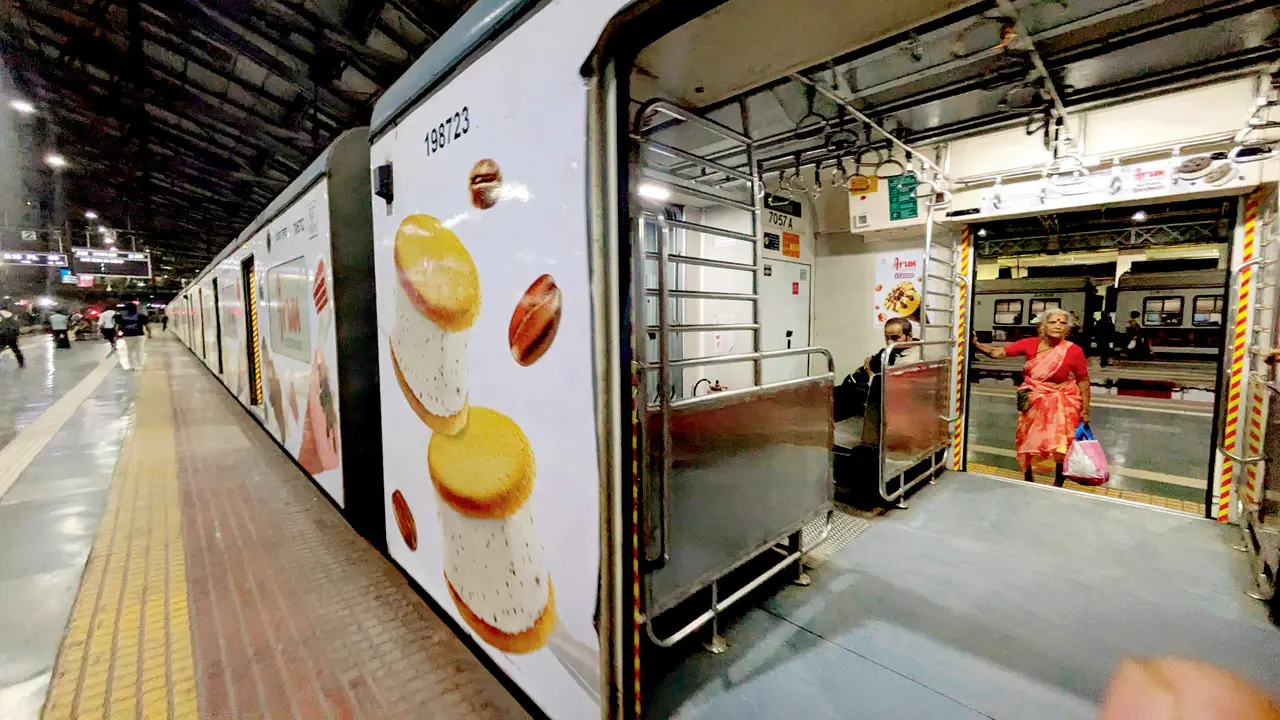
Advertising on non-air-conditioned coaches, where visibility isn’t hindered
Ansuman Satapathy, a frequent passenger, asked why the authorities had failed to consider passenger comfort before prioritising non-fare revenue (NFR) through full-body advertisements. “In jam-packed local trains, poor window visibility is a major safety and convenience concern for lakhs of commuters,” he added.
Commuter Voices
Mukhesh Makhija,
‘Beggars, hawkers, and unauthorised passengers move freely inside AC locals. Reducing visibility further can become a security concern — especially for women and senior citizens. Revenue generation is important, but it should never come at the cost of passenger safety and convenience. The authorities must review this immediately and restore clear window visibility’
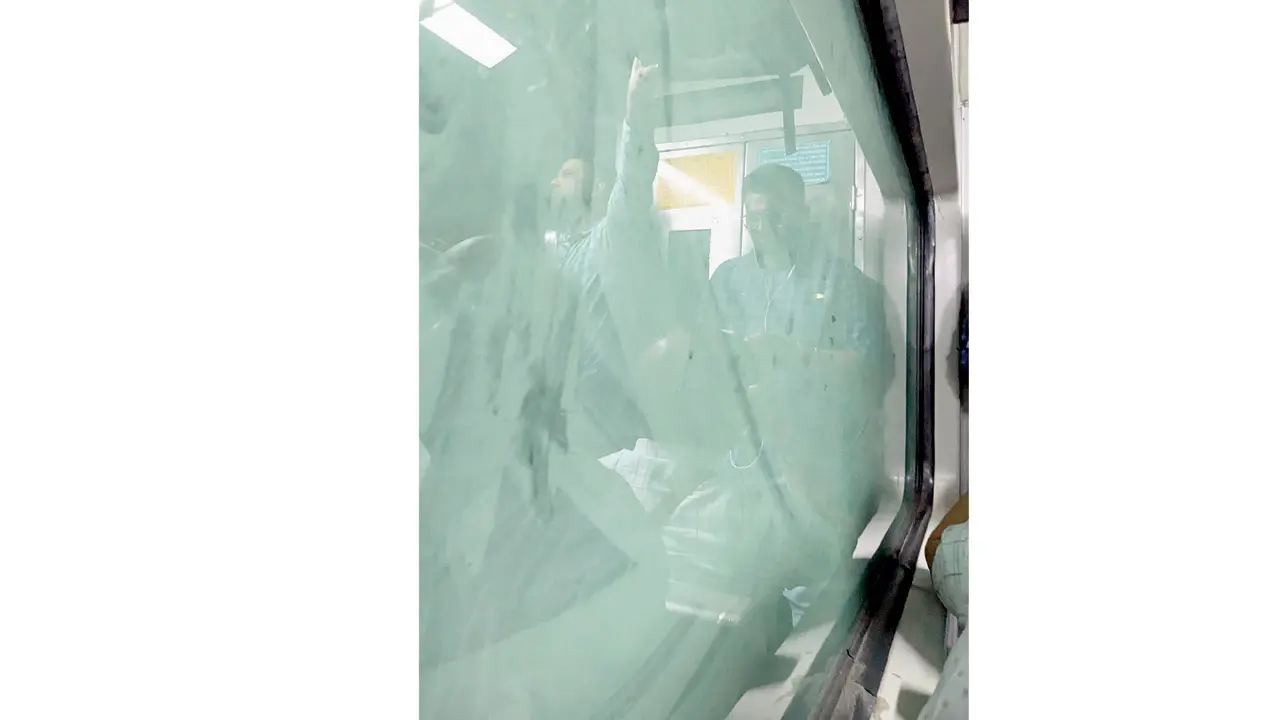
The view afforded to passengers inside the compartment. Pics/Rajendra B Aklekar
Aditya Pradhan,
‘Bigger and wider windows were introduced for enhanced passenger experience and safety. These advertisements defeat the entire purpose of having bigger windows. If they really want to block sunlight, they should come up with something at the manufacturing level’
Officials Speak
A CR spokesperson,
‘There is 80 per cent visibility inside to outside, but for those standing on the platform looking inside coaches, the visibility is very low, and it will depend on light intensity inside coaches. During the day and night, the lighting mode should be at 50 per cent and 100 per cent, respectively. We are verifying whether or not this rule is being followed’
Test ride
When mid-day inspected one such EMU, the train was found to be covered by advertisements for an ice cream company. From inside a compartment, visibility was poor due to the haphazard glue markings behind the wrapping. While the intention was to facilitate 80 per cent visibility, thick layers of glue hindered one from clearly viewing the outside of the coach.
Railways’ policy on train windows
For AC coaches, vinyl wrapping is permitted on windows, but…
>> 70 per cent visibility from inside must be maintained
>> Perforated/see-through film must be used
>> Safety markings, coach numbers and statutory information cannot be obscured
>> Emergency exit markings must remain clearly visible
Railways’ non-fare revenue stream
What is it?
AC locals look expensive to run, but Indian Railways quietly earns a lot from them through ads, branding, fibre cables, renting out station space, and especially train vinyl wrapping.
How does it work?
Railways sell three-month advertising rights to agencies, and the agency, in turn, sells them to brands. Railways collect fixed contract revenue (guaranteed income). They receive licence fees from advertising contractors.
The why
Rail advertising works because commuters see ads every day; Mumbai local trains carry massive captive audiences and visibility. Ticket prices on suburban railways are politically frozen. Vinyl wrapping makes the trains moving billboards that quietly help fund Mumbai’s suburban rail system. In Mumbai, it is especially important because the suburban network runs at operational losses, and ads help offset costs.
Adman’s views
Mayur Borkar, senior advertising professional who runs Unique Advertising
‘Mumbai has developed a full transit-media economy in which public transport vehicles double as advertising assets. But the way it is done is incorrect. Firstly, covering windows is a safety risk if not done properly. Globally, wrappings are not done so extensively. Secondly, vinyl is inflammable. In case of an EV vehicle fire or pantograph sparks, it is the vinyl that will turn vehicles into a death trap’
 Subscribe today by clicking the link and stay updated with the latest news!" Click here!