


Kuch hatke karo, yaar? One-size-fits-all generic menus, Instagram Reels that create FOMO and lead to crowds, and super-expensive coffee — Do we need another new-but-same café?

Pic/iStock
In the past five years, cafés have turned into de facto living rooms, co-working nooks, date spots, and community spaces. They have mushroomed in bylanes, next to gyms, inside shirt and sneaker stores, and inside converted heritage bungalows. Everywhere you look, a collagen-spiked matcha and an avocado toast wait to be photographed.
This looks sexy on Instagram. But does a city with shrinking public spaces need more cafés or parks?
“People are looking for places every time. Cafés are their source of entertainment and joy,” says Parth Suri, founder of Silk Road Coffee Company in Versova. “Alcohol consumption is going down among Gen Z; so, people need a space where they can come together and find space to talk.” Suri’s observation explains why cafés are culturally sticky.
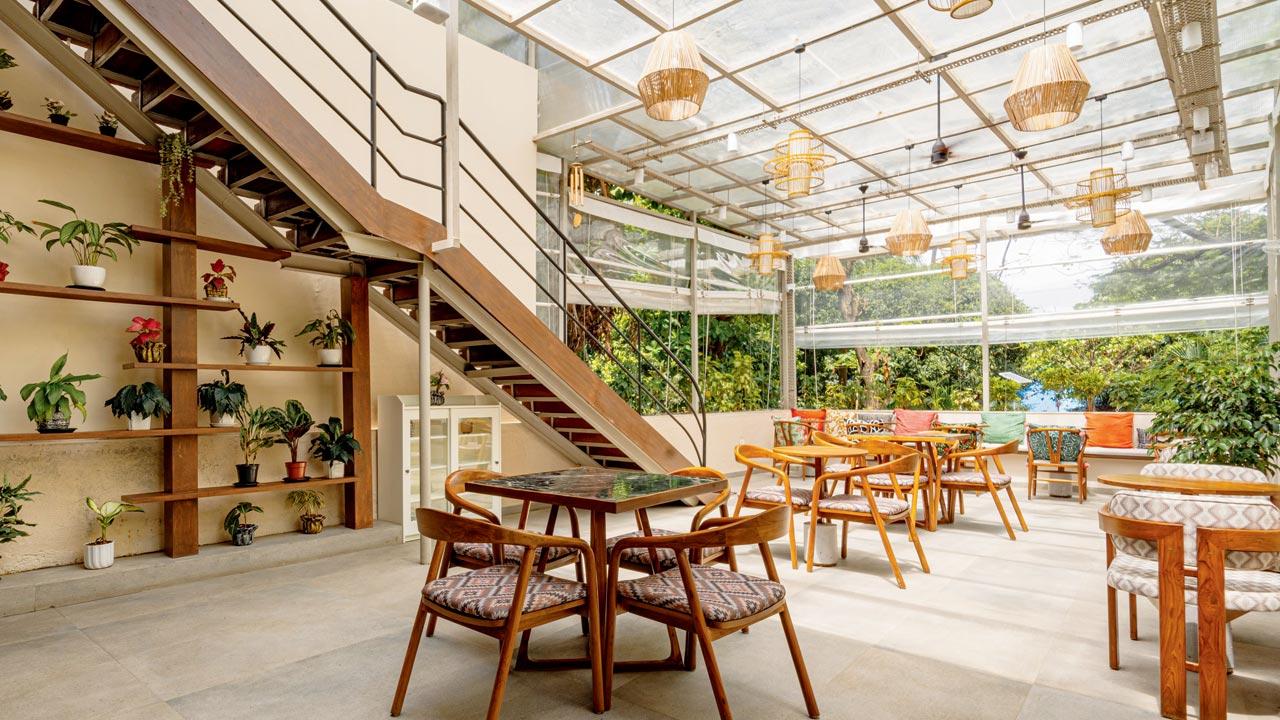 Silk Road Coffee Company finds that having an open kitchen and coffee bar helps build trust with customers
Pooja Dhingra, who is no stranger to the café game, opened the doors to her new café, Pardon Our French, on February 4. This is Dhingra’s second innings in the game, her first café being the Le15 Patisserie. With every other café opening in Bandra, it seems like the queen of suburbs has got some secret sauce. Dhingra chose a different potion, though. “I did want to open a café in Bandra and will hopefully do so in the future,” says Dhingra, “Our old café was in Colaba, so, I wanted something close by. Fort has always been one of Mumbai’s most cultural, creative, and walkable neighbourhoods. It attracts people who genuinely enjoy discovering food, coffee, and experiences, not just quick consumption.”
World Coffee Portal’s Project Café India 2025 report finds that there are about 5339 coffee chain stores in India. According to Mordor Intelligence, specialist coffee and tea shops captured 85 per cent of the overall market, which would give an estimate of close to 35,000 cafés in India.
Is the market facing an oversaturation then? Dhingra responds, “Café culture becomes oversaturated when too many places do the same thing. Similar menus, aesthetics, and pricing without a clear point of view. It is not really about the number of cafés, but about the lack of differentiation.”
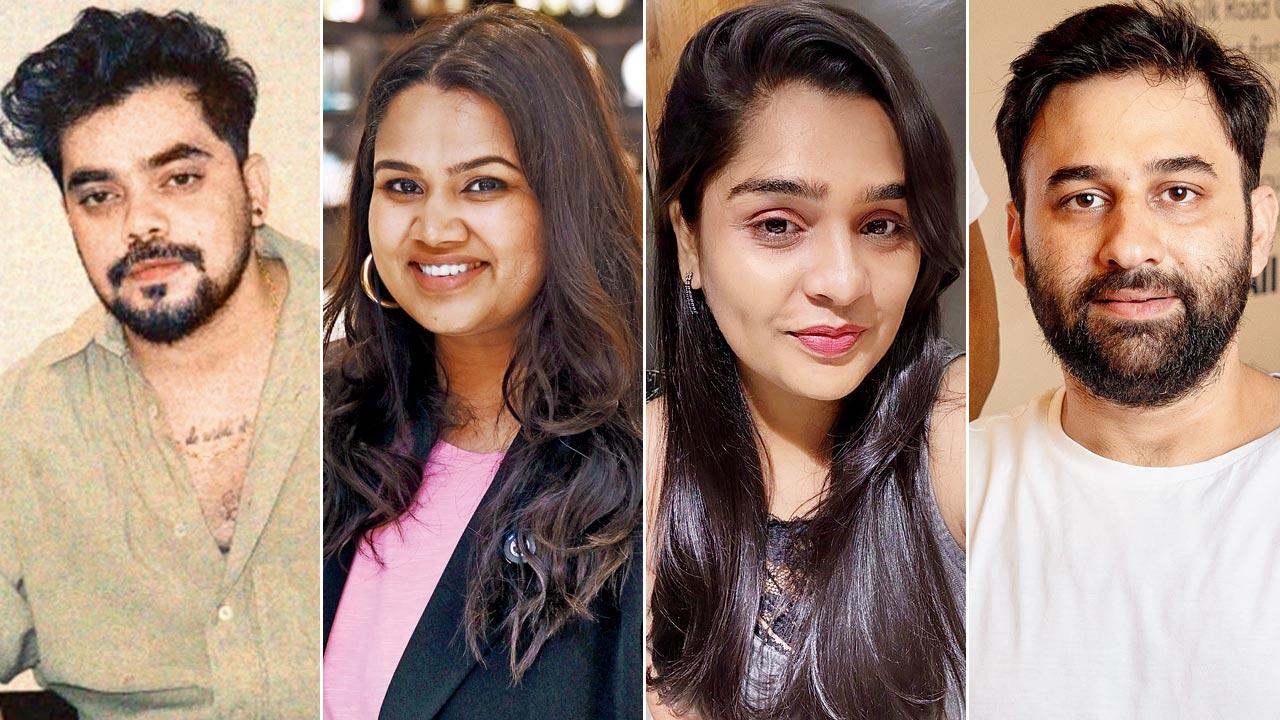 Ateet Singh, Pooja Dhingra, Atharwaa Kale and Parth Suri
Some do stand out with their ambience. Silk Road Coffee Company, Versova is a good example. It’s designed keeping in mind the need to build community. “We wanted to bring a ‘Goa inside Mumbai’ vibe to the space. It’s calm for a conversation, to work out of, or to have a family meal. Our open kitchens and coffee bar were also designed for people to see chefs at work, as this helps build trust,” says Suri.
Others achieve loyalty through menu offerings, but there is still a checklist followed: sourdough, avocado toast, matcha latte, and a cold-brew. It’s a safe menu. “People love variety,” Suri says, “but they need some familiarity, and some bit of experimentation. So, some basics have to be on the menu.”
This nails the whole conundrum: cafés copy one another because customers demand familiarity. The result is menu monotony.
Ateet Singh, founder of Journal in Santacruz, is blunt: “If you want to introduce a trendy item, first crack it right. I tried a tiramisu latte somewhere, and they had essentially put the cake in the drink. No one wants cake in their beverage. Only serve something once it’s tested and makes sense.” Singh argues the real edge is not gimmicks but consistent craft. “Community building is key. You need to know your people, your data, and take constant feedback,” he says.
The community experience could be one reason why people are drawn to cafés. “Everyone wants to belong somewhere,” says food reviewer Sahil Makhija, better known as @headbangereats on Instagram. “Mumbai is a city of newcomers. Cafés give people a sense of belonging.”
Makhija, who usually visits places for a good food experience, says that the ease of getting a good cup of coffee in every lane of Bandra is enjoyable. He also points out that a good cup of coffee is now expected. “I could be in Kolkata, and I know that I will get a good cup of coffee at a Blue Tokai, which has now become sort of the McDonald’s of cafés. But we need independent cafés for a bit of a personalised experience, and community.”
For Dhingra, who learnt the ropes in a pre-Instagram era, the experience from her first innings has taught many lessons. “When I started, growth came mainly from word of mouth. Instagram later became a huge amplifier,” she says, “Today, visibility is much faster, but attention spans are shorter. What is different now is that aesthetics matter more.”
A growing industry it may be, but the fact is that the average life span of a café in Mumbai is four years and two months. Dhingra saw these difficulties of the business first-hand during the first inning, “Margins are tight, rentals are high, staffing is a constant challenge. Add to that perishable inventory, daily production pressure, rising raw material costs, and heavy upfront investment in interiors and equipment.”
Cafés closing is so common that Amit Patel has made a career out of it, as an exit strategy consultant. He says, “To run a café today, it is very important to get to know your neighbours. Your customer has the option to go to a Starbucks or a Third Wave Coffee. If they’ve chosen a homegrown brand, they expect some importance. So get to know at least 500 people in your neighbourhood personally, they’ll bring in 1000.”
How do newcomers and first-time entrepreneurs achieve this? Nikita Pawale and Vaibhav Bhosale, founders of Café Blue J in Mahim, focused on product first, social marketing later, and leaned hard on neighbourhood regulars to survive early shocks. “Our barista once left midway and did not return. We were ready to shut the café for the rest of the day. But one of our regulars knew how to use the machine, and he gave me the confidence to get behind the coffee bar. He guided me through the process, made an Americano for himself, and told me, ‘Don’t feel shy, just do it confidently.’ It saved us a half-day of shutdown. He even paid for the coffee he made himself,” says Pawale, emphasising that this kind of micro-community support is the real runway for many independents.
A struggle for customers is the soaring prices at cafés. Neel Kanwarjani, founder of Every Morning Cartel, Kandivli, shares, “Labour cost remains pretty much the same throughout the city. Today, rentals in Kandivli have become comparable to Juhu and Bandra. Ingredients are also expensive. Some of the international coffees we have cost about '10,000 per kg. So yes, a cup of coffee does end up being Rs 450.”
But should your salad cost '900, as it does at some cafés around Bandra, particularly? Singh says, “Everyone knows that a salad will not and cannot cost that much. But for many, it’s a way to create brand value and maintain exclusivity. People say rentals are high, but it should only be five per cent of your sales, not more,” he notes, a rule of thumb that rarely holds in Mumbai’s premium lanes.
Rishi Dusija of RR Real Estate adds that the rental-to-revenue ratio is not fixed for commercial spaces, unless they are inside a mall or a commercial complex. “In malls, usually the rent-to-revenue ratio is set at 14–15 per cent, and in some cases goes up to 18 per cent. But there is no rule like this, anywhere else. In most neighbourhoods, landlords, too, help out and understand when cafés and restaurants are performing poorly. But, of course, some expect you to shut shop and leave if you cannot make rent.”
If everything is so hard, what keeps people coming to this business? “Even when the market is saturated, there are people like me who are simply passionate about the art of food. Everything else, money, it’s all secondary,” says Kanwarjani.
Suri adds, “Everyone wants three things growing up. They either want to be an actor, a cricketer, or own a café someday. It’s our responsibility as café owners to take that ahead because someone will live that dream through our café.”
So, will café culture continue to brew? One can only wait and watch. Mumbai, right now, has too many cafés. For Millennials, café fatigue has already begun to set in. “I am fed up with cafés,” says 34-year-old freelancer Atharwaa Kale, who works out of cafés in Kala Ghoda after dropping off her kid to kindergarten. “Tables are full, and many don’t allow laptops. The younger generation is eating healthier, and they spend at cafés. For us, it was cool to be at a club. For them, it’s cool to be at a café. But the lack of available tables and long wait times is frustrating. I end up going to a Starbucks to work, but then the food options there are poor.”
The roadside coffee romeos
If coffee is to be done for the love of the game, look no further than Suraj Kumar, who runs a coffee shop out of a scooter at Carter Road. “I have worked at many big-name cafés. I learnt coffee-making there.” On January 1, Kumar officially revved up his engines and opened Belsta Coffee.
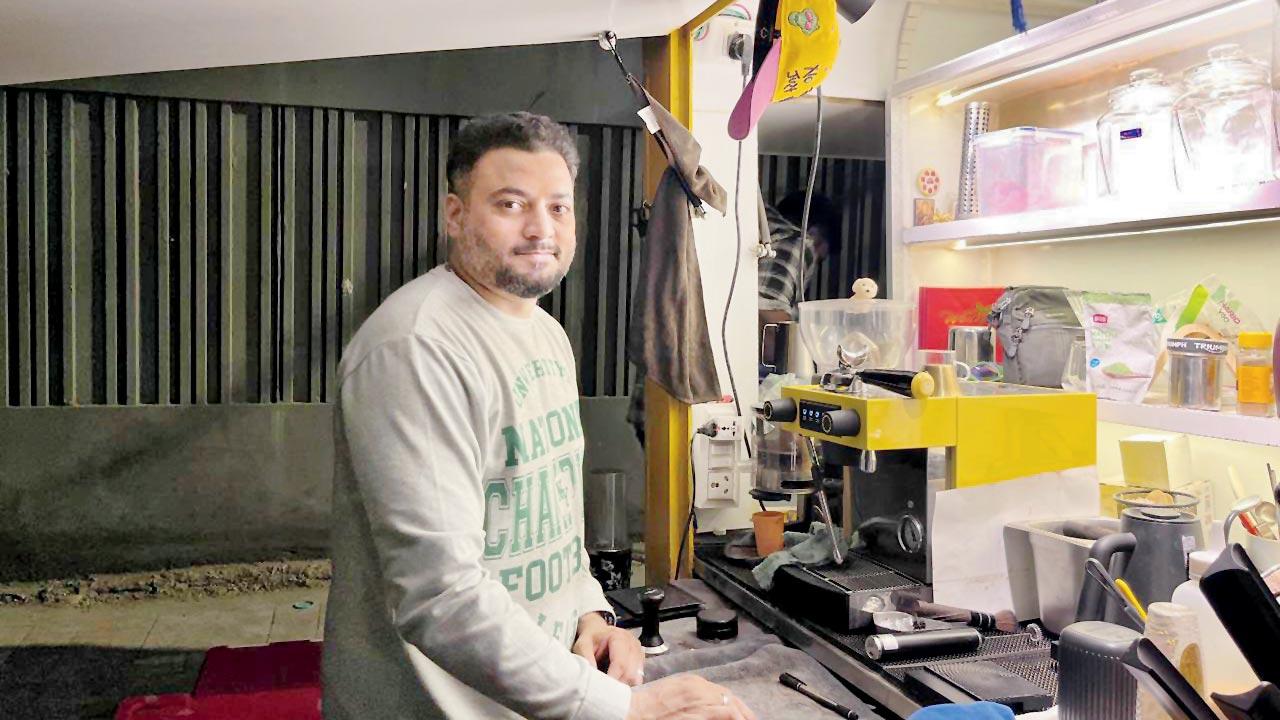 Rohan Phanse sells coffee out of a truck outside BKC
His personal favourite drink? “A cappuccino,” he says. “The places I used to work at before were active on Instagram. I knew I had to use Instagram for marketing,” says Kumar. His Reels have gone viral online, all thanks to the unique concept and an unbelievable price point — starting from '97 for a cup.
Another is Rohan Phanse, who started a coffee cart, Sowaka Coffee, at Government Colony, Bandra East, on December 3, 2025. In 2008, he stepped into a Barista coffee shop at Bandstand with his friends and was shocked to see the prices. “I could only get the black coffee. But after tasting that, I could immediately tell the difference between instant and specialty coffee,” he says. He went on to become a professionally trained barista.
We ask him what the response has been like. “Amazing, really. I have many repeat customers, which is an important thing in the coffee business. I have people living in Colaba or Khar who call me to get their coffee delivered there. I do some jugaad and send it to them,” he says.
But for him, the most important reason to be in the business is to make coffee accessible. His prices start at '99. “I stick to the basics, keep it simple. I want everyone to have that experience I had at Barista, to be able to fall in love with coffee.”
Is it time to move beyond Bandra?
In Bandra, Mumbai’s most attractive suburb to café hop over the weekend, rentals have doubled. “The average rate used to be Rs 500–600 per sq ft. Now, that number is around Rs 1000–1500 per sq ft,” says Rishi Dusija of RR Real Estate, which specialises in commercial real estate. “Landlords are, of course, happy about this, but residents are not.”
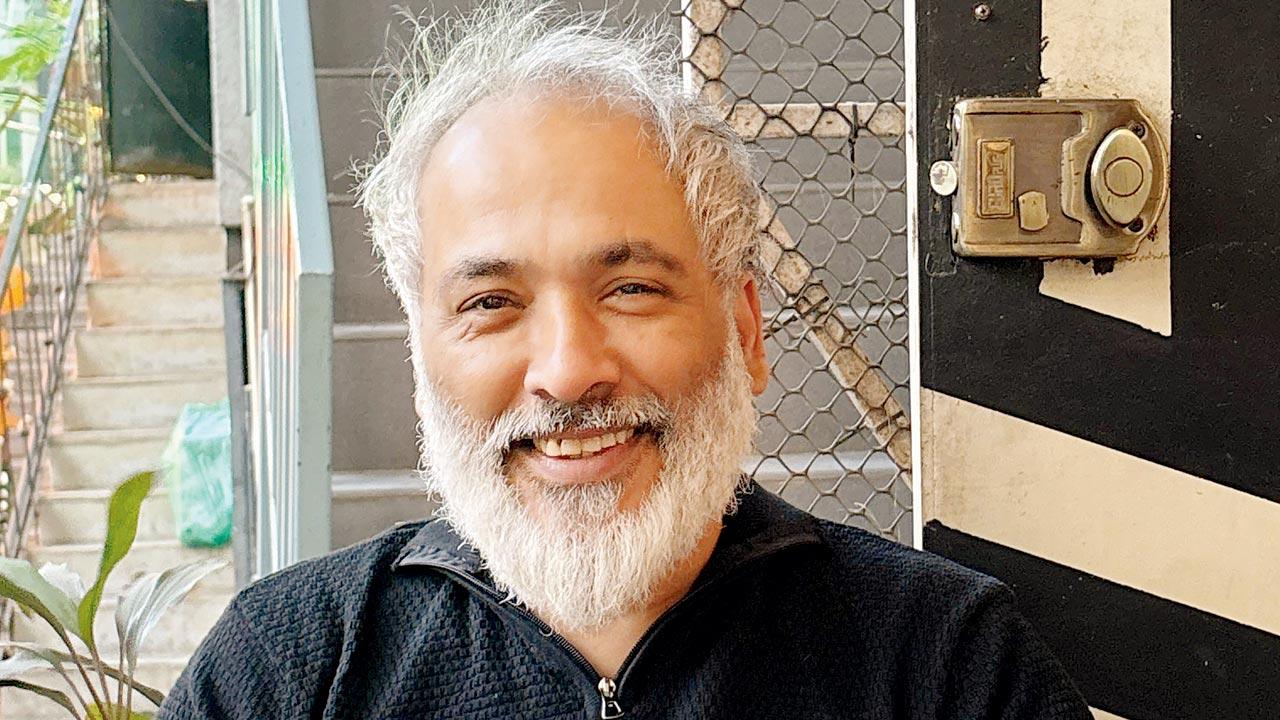 Ravi Kanal
What makes Bandra such a hotspot for cafés, though? Owner of Steps Café and born-and-brought-up Bandra boy, Ravi Kanal, argues it isn’t called the queen of suburbs for nothing. The natural love of food packaged with “breath-taking locations like Carter Road and Bandstand make for the perfect location for a café,” says Kanal. “And then there’s the shopping. What do you do after you’re done shopping? You grab a bite to eat.”
As Bandra residents complain about the gentrification of the neighbourhood, Kanal feels it is his personal responsibility to take care of the neighbourhood. “We’re in a corner, with residents living right beside the café. We don’t allow any parking near the café,” says Kanal, “We’ve done up a garden near the café, plantations up the steps. Thankfully, we’ve never heard any complaints from the residents.”
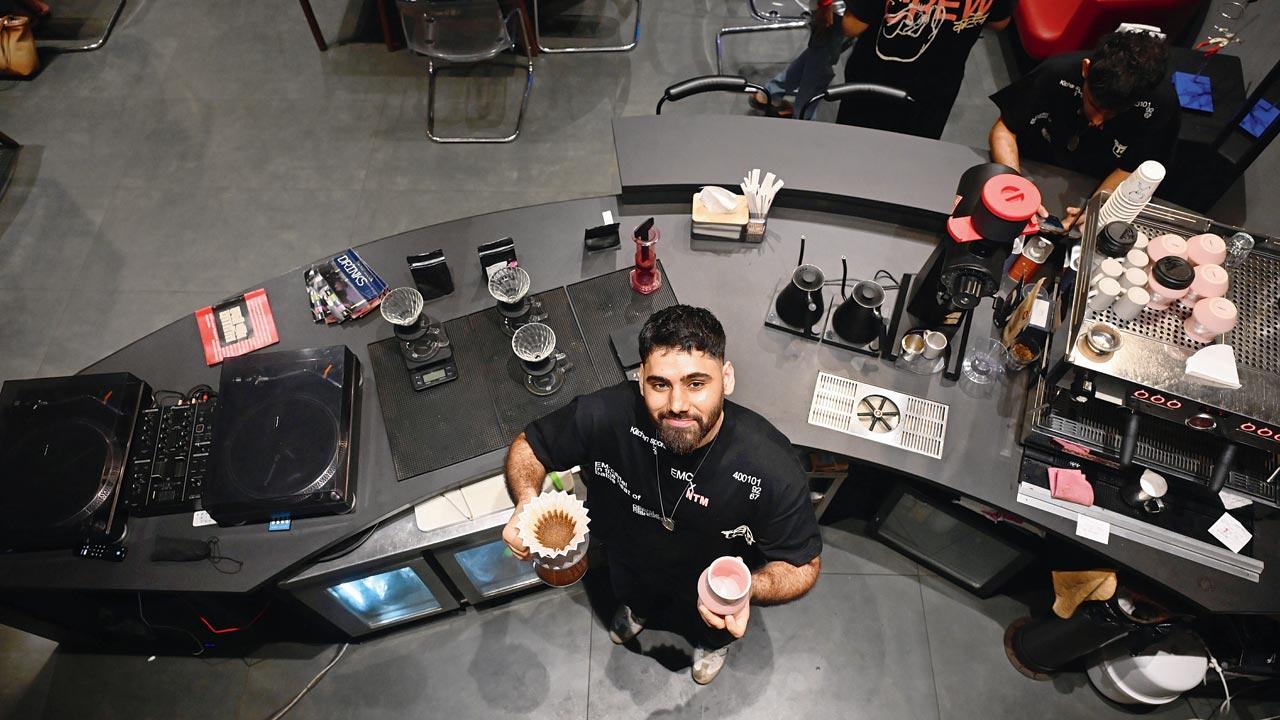 Brothers Neel and Rishiraj Kanwarjani started a café in Kandivli to avoid the Bandra saturation. Pic/Atul Kamble
But, walk through Bandra, Santacruz, Kala Ghoda, and you will see a string of chains and independent cafés. “The demand for cafés is very high. People want to open spaces as the younger generation is keen to go out,” says Dusija.
Outside Bandra, though, a new movement is brewing up. Brothers Neel and Rishiraj Kanwarjani have opened up their very own café called Every Morning Cartel in Kandivli. Neel says, “I hate to say it, but Kandivli is a tier-2 suburb in a tier-1 city. My brother and I grew up here, and we wanted to build something for the neighbourhood.”
Even though we might know Bandra, Juhu, and Colaba as the hotspots of the city, Kanwarjani says, “We have the money for this, we have the taste for this, then why should I go so far for a cup of coffee?” Kanwarjani wants people to come to Kandivli to taste his food, not the other way around, riding the MaKaBo (Malad, Kandivli, Borivli) wave. “In Bandra, I have so many options that I’m not loyal to any brand. I will keep cafe-hopping for the rest of my life,” says Kanwarjani, “The roads are dug up, there’s no space for parking. I have to stand in line for two hours for a space which is maybe 200–300 sq ft; there’s no place to sit down.”
‘Instagram-mability does not equal retention’
I probably think of Gilmore Girls and ‘coffee, coffee, coffee’,” says 21-year-old Piushi Ajwani, when we ask her what coffee means to her. “Coffee has become an integral part of pop culture today.” Ajwani is a student, model, and pop culture commentator on Instagram. In her free time, you’ll find her grabbing a coffee with her friends, working on an assignment over a cup of joe, or making a new coffee combo for herself.
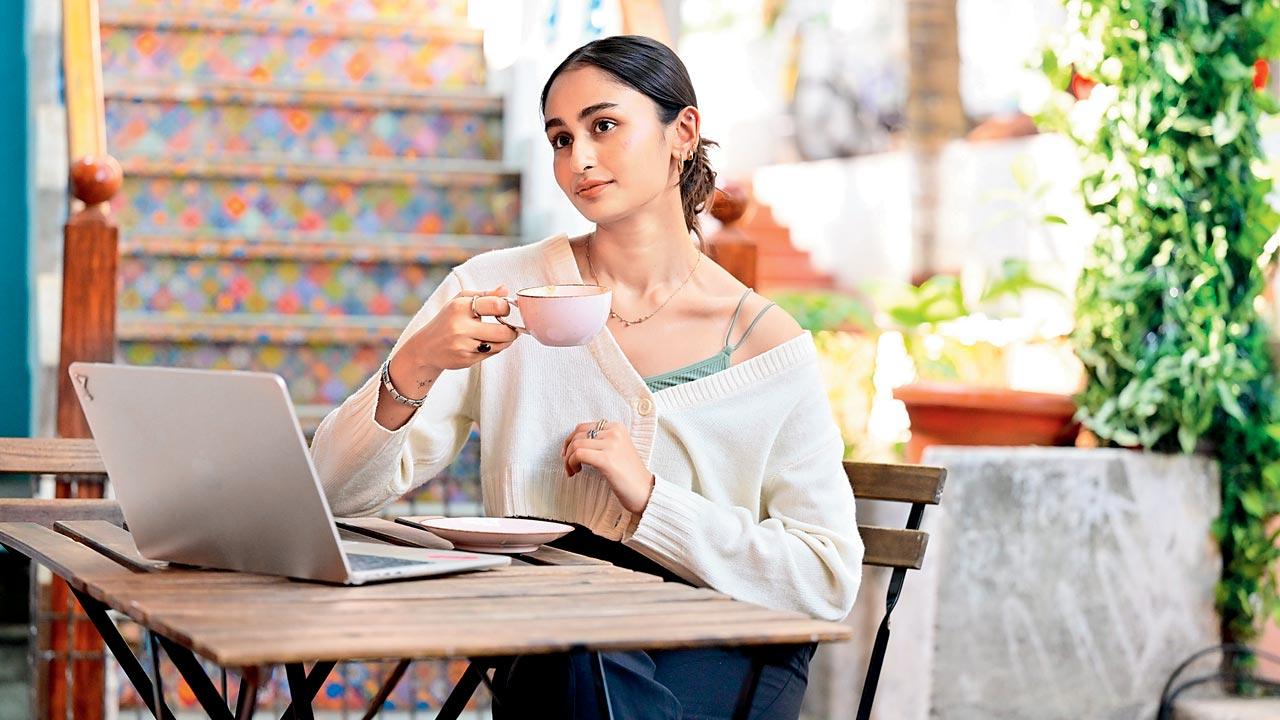 Piushi Ajwani believes Gen Z chooses what café to go to based on how we want to be perceived. Pic/Shadab Khan
In Mumbai, café culture has found a new language. “If you’re a café today, you cannot sell just coffee, you have to sell an identity. You bank off that identity and weave coffee into the narrative.”
Ajwani explains how this narrative is built, “If I want to be perceived as somebody who maybe is in the media or has a lot of money to spend, I would go to Boojee [Café], or if I want to be perceived as somebody who cares more about small businesses and nature, then I would associate myself with Steps [Café],” says Ajwani, “We’ve [Gen Z] grown up with the Internet. It becomes indistinguishable — what we are doing for others versus what we are doing for ourselves, which is actually kind of scary.”
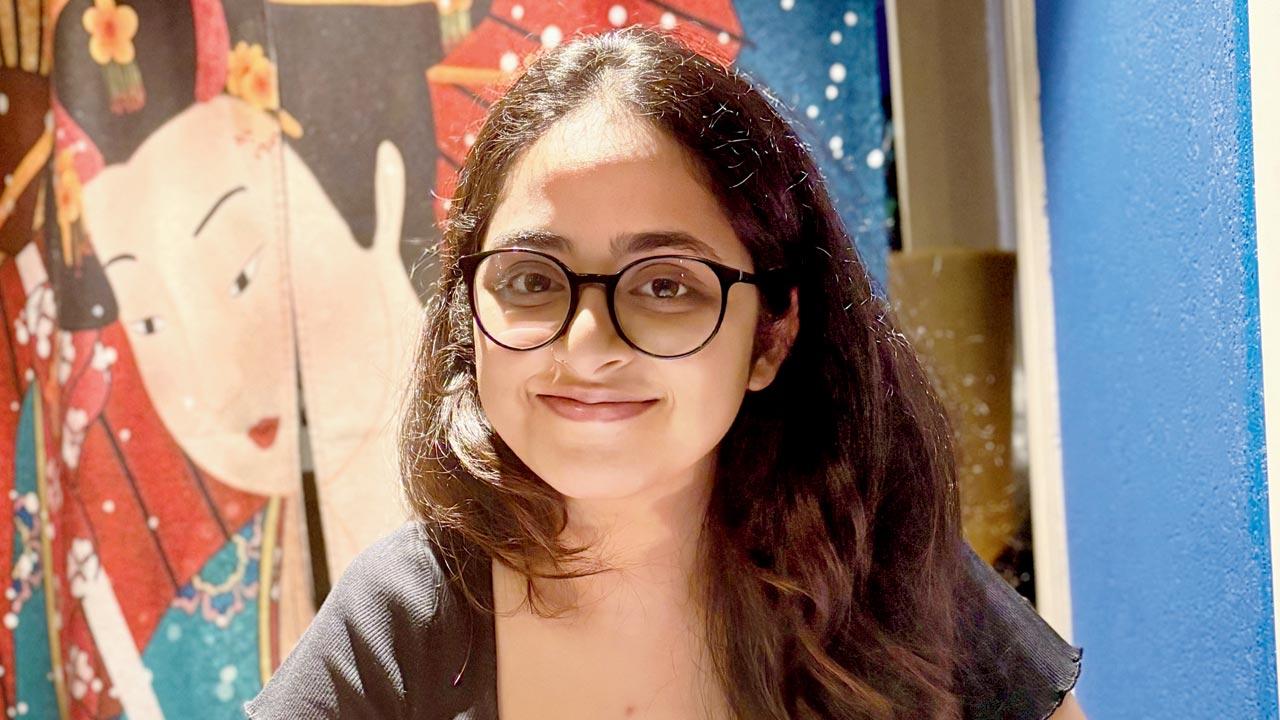 Senain Sawant
If Gen Z is subscribing to identities created by cafés, we speak to someone who helps create them, Senain Sawant, a food photographer and social media strategist. She says, “There are some great brands tapping into the Gen Z market. They’re doing all the right things for their demographic — be it online or offline marketing. I see a lot of great work on Instagram, but those feel like more individual content pieces that are great. However, I’m yet to see a marketing campaign as a whole in the F&B space that truly blows me away.”
According to Sawant, who is also the founder of creative agency Grump, the kind of crowd you’ll find in a place also becomes an important point in bringing a customer in. “The kind of people you want to sit in your café determines the personality that you set for it,” she adds.
This creates a hype and an “inner circle” of people, those who get it. But is our city suffering from eternal FOMO? Sawant says, “Hype plays a large role in how well a café does, especially in the first six months. However, I think it will always come down to the basics — the food, service, ambience will eventually take precedence. People will go to a café, take a picture, post on Instagram once, maybe twice. What will make them keep coming back is those basics. A sense of belonging is what will make me a regular at a café. I want to feel like I’m a part of something when I go out. That’s how a brand can stand out from the sea of cafés who are doing more or less the same thing. It’s about what I’m getting even when I’m not being sold something.”
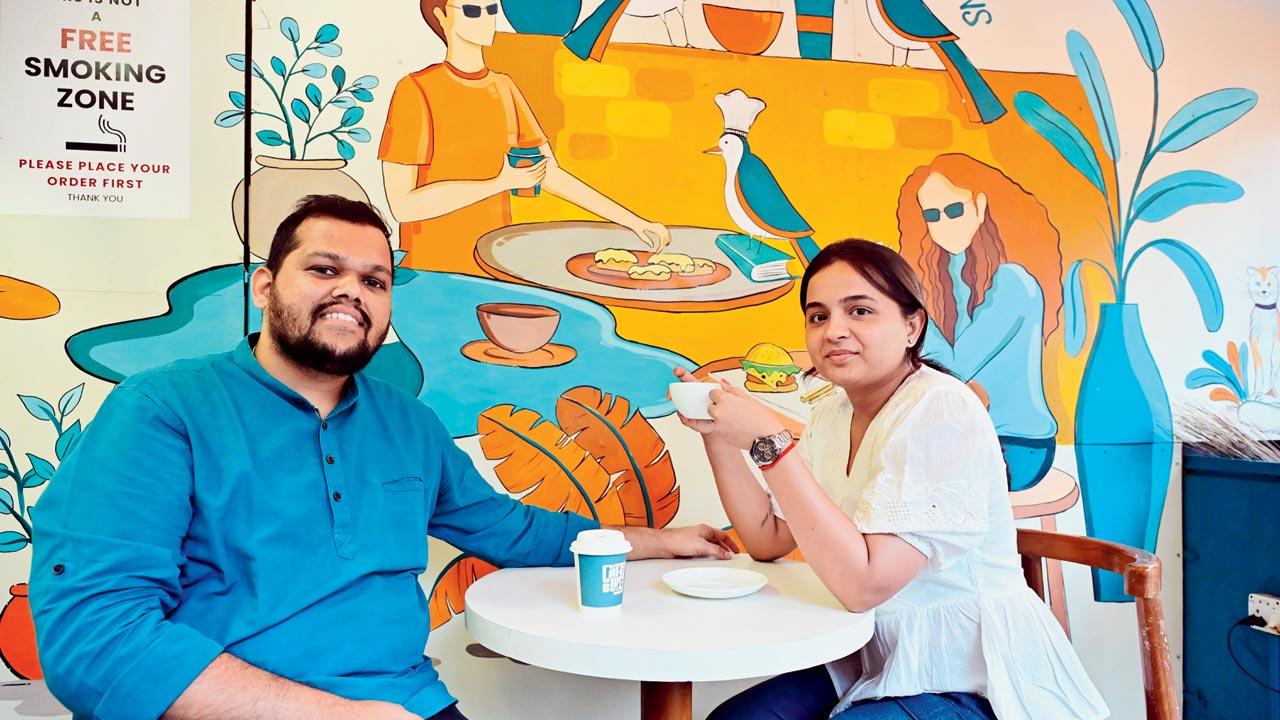 Building a connection with their customers helped café Blue J, Mahim; one time when a barista left suddenly, a customer swooped in to save the day. Pic/Shadab Khan
A tier-2 boom
Cafes may be struggling in big cities, but tier-2 and tier-3 cities are experiencing a boom like never before. When you think of coffee, the first names that might come to your mind are Nagpur and Surat. According to Knight Frank’s research on India, more than 38 per cent of all new F&B store leases were signed in tier-2 and tier-3 cities in 2023. A Colliers analysis claims that tier-2 city outlets, particularly café formats, recover expenditures 20–25 per cent faster than those in metro areas, making smaller towns a more lucrative location to start a café.
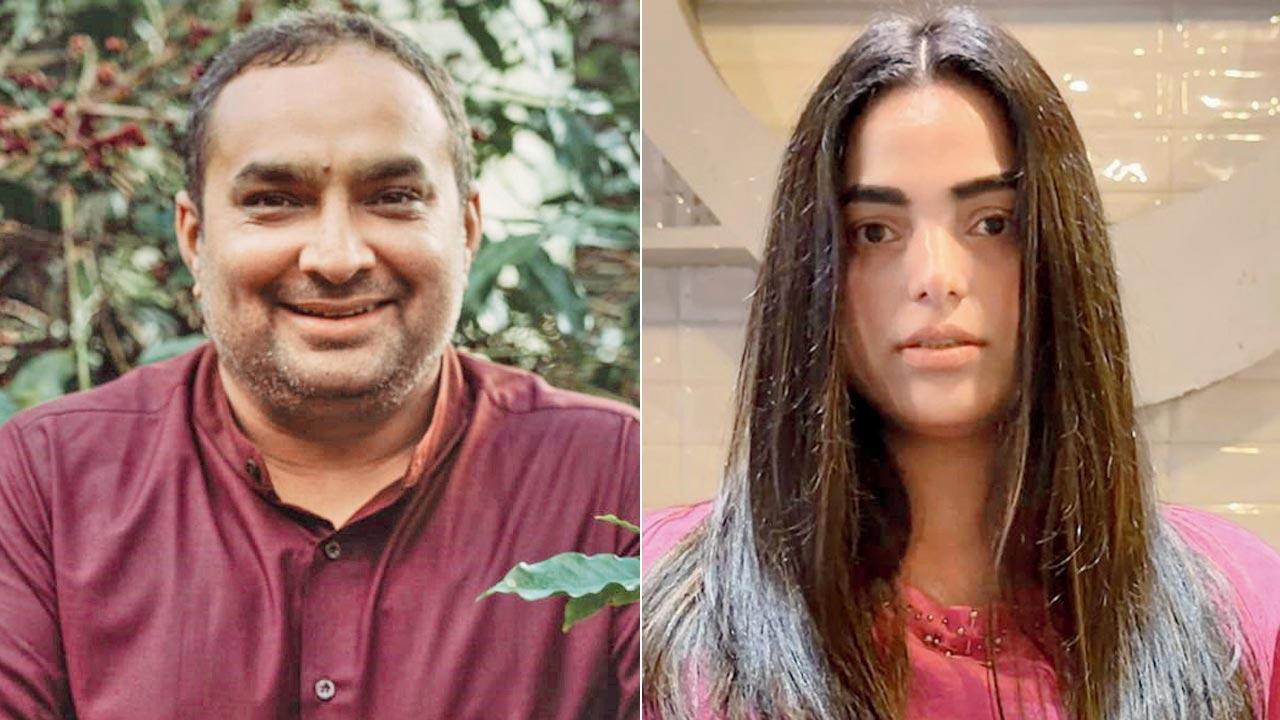 Amit Patel and Nihareeca
Amit Patel started Kokoro Coffee in Surat, Gujarat, for this exact reason. He started by building a community of caffeine lovers in the city. “From 2018 to 2019, we did more than 35 events and workshops; at the same time, we saw a wave of new specialty cafés.” In Surat specifically, Patel believes, “People appreciate coffee here more because of the liquor ban. Coffee gives you something to connect over, while giving you the feeling of nightlife in the city.”
Moreover, an increase in median income and the relatively low cost of living in small towns make coffee the perfect dream. It’s cool, it’s sophisticated, it’s aspirational, but not out of reach. Nihareeca started her own café, Daily Dose, in Raipur, Chhattisgarh, after discovering her own love for artisanal coffee. “In small towns, you can’t serve just coffee. In bigger cities, people grab coffee and leave for work. Here, people like to sit in a café for a few hours. You need food to anchor it,” says Nihareeca.
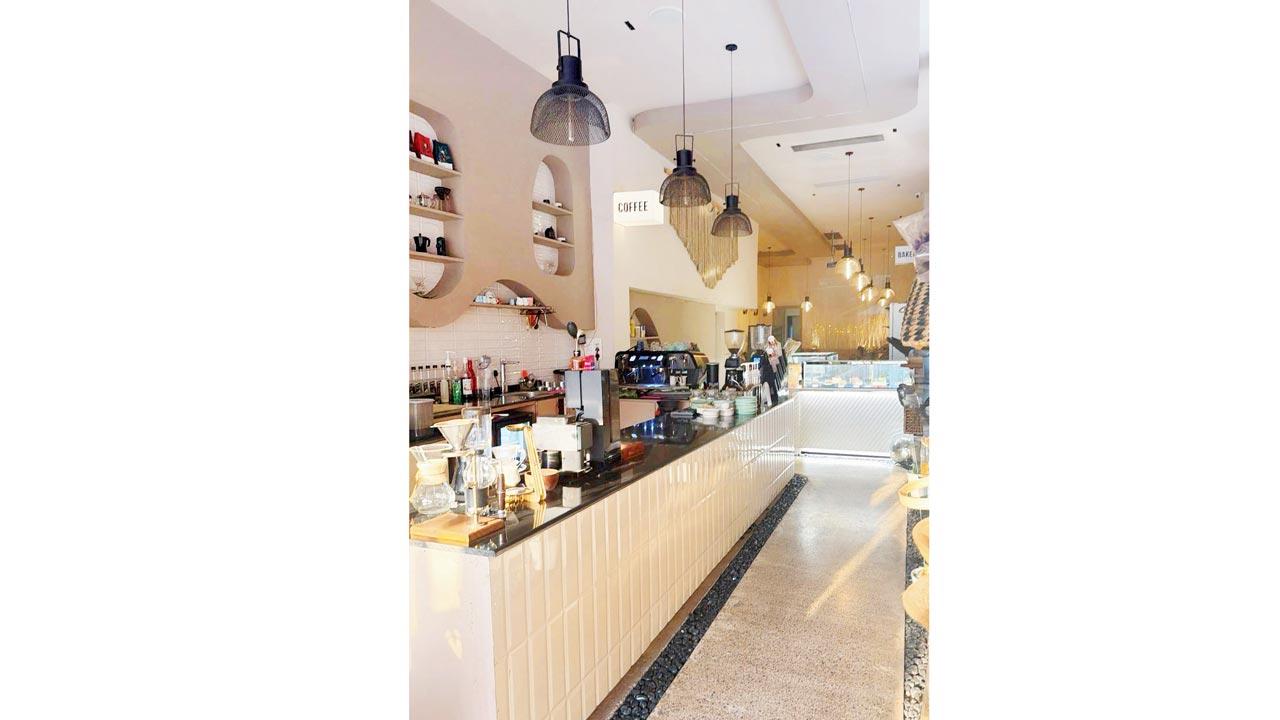 Nihareeca shares that having open coffee bars helps build trust with customers
The first few years, for her too, were spent in education. Gaining your customer’s trust remains the most important. “Here, we put all our equipment on display, and we keep the coffee bar open. If the customer can see their coffee being made, they are more comfortable paying that much money,” she adds.
Where everyone knows everyone — classic small town — word-of-mouth publicity works best. “Your social media can showcase what you do at the café, but what will work is people telling their friends to go check out Daily Dose,” Nihareeca says.
 Subscribe today by clicking the link and stay updated with the latest news!" Click here!