From Copenhagen to Colaba, Henrik Jyrk brings his signature Nordic sensibility, letting produce, memory, and spice take the lead

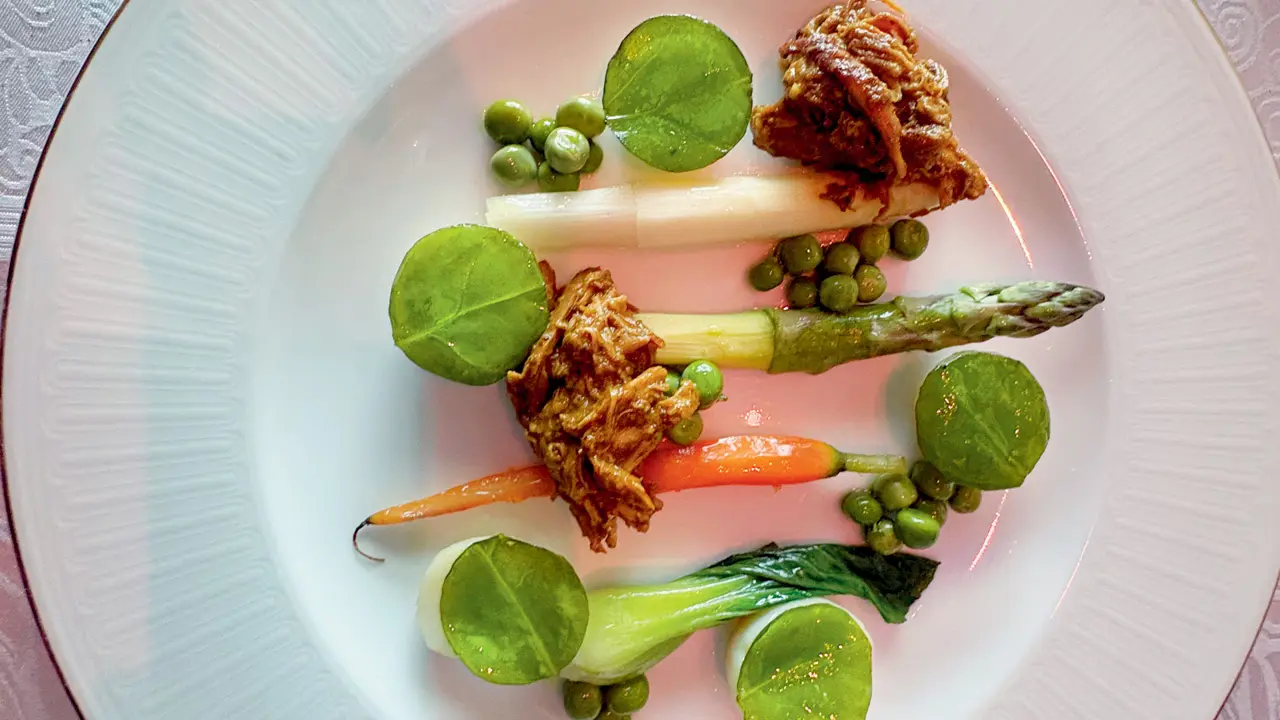
Nordic curry of goat and peas
During his first visit to Mumbai, award-winning Copenhagen chef and the visionary behind IBU, Copenhagen was mesmerised by the warmth he received. He is celebrated for his bold Asian fusion creations, global flavours, and acclaimed appearances on Danish television as a two-time ‘Sol Over Gudhjem’ champion. Here for the latest edition of Rendezvous – The Culinary Chronicles at the Taj Mahal Palace, Jyrk’s mission is to make gourmet food available to as many food lovers as possible, offering flavours that reflect the latest trends from around the world while not disregarding original, natural flair.

Vanilla and Cream
His creative process begins with produce, noting what’s in season, what’s grown locally, and what feels alive and expressive in that moment. In a Nordic context, that often means root vegetables, cabbages, berries, herbs, mushrooms, and cold-water fish — ingredients that carry a strong sense of place, restraint, and purity. Interestingly, you’ll find mild Indian influences enter gently, through spices, fermentation, and technique, used to deepen flavour rather than overwhelm it. For him, inspiration comes as much from memory and intuition as from technique — childhood flavours, travels, and shared meals — all filtered through a Nordic lens of simplicity and respect for ingredients. Balance sits at the centre of everything: warmth against freshness, earthiness offset by acidity, subtle heat paired with natural sweetness. Each dish is built slowly, adjusted and refined until it feels honest, seasonal, and rooted in more than one culinary world.

Lobster with tomato and vadouvan
Jyrk feels his culinary curiosity has deepened on this visit to India. “The first place I visited in Delhi was the spice market, one of the largest in Asia. It felt chaotic at first, but there’s a system within that chaos. Coming from Denmark, where everything is very square and structured, it was refreshing to see something so full of colour and movement — and yet, it works. It made me realise that not everything needs to fit into boxes. That sense of ‘everything will be alright’ really comes through.” The chef has also packed many spices to take back home. “In Denmark, we use garam masala, but not in the same way it is used here. Here, spices aren’t just about heat; they’re about fragrance and depth. What surprised me was how flavourful the food is without relying on chilli. It’s the spices that build that intensity.”

Langoustine with Jerusalem artichoke and coconut
Indian cuisine, he realised, resists simplification, just as much as it embraces it. “The food changes every hundred kilometres, and that’s inspiring. You could travel from north to south and discover dozens of distinct cuisines. One dish that really stayed with me was a white chicken curry — subtle in appearance, but exploding with flavour. It challenged everything I thought I knew about what a curry should look like.”
Travel has always shaped his cooking. Trained in Denmark, he later moved to San Francisco, where a new pantry opened up. “That’s where I was introduced to Asian ingredients like white soy, tofu, seaweed, star anise, and fennel. I remember tasting those flavours for the first time — it was like discovering something I’d been missing my whole life.” Travelling across Asia with his wife, who has Indian-Malaysian roots, further deepened that influence. “Today, my food is a blend of Asian flavours and Nordic techniques. I like powerful food, but it has to be balanced. I think of it as combining feminine and masculine energy — delicate presentation with bold, robust flavours. I want people to feel surprised: something that looks light but delivers intensity.”

Aebleskiver
That contrast defines his plates. “My cooking is simple on the plate, but there’s a lot of work behind it. It’s almost a mind trick that is elegant, restrained, and then suddenly very expressive.” He traces this approach to the understanding of how cuisines overlap and travel across borders to form their own identity. “It also comes from seeing the shared histories of food; of how Indian influences have shaped Malay and Thai curries.”
Certain elements anchor everything Jyrk cooks. Three constants in his kitchen are citrus, seaweed, and spices. “Citrus keeps food feeling fresh, seaweed adds depth and umami without being obvious, and warm spices like fennel, star anise, long pepper, and cinnamon bring complexity beyond salt and pepper,” he explains.
Jyrk didn’t grow up dreaming of becoming a chef but kitchens have been a part of his life. At 13, he was a dishwasher at a Chinese restaurant. At 17, he walked into a Michelin-starred restaurant and never looked back. “This is the only thing I’ve ever truly been good at — and the thing I love most.” One of the hardest chapters came with relocation to the US. “New metric systems, different language and working with people from different cultures forced me to unlearn and relearn everything. It changed how I think about food and that shaped my journey as a chef.”

Henrik Jyrk
At its core, Jyrk’s philosophy remains uncomplicated. “I believe everyone deserves one good meal a day. It doesn’t have to be fancy — it can be a great dal, a beautiful carrot, a comforting soup. Good food makes people happy. If I can help even a small part of society eat better, then I’ve done something meaningful.” And that’s why, all his menus, like the man behind it, are guided by nature first, shaped by culture, driven by curiosity, grounded in season and place, and yet quietly open to the world.
A mindful lunch
For the curated lunch at The Chambers at the Taj Mahal Palace, Mumbai, Jyrk unfolded a thoughtful progression of flavours, pairing it with sparkling tea. The meal began with a truffle Danish aebleskiver, followed by a scallop dish featuring ginger and caviar, complemented by the crisp freshness of LYSEGRØN Copenhagen Sparkling Tea. Next was lobster with tomato and vadouvan, paired once again with LYSERØD. Langoustine with Jerusalem artichoke and coconut came next, complemented by BLÅ, before moving into a deeply comforting Nordic curry of goat with peas. The experience concluded with dark berries and vanilla ice cream, paired perfectly with fresh berry juice.
Subscribe today by clicking the link and stay updated with the latest news!" Click here!