










Distribution points of bhakri, dry peanut chutney, and thecha propped up in several pockets around South Mumbai. “We prefer this because it is dry food and there are low chances of it getting spoiled,” said Ashok Gunda, from Tuljapur in Beed

Ashok Gunda (left) distributing bhakri and chutney to Maratha morcha participants
The first day of the Maratha Morcha protests marked a food shortage for many. From lining up in the rain for a single vadapav to pushing through crowds for a pack of chiwda, several protesters reported hunger and subsequent weakness. However, things took a complete turn by Day 3.
Distribution points of bhakri, dry peanut chutney, and thecha propped up in several pockets around South Mumbai. “We prefer this because it is dry food and there are low chances of it getting spoiled,” said Ashok Gunda, from Tuljapur in Beed.

Around 50,000 bhakris were sent for the protestors from Chincholi, Beed. PICS/ADITI ALURKAR
Gunda said the food was made by the protesters in makeshift kitchens set up on the pavements or in pick-up trucks. Some food came in from trucks parked in Navi Mumbai, and the rest was a result of the crowd chipping in. “We have enough food to feed the needy; it does not matter whether they are a part of the Maratha morcha or not. Mumbaikars are also welcome to come over and try the ‘gavran’ food,” said Gunda.
After spending two days at the morcha, returning protesters shared concerns with their villagers about the food mismanagement they experienced. Majalgaon’s Vaishali Naiknavre did the same when she went back home in time for Mahalakshmi or Gauri poojan.
“We could not get hold of water on the first day. Since there were limited shops that were open, the hawkers sold us Rs 5 kulfis for Rs 30. We relied on the cold treats till we could find some water,” said Naiknavre. Subsequently, all the women from the village came together to make as many bhakris as each could and dropped them off at the village temple. A car was then sent from Majalgaon with bhakris, thecha, chiwdas, and water bottles.
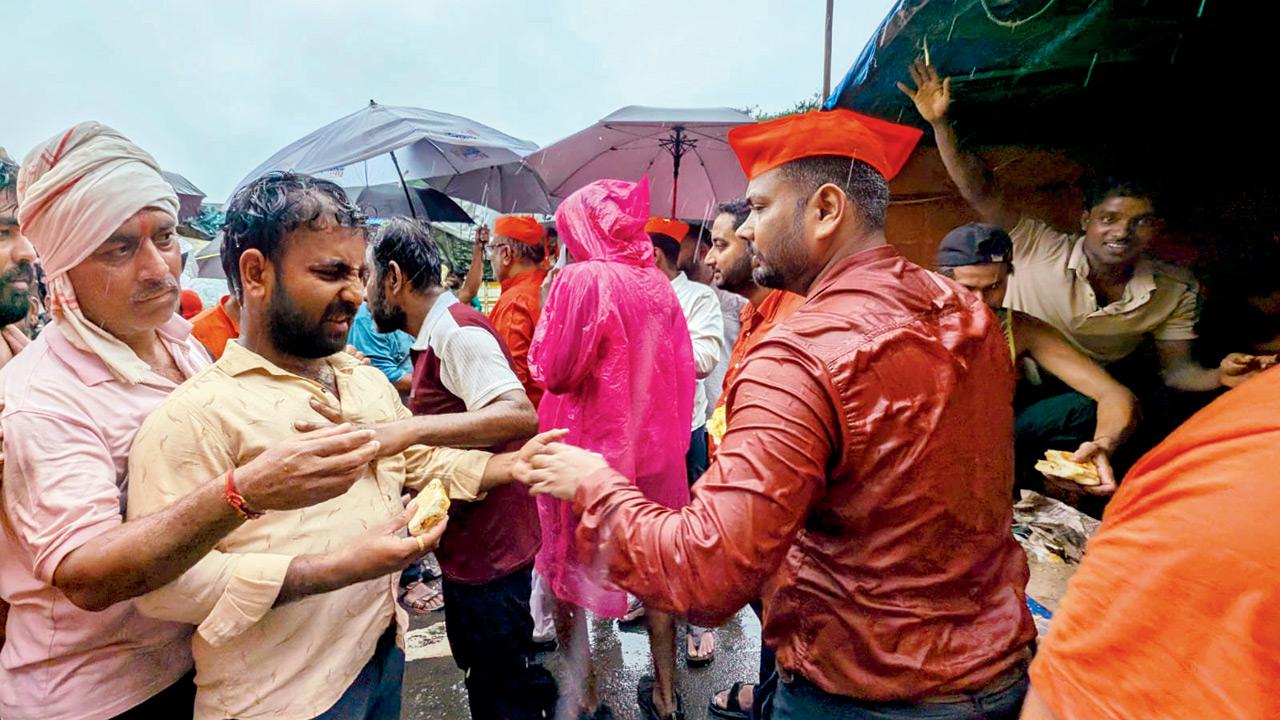
Vadapav being distributed to morcha members in the rain
Shubham Gadge from Baramati had carried a month’s worth of groceries, a stove, and an LPG cylinder from home to cook for himself and his group of 15 friends. However, the material now remains untouched.
“There is enough food to feed Marathas as well as Mumbaikars. Women from our villages cook homestyle food, like varan bhaat, and vehicles keep carrying it to the city. We even have a 24-hour tea stall behind the BMC office, and we need not set up our separate kitchens anymore,” said Gadge. By Day 4, tempos distributing bananas and biscuits made rounds around Azad Maidan.
After Ganapati’s Day 5 visarjan, on August 31, the police estimate that nearly 20,000 more Marathas came to Mumbai. The new entrants were tasked with carrying more food and groceries from their respective villages. Additionally, the authorities were also tasked with providing basic necessities to the Morcha members, which led to excessive food distribution.
 Subscribe today by clicking the link and stay updated with the latest news!" Click here!