Janmashtami 2025: Exploring the festival's significance and traditions
Updated On: 06 August, 2025 12:56 PM IST | Mumbai | mid-day online correspondent
One of the most exciting and culturally rich aspects of this celebration is the Dahi Handi—a ritual that has become symbolic of Lord Krishna's playful and mischievous nature





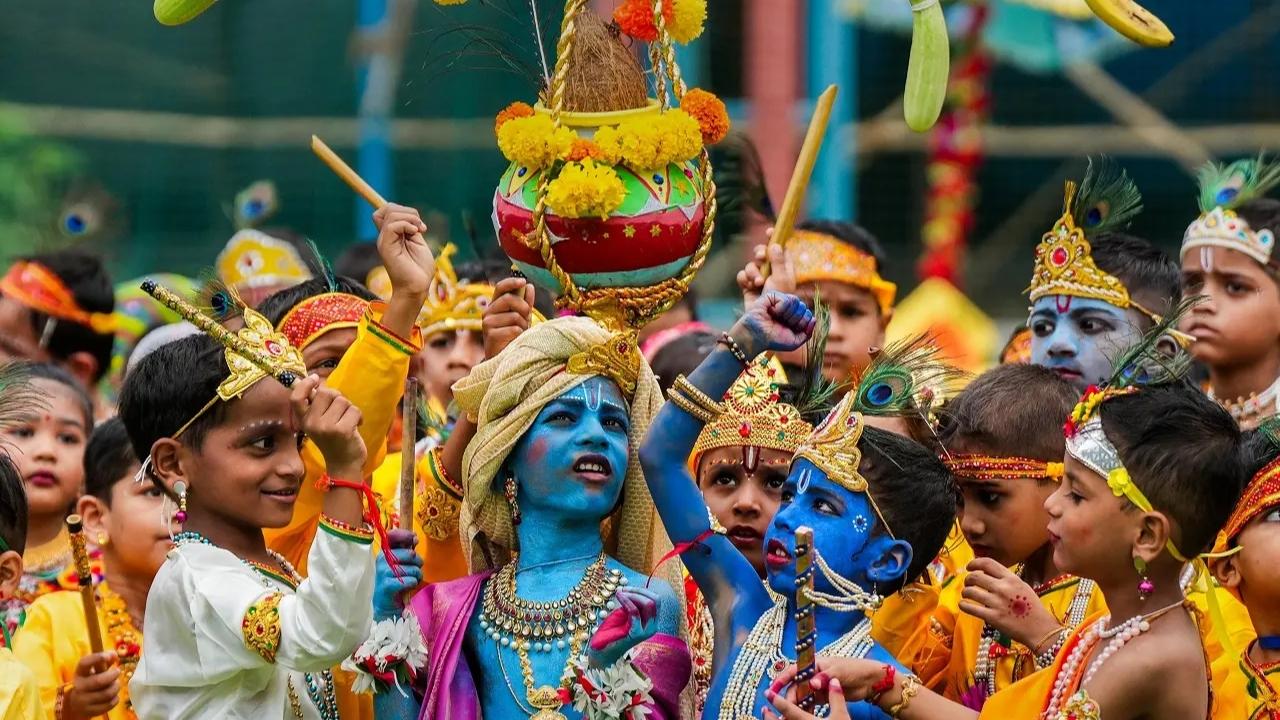
File Photo. Pic/PTI
Janmashtami, the joyous festival celebrating the birth of Lord Krishna, is one of the most vibrant and widely celebrated occasions in India. In 2025, Janmashtami will be observed on Friday, August 15, bringing with it the customary fervour, devotion, and festivity. One of the most exciting and culturally rich aspects of this celebration is the Dahi Handi—a ritual that has become symbolic of Lord Krishna's playful and mischievous nature.
What is Dahi Handi?
Dahi Handi is a traditional event that takes place primarily on the second day of Janmashtami, known as Gokulashtami. This year, Gokulashtami will be celebrated on July 16. A clay pot filled with curd, butter, ghee, and other dairy delights is hung high above the ground, usually in open public spaces. Groups of young men and boys, referred to as Govindas, form human pyramids to reach and break the pot—an enactment of Lord Krishna’s childhood antics of stealing butter from pots hung out of reach in Gokul.
Cultural and Mythological Significance
The tradition of Dahi Handi stems from tales of Bal Krishna (young Krishna), who was famously fond of butter and would often raid the neighbourhood homes with his friends. Women, in an attempt to keep their dairy products safe, would hang them from the ceiling. Krishna, never one to back down from a challenge, would devise strategies to reach the pots—hence the human pyramid was born.
Trending Stories
Latest Photos
Latest Videos
Latest Web Stories
ADVERTISEMENT
Mid-Day Fast
ADVERTISEMENT