shot-button
E-paper E-paper
Home > Mumbai Guide News > Mumbai Food News > Article > The A to Zaatar of Levantine cuisine

The A to Za’atar of Levantine cuisine

Updated on: 14 July,2025 09:25 AM IST  |  Mumbai
Fiona Fernandez | fiona.fernandez@mid-day.com

The new chef at Souk has brought along a bagful of flavours and ideas from the Levant region, to satiate Mumbai’s discerning diners. Excerpts from an interview

The A to Za’atar of Levantine cuisine

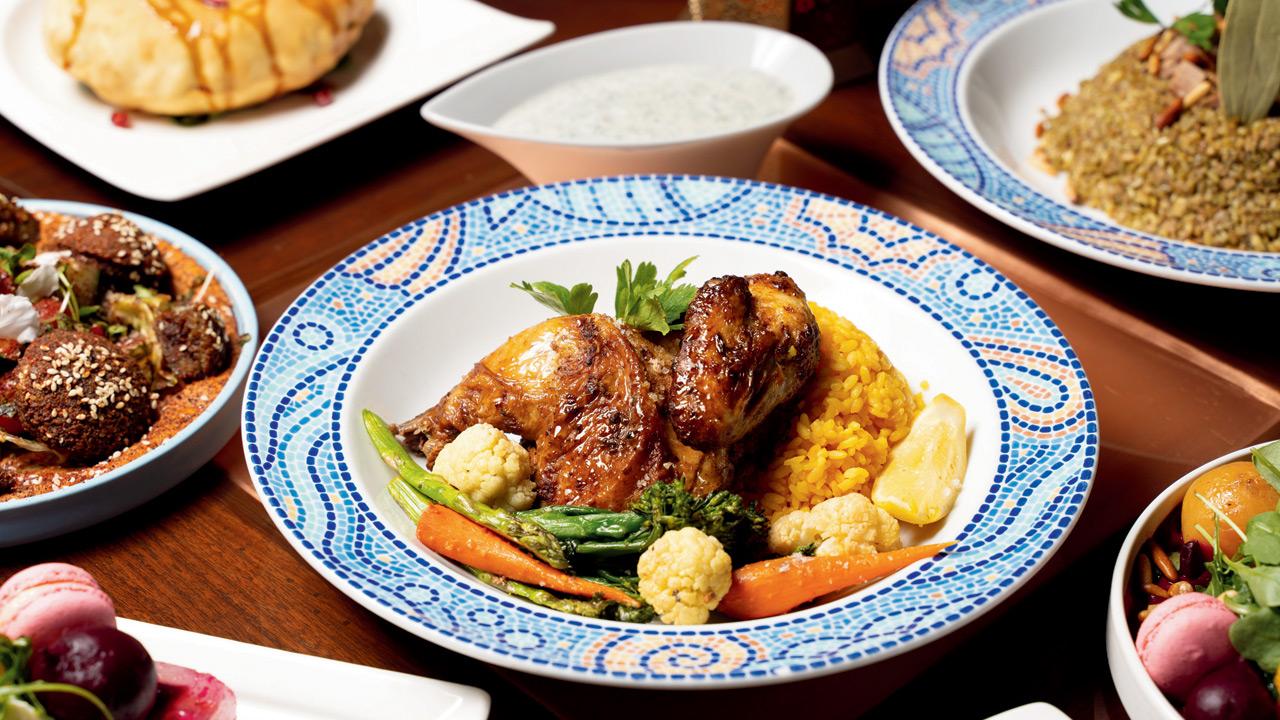
Salt Baked Chicken

Listen to this article
The A to Za’atar of Levantine cuisine
x
00:00

MID-DAY: How would you introduce Levantine cuisine to a first-time diner?
Chef Alaa Aloush: Levantine cuisine is all about freshness, balance, and deep-rooted traditions. For first-timers, I’d highlight its generosity of flavours — the use of olive oil, lemon, herbs like mint and parsley, and spices such as sumac and za’atar. Dishes like muhammara, fattoush, or slow-cooked lamb with freekeh may seem simple, but it involves careful layering and time-honoured techniques. One of the most interesting aspects is the emphasis on slow cooking and charcoal grilling, which allows the ingredients to express themselves. There’s also a beautiful sense of hospitality embedded in the cuisine — everything is meant to be shared.

(From left) Majboos Dajaj — an Emirati chicken rice dish, The Taj Mahal Tower, Cauliflower Steak and Vegetable Bamia. Pics Courtesy/The Souk


Food from the Levant region is unique but also has similarities to the cuisines of the Indian Subcontinent. There are common ingredients including cumin, cinnamon, turmeric, chilies, legumes and chickpeas, apart from similar cooking techniques like char grilling over coals, slow cooking, frying, baking and steaming.


MD: What inspired you to become a chef?
CAA: Over time, I realised that Levantine cuisine, despite its richness and depth, was underrepresented on the global stage. That inspired me to not just cook, but to advocate for its legacy. I’ve had the opportunity to travel and work across the Middle East, GCC (Gulf Cooperation Council), and now, India. With every step I’ve made it my mission to showcase the soul of our cuisine — not just the flavours, but the stories behind each dish.

MD: Tell us about the experiments and innovations that we can expect in Souk’s new menu. Will we see Indian influences?
CAA: I’ve taken a respectful, ingredient-driven approach to innovation. While the roots of the menu are authentically Levantine, we’ve introduced modern presentations and flavour pairings that resonate with today’s diners. For example, we’ve played with textures in traditional dishes — giving a twist to kibbeh or labneh — while still staying true to their essence.

(From left) Maqali Mushkila, a simple fried dish from Syria, Lamb Freekah is a slow-cooked dish and Greek Spinach Pie

There are subtle Indian influences. We are ensuring that we have ample choices for the vegetarian diet on our menus. Our menu features dishes in small plates for individual orders and large plates for guests who like to share their food. We ensure that the recipes developed/used are as per the generally accepted flavours in India in the way we explore spices or plating, but we’re careful not to dilute the identity of Levantine cuisine. It’s more of a conversation between the two cultures, not a fusion. We’ve also introduced vegetarian-forward dishes that celebrate seasonal Indian produce in Levantine formats.

MD: Is this your first time in Mumbai? Have you visited any of its restaurants and food markets? 
CAA: Yes, this is my first time, and it’s already a city that leaves a lasting impression. The energy is incredible — there’s a pulse here that feels very alive. I’ve managed to explore a few local spots. I like Tandoori Chicken Tikka and Pani Puri. The spice markets and fresh produce are also inspiring. I would love to visit Crawford Market more deeply, and perhaps, experience iconic spaces that reflect the city’s diverse culinary identities, including restaurants in Bandra and Bandra Kurla Complex, the Khau Galli in Kandivli, and traditional Maharashtrian and Konkani eateries in Girgaon and Dadar. I’m fascinated by the diversity of the street food scene, and would love to experience an authentic trail. Dosas, Kutchi Dabeli, Pav Bhaji and Bhelpuri are on my must-try list.

Food Travels

Chef Alaa Aloush
Chef Alaa Aloush

Many traditional Indian recipes have evolved from the cuisines of Levant, when they travelled to India with the traders and raiders over centuries. For example, the sambousek from Persia has evolved into the samosa in India. Our halwa has its roots in the Middle East; in fact, ‘hulw’ is the Arabic term for sugar. 

TILL July 20 (Monsoon menu); a la carte, lunch and dinner
AT Souk, Rooftop, Taj Mahal Tower, Colaba. 
CALL 2266653272 (for reservations)

"Exciting news! Mid-day is now on WhatsApp Channels Subscribe today by clicking the link and stay updated with the latest news!" Click here!

Did you find this article helpful?

Yes
No

Help us improve further by providing more detailed feedback and stand a chance to win a 3-month e-paper subscription! Click Here

Note: Winners will be selected via a lucky draw.

Help us improve further by providing more detailed feedback and stand a chance to win a 3-month e-paper subscription! Click Here

Note: Winners will be selected via a lucky draw.

Food mumbai mumbai food mumbai guide things to do in mumbai

Mid-Day Web Stories

Mid-Day Web Stories

This website uses cookie or similar technologies, to enhance your browsing experience and provide personalised recommendations. By continuing to use our website, you agree to our Privacy Policy and Cookie Policy. OK