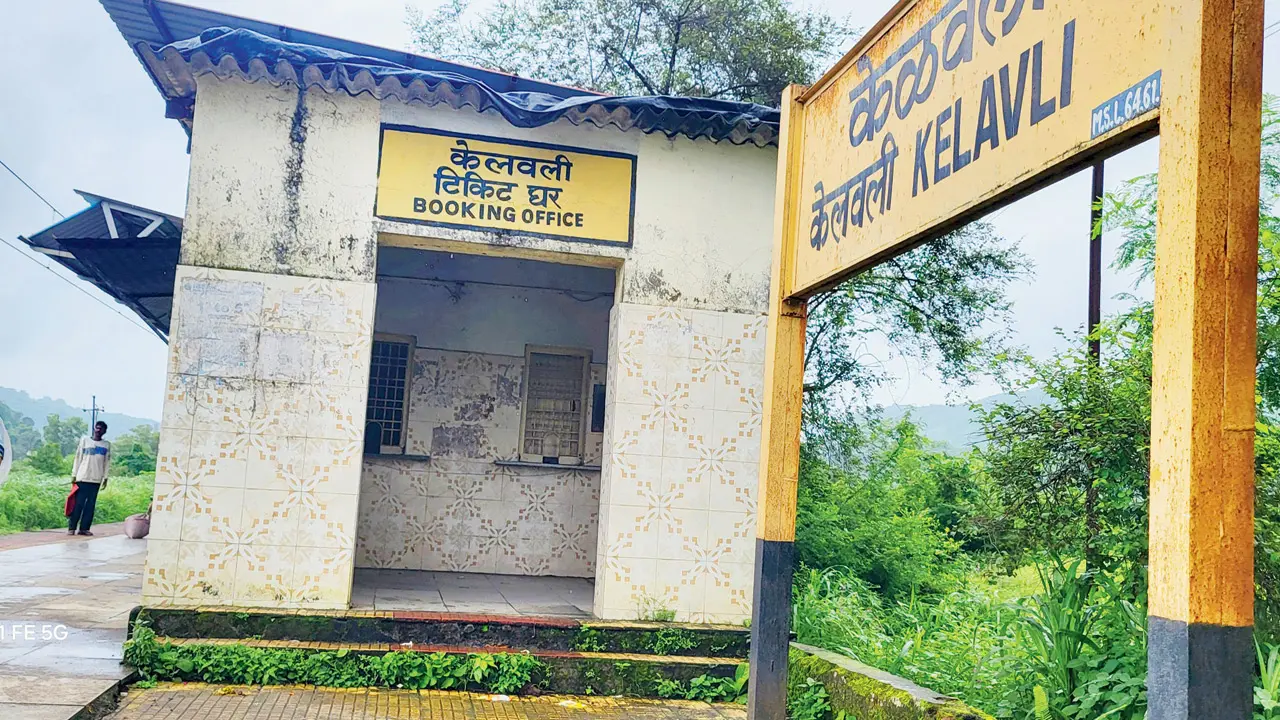
Rampant fare evasion on 10-km route is costing Indian Railways heavily, with almost no ticket checks at smaller stations, minimal staff presence; the route passes through small stations like Palasdari, Kelavali, Dolavali, and Lavajee before ending at Khopoli

An empty booking office at Kelavli station. PICS/BY SPECIAL ARRANGEMENT
The Karjat–Khopoli suburban rail route, covering just 10 kilometres with 38 trips daily, is packed throughout the day — yet only about 100 tickets are sold on this section each day. Despite a nominal Rs 5 fare, rampant fare evasion has led to significant revenue losses for Indian Railways.
The route passes through small stations like Palasdari, Kelavali, Dolavali, and Lavajee before ending at Khopoli. Yet, regular ticket checks are nearly absent, and most commuters board without buying tickets. A commuter travelling recently from Dombivli to Kelavali said, “Sometimes tickets are checked, but mostly only at Khopoli. Stations like Palasdari and Kelavali see no inspections.” One ticket counter staff member confirmed, “We hardly sell 100 tickets a day on this entire section.”

Passengers board a packed train at Kelavli station
Security is a concern, with no Railway Protection Force (RPF) or Government Railway Police (GRP) stationed at smaller stops. If incidents occur, officers must be rushed in from Karjat, delaying response. Locals say private booking clerks at smaller stations arrive just minutes before trains and leave immediately after, making fare collection almost impossible. Another passenger commented, “People won’t buy a R5 ticket but will spend Rs 200–Rs 300 on snacks and mobile recharges. Then they demand more trains and better facilities.”
‘Book online for discounts’
The Chief Public Relations Officer (CPRO) of Central Railway addressed the issue, “We have simplified ticket purchasing through mobile apps, UTS, and ATVMs to avoid queues. Commuters who book tickets online often get discounts, so we encourage everyone to use digital platforms rather than stand in long lines.” He added, “Due to limited manpower, we cannot station staff at every station, but we urge passengers and commuter associations to help spread awareness and discourage fare evasion.” The CPRO emphasised that without passenger cooperation, curbing ticketless travel remains a challenge.
Action demanded
Prabhakar Gangavne, secretary of the Kalyan Kasara Passengers Association, said, “We are pushing for increased train frequency, which requires more revenue. We have consistently appealed to passengers not to travel without tickets and requested the railway administration to increase ticket-checking staff and appoint inspectors at all stations. However, these requests remain unaddressed.”

Anita Zope, Kalyan Kasara Passengers Association; (right) Prabhakar Gangavne, secretary, Kalyan Kasara Passengers Association
“The administration appears focused solely on revenue while neglecting passenger needs. Strict enforcement against fare evasion is necessary, and staff must be held accountable,” he added
Enforcement needed
Anita Zope of the Kalyan Kasara Passengers Association added, “We have appealed to passengers not to travel without tickets and conducted awareness drives. Still, railway authorities must step up by increasing ticket-checking personnel and appointing permanent inspectors.” She expressed frustration over pending projects and said, “The focus seems to be only on revenue collection. Staff hired for enforcement must perform their duties properly to control fare evasion.”
Panvel–Karjat shortcut
The upcoming Panvel–Karjat suburban route — a Harbour Line shortcut from CSMT to Karjat via Panvel — will save commuters 15–20 minutes compared to the main line via Kalyan. This new route is expected to increase passenger traffic on the Karjat–Khopoli section, making improved ticket checking and management crucial.
Subscribe today by clicking the link and stay updated with the latest news!" Click here!